
Intrinsic Time: A New Dimension for Dynamic Community Detection
On the use of intrinsic time scale for dynamic community detection and visualization in social networks
The paper introduces a method for dynamic community detection using Intrinsic Time, a non-linear rescaling of time based on network topology changes (edge additions/removals). Applied to the Infocom 2006 contact network, the method identifies stable community structures more accurately than traditional extrinsic time-based approaches.
TL;DR
Analyzing social networks using standard clocks (extrinsic time) often obscures the true "speed" of social interactions. This paper proposes Intrinsic Time—where time is measured by the activity of the network itself (link changes). This approach allows for far more accurate detection of stable communities by effectively "slowing down" the moments when everyone is talking and "speeding up" the quiet nights.
The Problem: The Mismatch of the Clock
Social networks are high-velocity environments. In datasets like the Infocom 2006 contact network, activity isn't linear. There are "bursts" during coffee breaks and "silence" during the night.
Current SOTA methods for community detection struggle because:
- Instability: Algorithms are sensitive; a tiny change in links can lead to a completely different community structure.
- Extrinsic Bias: Using seconds as a unit treats a quiet hour at 3 AM the same as a frantic hour during a keynote. This makes it incredibly hard to define "windows" of time where a community structure is truly stable.
Methodology: Let the Network be the Clock
The authors' core insight is simple yet profound: If nothing changes in the network, no time has passed.
1. The Rescaling
They convert "Extrinsic Time" (standard units) into "Intrinsic Time."
- High Activity: Shorter intervals in extrinsic time (seconds) become longer segments in intrinsic time.
- Dormancy: Long stretches of inactivity are compressed into a single "tick."
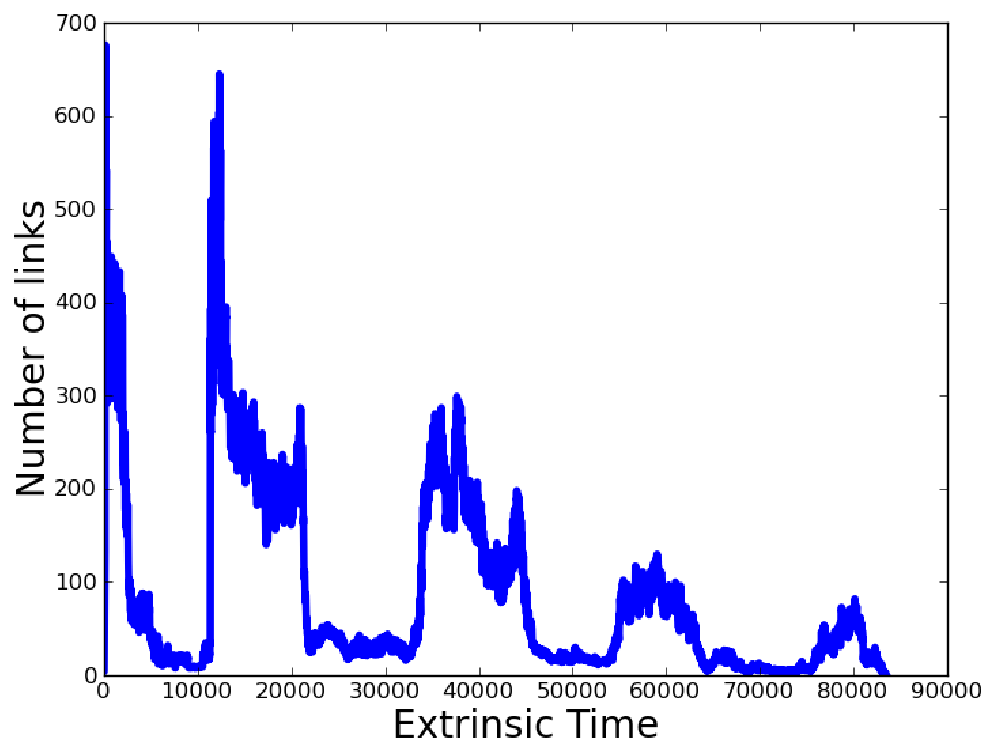 Fig 1: The logic of non-linear rescaling where gaps in activity result in no intrinsic time progression.
2. Hierarchical Merging
The algorithm (Algorithm 1) performs a hierarchical clustering of these time steps. It merges time periods if they share a high Average Modularity (). The goal is to find the largest possible window that can be represented by a single, stable partition .
Experiments and Results
The authors tested this on the Infocom 2006 dataset (78 participants, ~3000 links).
Extrinsic Results: Found 9 windows. It failed to distinguish between the third night and the following day, grouping them into a single, meaningless window because the modularity threshold was too blunt.
Intrinsic Results: Found 19 windows. Because the bursts were "stretched," the algorithm could zoom in on the specific community shifts happening during lunch breaks and sessions.
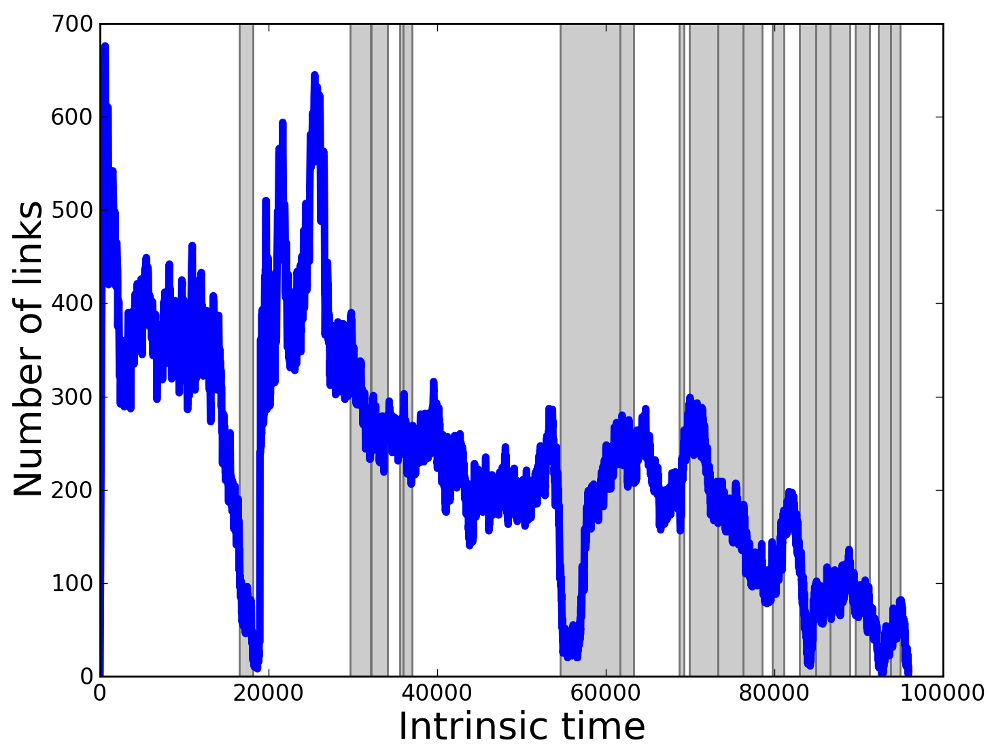 Fig 2: Number of links as a function of intrinsic time, showing how the "day" periods are expanded for better granularity.
The Visualization Proof
In a key qualitative analysis, the authors visualized the "Extrinsic Window 7." In extrinsic time, this looked like a single dense blob. However, by splitting it into 5 Intrinsic Windows, the visualization clearly showed the network transitioning from a sparse night-time state to distinct, dense daytime interactions.
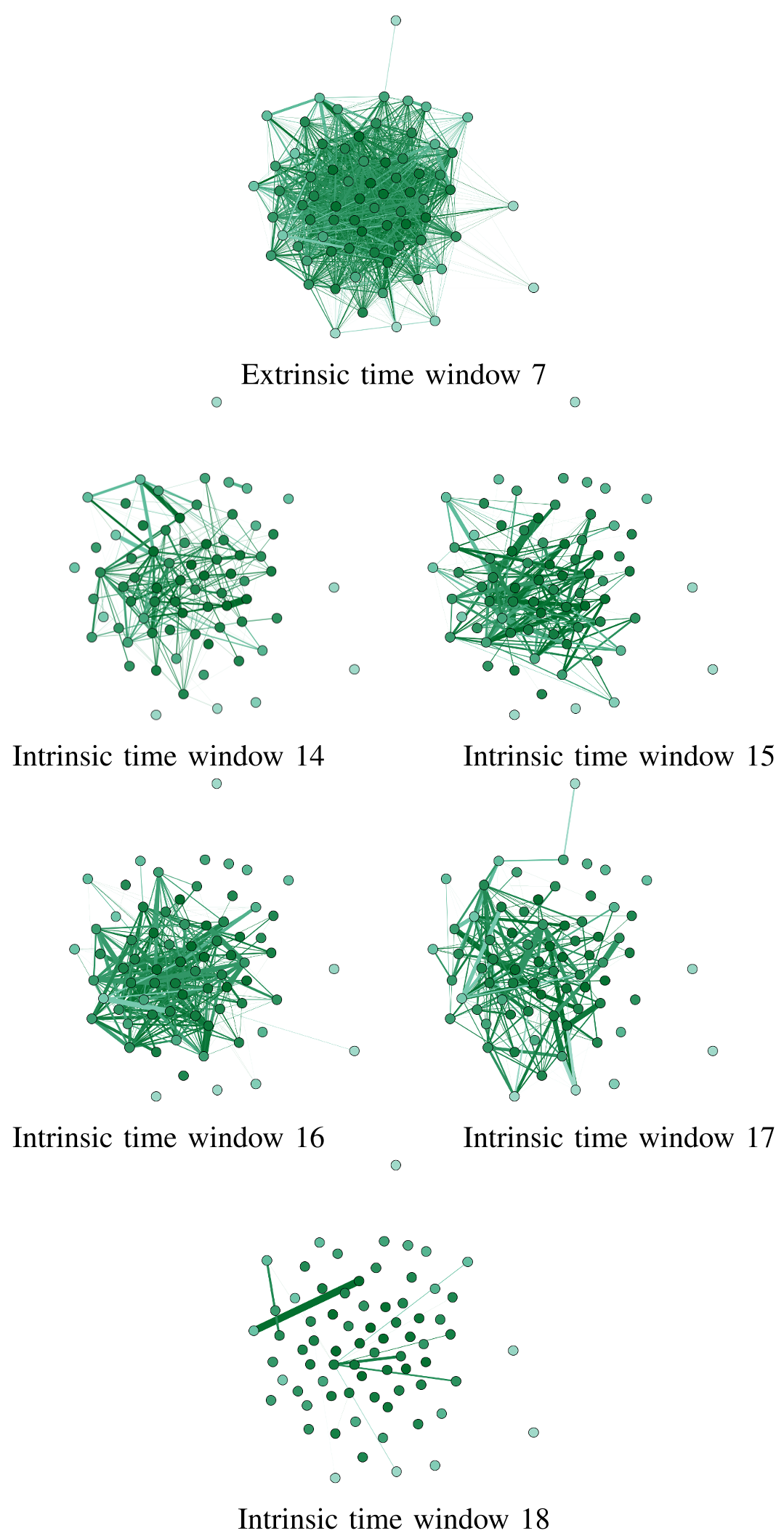 Fig 3: Splitting a single extrinsic "dense blob" into 5 distinct, readable intrinsic evolutionary states.
Critical Insight: Why This Matters
The fundamental value of this work lies in its Inductive Bias. By forcing the algorithm to look at the network's own pace, we remove the "external noise" of the 24-hour cycle.
Limitations:
- The definition of "Intrinsic Time" is currently tied to link changes. In denser networks (like those involving triangles or cliques), link-level changes might be too noisy.
- The Louvain method used is non-deterministic, though the authors mitigate this via consistency checks.
Conclusion
This paper effectively argues that to understand the evolution of a digital society, we must stop looking at our watches and start looking at the interactions. Intrinsic time is not just a preprocessing trick; it is a more philosophically sound way to treat temporal graph data.