
BELiMs: Harnessing the Logic of Fear for High-Performance Time Series Prediction
An introduction to brain emotional learning inspired models (BELiMs) with an example of BELiMs’ applications
This paper introduces Brain Emotional Learning-inspired Models (BELiMs), a novel Computational Intelligence (CI) paradigm mimicking the mammalian fear conditioning system. By integrating adaptive neuro-fuzzy networks into an amygdala-orbitofrontal architecture, BELiMs achieve superior performance in chaotic time series prediction with significantly lower computational complexity than traditional ANNs.
TL;DR
In the quest for efficient Computational Intelligence (CI), researchers are looking beyond human cognition toward the "faster" emotional systems of the brain. This paper introduces Brain Emotional Learning-inspired Models (BELiMs)—a category of models that mimic the neural structure of fear conditioning to solve complex time series problems with minimal computational overhead.
Academic Positioning: BELiMs represent a shift from purely cognitive Artificial Neural Networks (ANNs) to affective computing models. They sit at the intersection of Neuro-fuzzy systems and Bio-inspired Reinforcement Learning, focusing on low-latency, high-accuracy prediction.
Problem & Motivation: The Complexity Wall
Traditional ANNs are "cognitive-heavy." They require thousands of iterations to adjust parameters, leading to high time and model complexity. The author identifies a biological shortcut: the fear circuitry. In mammals, the amygdala processes fearful stimuli almost instantly, bypassing complex cortical thinking to provide life-saving reactions. The core insight is: Can we use this "quick and dirty" yet highly adaptive mechanism to predict chaotic data?
Methodology: The Anatomy of an Algorithm
The BELiM architecture is a functional blueprint of the brain's emotional system. It is divided into four primary components:
- Thalamus (TH): Acts as a signal router, providing initial "rough" data.
- Sensory Cortex (CX): Aggregates and refines stimuli.
- Amygdala (AMYG): The learning hub that makes associations between stimuli and "rewards" (errors).
- Orbitofrontal Cortex (ORBI): Modulates and inhibits responses when the "fear" (error) is no longer present.
Architectural Integrity
The power of BELiMs lies in the use of Adaptive Neuro-Fuzzy Inference Systems (ANFIS) within these modules. This allows the model to handle uncertainty via fuzzy logic while adapting through neural learning.
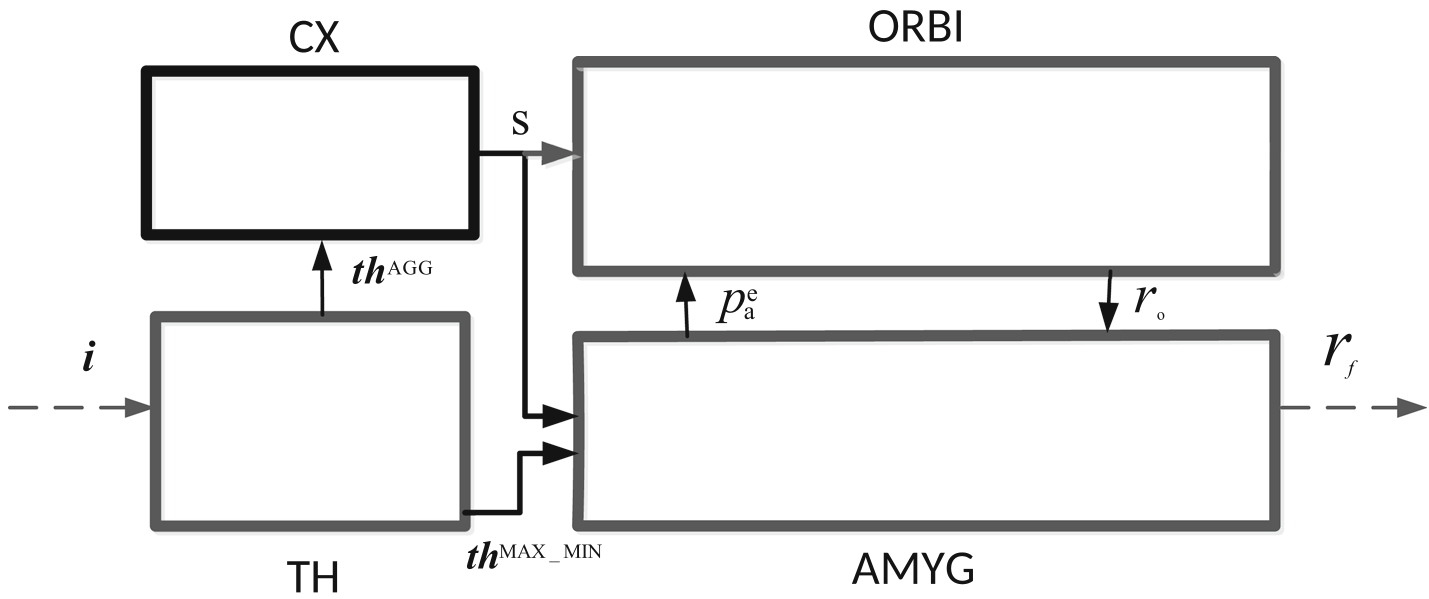 Fig 1: The internal sub-components of a BELiM, showing the interaction between the Amygdala and Orbitofrontal regions.
The model utilizes a "Reward" signal (REW) to adjust weights. Unlike standard backpropagation, this mimics reinforcement learning where the model seeks to minimize the "emotional" discrepancy between the predicted value and the actual target.
Experiments: Sunspots and Chaos
The author validated BELiMs against two rigorous benchmarks: the Lorenz chaotic system and Sunspot numbers.
1. Lorenz Time Series
Predicting chaotic systems is notoriously difficult due to sensitive dependence on initial conditions.
- BELFIS (Fuzzy variant): NMSE 4.4e-10.
- BELRFS (Recurrent variant): NMSE 5.11e-10. These results are significantly better than Evolving Recurrent Neural Networks (ERNN), proving that the emotional learning paradigm captures temporal dependencies with high precision.
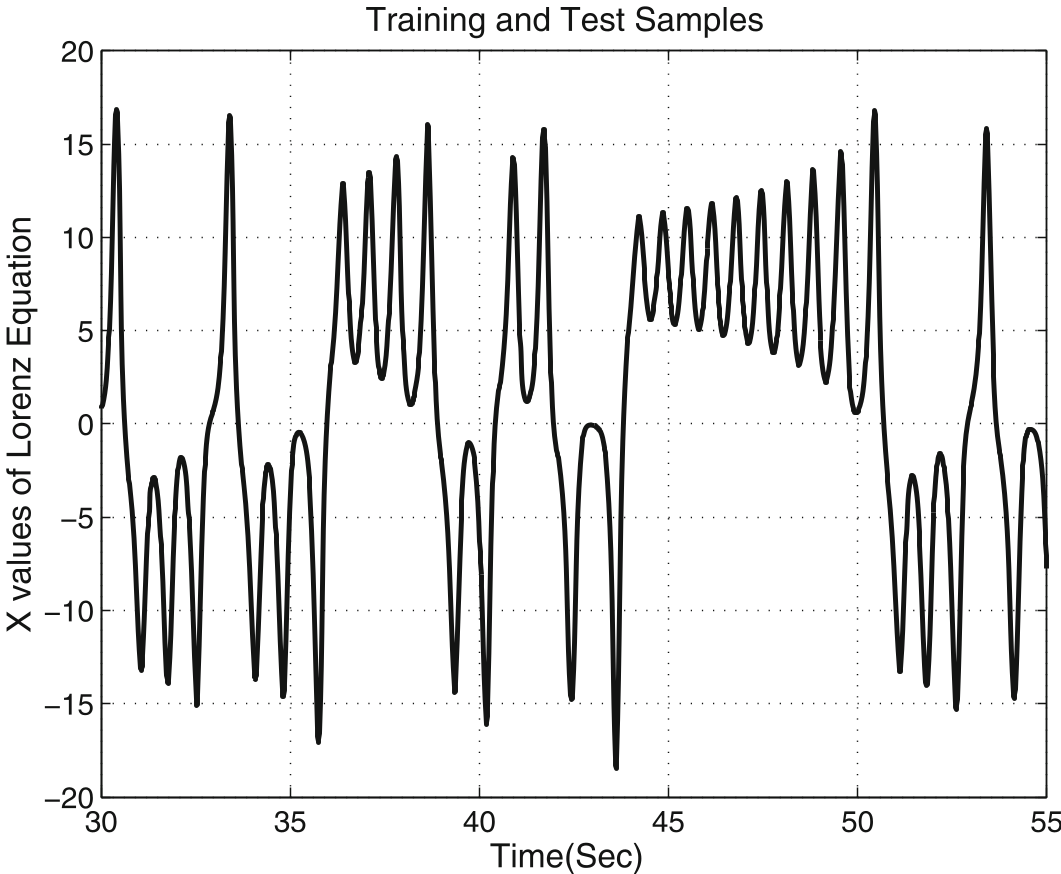 Fig 2: BELFIS accurately tracking the complex oscillations of the Lorenz attractor.
2. Sunspot Prediction
Solar activity forecasting is critical for satellite safety. In comparisons, BELiMs outperformed established models like MLP and RBF networks.
| Model | NMSE | Complexity |
|---|---|---|
| BELFIS | 0.098 | 16 Rules |
| ANFIS | 0.128 | 4 Rules |
| MLP | 0.140 | High |
Critical Insight & Conclusion
The success of BELiMs underscores a vital takeaway: Structural Inductive Bias matters. By constraining the machine learning model to a biologically plausible "emotional" architecture, the author achieved a level of generalized learning that "flat" neural networks struggle to reach without massive datasets and compute time.
Limitations: While powerful, BELiMs are sensitive to their reward (punishment) signal definition. Future iterations may benefit from automated hyperparameter optimization for their fuzzy membership functions.
Final Thought: BELiMs prove that for time-critical, non-linear forecasting, sometimes we don't need a bigger "brain"—we just need a more "emotional" one.