
RoBERTa vs. Satire: Unmasking Parody Accounts in the Pakistani Social Media Landscape
Investigating Parody from Social Media Accounts
This paper introduces a supervised learning framework to detect parody social media accounts, specifically targeting Pakistani political and corporate entities. By curating a novel dataset of 15,435 tweets, the authors evaluate several models, identifying RoBERTa as the SOTA performer for this task.
TL;DR
Social media parody is no longer just about humor; it’s a tool for disinformation. This study tackles the challenge of identifying fake Pakistani political and corporate accounts by building a custom dataset of ~15k tweets and benchmarking high-end NLP models. The verdict? RoBERTa reigns supreme with 92% accuracy, proving that deep semantic understanding is the key to spotting sophisticated digital mimicry.
Background & Motivation: The "Copycat" Crisis
In the hyper-polarized world of Pakistani politics, Twitter serves as a primary battlefield for narratives. Parody accounts—which often mirror official handles with subtle character swaps (e.g., replacing an "I" with an "l")—exploit the platform's speed to inject fake news into the public consciousness.
The authors observed that while Twitter mandates "parody" labels in bios, many users ignore these or use the accounts maliciously. The core research question was: Can machine learning distinguish between a real policy announcement and a satirically crafted fake that mimics the official's voice?
Methodology: From Baselines to Transformers
The research followed a rigorous pipeline of data acquisition, cleaning, and multi-model evaluation.
1. The Dataset Challenge
Because no public dataset existed for this specific niche, the authors curated a balanced corpus:
- Real Tweets: From verified politicians and media houses (e.g., ARY News).
- Parody Tweets: Sourced via keyword filters like
fake,non-official, andleaks. - Data Cleaning: Lowercasing, stopword removal, and URL stripping, notably retaining emojis and punctuation which are often stylistic "tells" in parody.
2. Experimental Architecture
The study compared three tiers of complexity:
- Traditional ML: Linear Regression with Bag-of-Words (BoW) and Part-of-Speech (POS) tagging.
- Deep Learning: Bidirectional LSTMs utilizing 200d GloVe embeddings.
- State-of-the-Art: Pre-trained Transformers (BERT, RoBERTa, and XLNet).
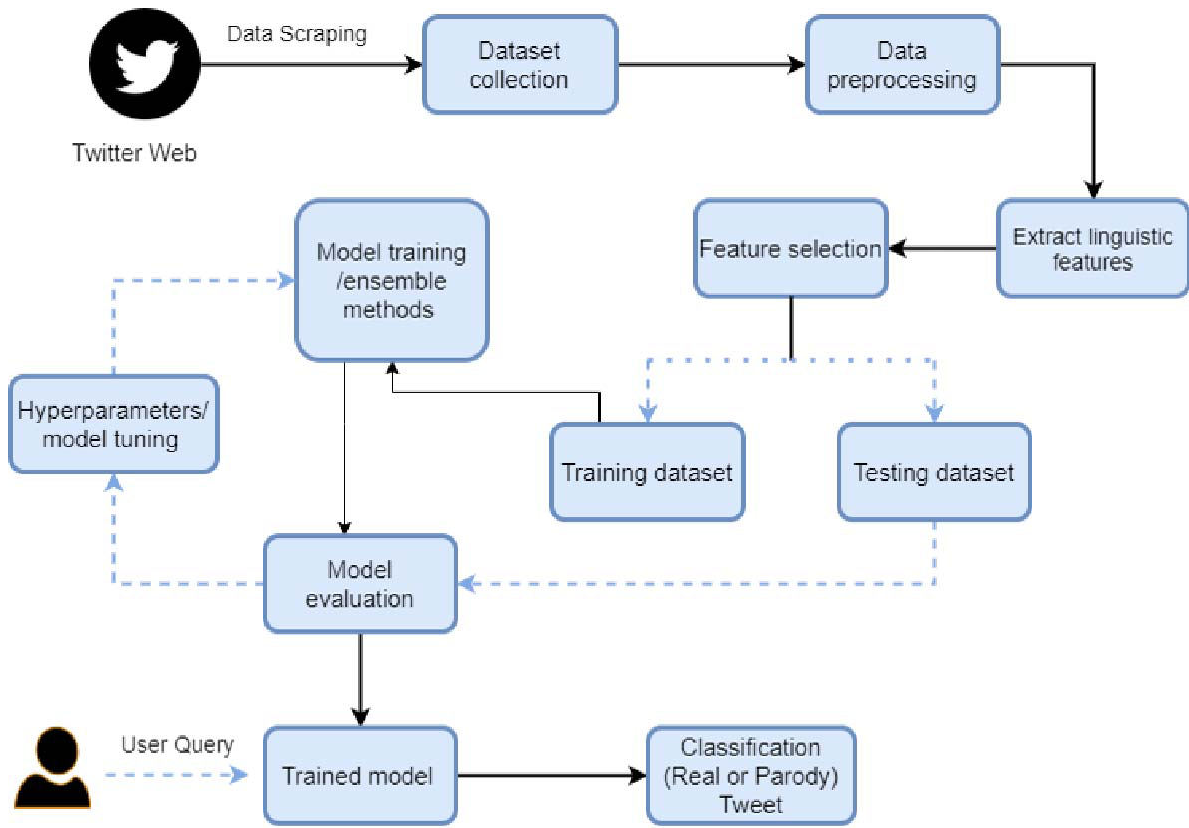 Fig 1: The systemic flow from data gathering to final classification.
Experiments and Results
The results confirm the trend in modern NLP: Contextual embeddings are far superior to static ones.
| Model | Accuracy | F1-Score |
|---|---|---|
| RoBERTa | 92.00% | 92.00% |
| BERT | 91.50% | 91.65% |
| XLNet | 90.30% | 91.00% |
| BiLSTM | 86.50% | 86.00% |
| LR-BoW | 90.00% | 90.00% |
Why did RoBERTa win?
While the BiLSTM struggled (86.5%), likely due to the limited size of the training set relative to the complexity of satire, RoBERTa benefited from its robust pre-training on massive corpora. Its ability to detect subtle shifts in sentiment and tone—crucial for parody—allowed it to outperform even the standard BERT model.
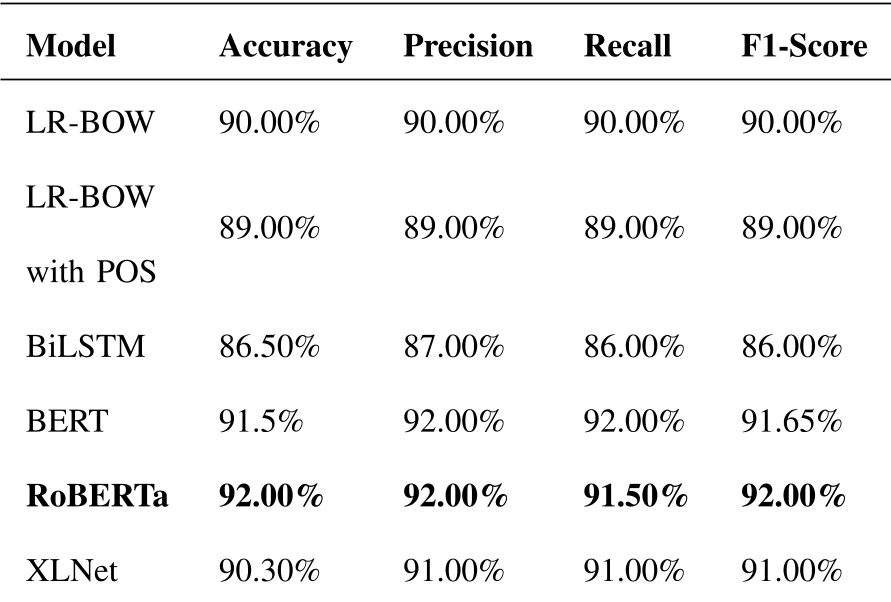 Fig 2: Comparative performance across all tested architectures.
Critical Insight & Future Directions
The study’s success with 92% accuracy highlights that parody detection is largely a semantic task. However, the reliance on English tweets is a notable limitation in the South Asian context, where Roman Urdu and code-switching are prevalent.
Key Takeaways:
- Feature Importance: Emojis and punctuation (retained during cleaning) are vital stylistic markers for parody.
- Model Selection: For small, specialized datasets, fine-tuning pre-trained transformers via wrappers like
Simple Transformersprovides the best ROI on computation and accuracy. - Next Steps: Expansion into regional languages and multi-modal analysis (profile pics + tweet history) will be the next frontier in securing social platforms.
Conclusion
This work provides a foundational tool for digital forensics in Pakistan's social media ecosystem. By leveraging the power of RoBERTa, the authors have demonstrated that even the most clever parodies leave a linguistic footprint that AI can track and identify.