
"Killing Time" vs. "At Rest": Why Activity Transitions are the Sweet Spot for Mobile Crowdsourcing
"I Got Some Free Time": Investigating Task-execution and Task-efort Metrics in Mobile Crowdsourcing Tasks
This paper investigates the opportune moments for mobile crowdsourcing tasks through a six-week mixed-methods study of 30 users. It identifies that users are most receptive to performing tasks during "transitions" between activities rather than during long idle breaks, utilizing platforms like Google Crowdsource and Local Guides.
TL;DR
Most mobile crowdsourcing platforms struggle with low engagement because they don't know when to ask. This CHI '21 study reveals a counter-intuitive truth: people don't want to do crowdsourcing tasks when they are "free" and resting. Instead, they proactively seek these tasks during transitions between activities (e.g., waiting for a bus or between meetings) to "kill time." By tracking 30 users over six weeks, the researchers developed a framework for understanding how stress, energy, and activity context dictate our willingness to contribute.
The Motivation: The "Receptivity" Gap
Why do we ignore some notifications but engage with others? While previous research has looked at messages and news, mobile crowdsourcing (like tagging images for AI or reviewing local shops) is different—it's less personal and lower priority. The authors noticed that existing "opportune moment" models often categorize all "non-working" time as "idle time," but as humans, we treat a 5-minute transition very differently from a 2-hour rest.
Methodology: Tracking the "In the Wild" Experience
The researchers deployed a custom Android app that utilized the Accessibility Service and Screen Recording to capture real-world behavior on Google Crowdsource and Local Guides.
They categorized the "Context" into five types of Breakpoint Situations:
- WITHIN: Middle of an activity.
- BETWEEN: Between two distinct activities.
- PRECEDED: After an activity, but nothing planned next.
- SUCCEEDED: Before an activity, but nothing happened recently.
- NONE: Long period of idleness.
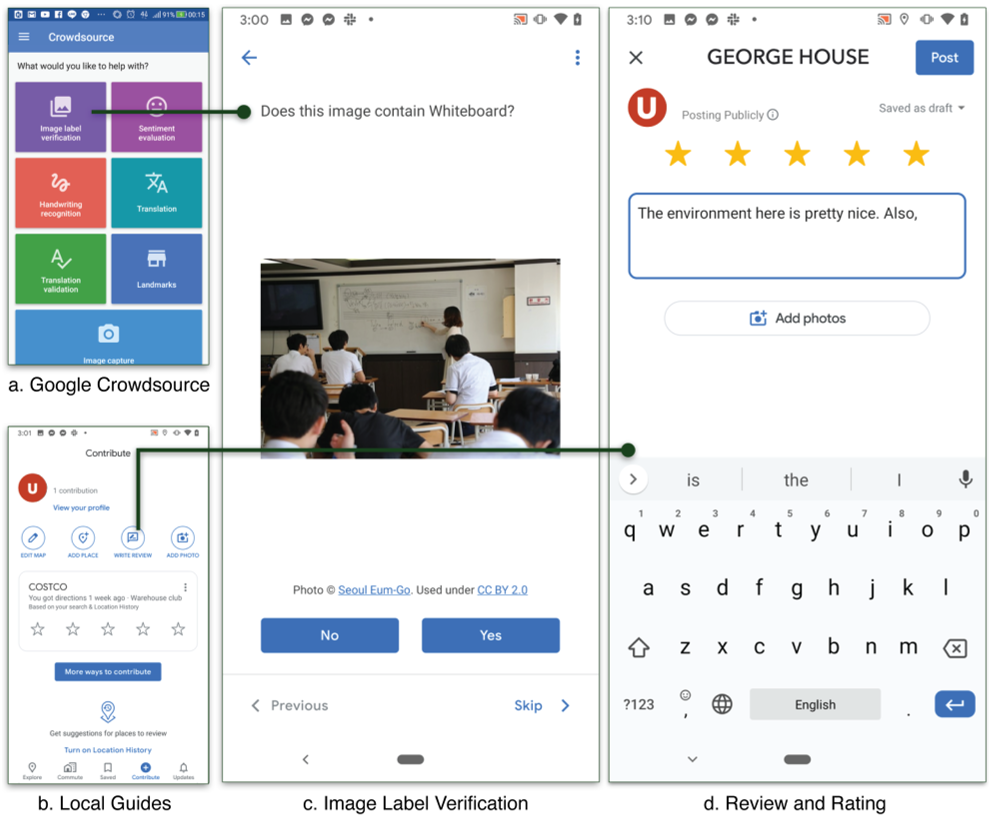 Figure 1: The research app interface used for Experience Sampling (ESM) and data submission.
Key Insights: Why We "Kill Time"
The study produced several "Aha!" moments that challenge typical design assumptions:
1. Transitions > Long Breaks
Quantitatively, the BETWEEN situation saw the highest proactive task initiation (55.8%). Qualitatively, users explained that during long breaks, they want to "veg out" or sleep. It is the short, awkward gaps where they can't start a major activity that drive them to open crowdsourcing apps.
2. Stress vs. Energy
- Stress is a gatekeeper. High stress leads to lower likelihood of starting a task. However, if a user does start a task while stressed, they often choose "brain-draining" tasks to "shift gears" and refresh themselves.
- Energy is an engine. It doesn't affect whether you start, but it determines how much effort (number of labels, photos, etc.) you put in once you've begun.
3. Task Similarity ("Context Congruency")
Surprisingly, people tend to choose tasks that match their current state. If they were just doing a physically demanding activity, they were more likely to pick crowdsourcing tasks requiring more physical effort (like taking photos).
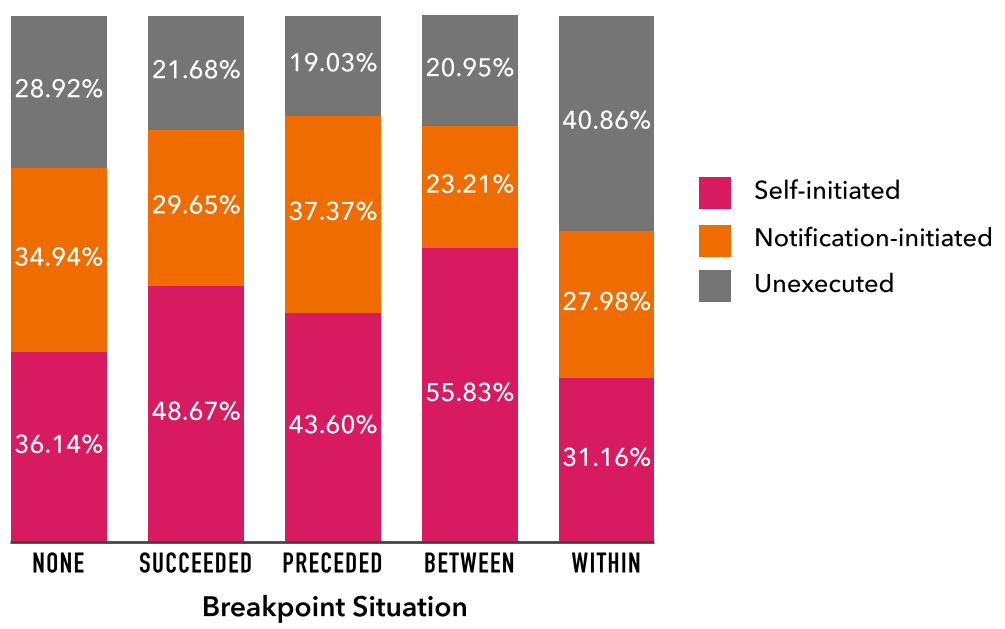 Figure 2: Task execution outcomes across different breakpoint situations, showing the peak of proactiveness in transitional moments.
Design Implications: Toward "Silent Portals"
Based on these findings, the authors suggest a pivot in how we design mobile task prompts:
- Schedule by Calendar, not Clock: Prompts should target the start of a transition period inferred from calendar or mobility data.
- The "Silent Portal" Concept: Since proactive use leads to higher effort, reminders should be subtle "portals" (silent notifications) rather than intrusive alerts that interrupt the state of rest or focus.
- Boredom Detection: Instead of random intervals, use phone usage intensity as a proxy for "microwaiting" or boredom within a dull activity.
Conclusion and Future Work
This research highlights that mobile crowdsourcing isn't just about finding "empty" time; it's about finding "transitional" time. The study's primary limitation is the potential bias of monetary incentives (though small), which might differ from purely voluntary platforms.
Future research could explore content-aware task delivery—matching the complexity of the task (e.g., Sentiment Evaluation vs. simple Handwriting Recognition) to the user's current stress and energy levels in real-time.
Takeaway: If you want a user's attention, don't ask for it when they finally have time to relax—ask for it when they are waiting for the world to catch up to them.