
IoCMiner: Mining the Twitter Haystack for Real-Time Cyber Threat Intelligence
IoCMiner: Automatic Extraction of Indicators of Compromise from Twitter
IoCMiner is a scalable framework designed to automatically extract Indicators of Compromise (IoCs) from Twitter by integrating graph theory, machine learning, and text mining. It successfully identified over 1,200 IoCs in four weeks, achieving high accuracy in detecting fresh malicious artifacts before they appear in traditional blacklists.
TL;DR
Cybersecurity is often a race against time. While attackers reuse infrastructure, defenders struggle with the delay of official threat reports. IoCMiner is an automated framework that solves this by treating Twitter as a real-time sensor. By focusing on who provides the information rather than just what is said, it identifies malicious URLs and IPs up to a week before they hit mainstream blacklists like Google Safe Browsing.
Problem & Motivation: The Signal-to-Noise Nightmare
The core challenge in Cyber Threat Intelligence (CTI) isn't a lack of data—it's the overwhelming volume of it. Twitter users post over 500 million tweets daily. For a security professional, finding an Indicator of Compromise (IoC) in this stream is nearly impossible because:
- Extreme Imbalance: Non-security tweets outweigh security tweets by several orders of magnitude.
- Low Precision: Standard keyword searches for "malware" or "attack" return massive amounts of news, opinions, and noise, leading to "alert fatigue."
- Ephemeral Value: Modern IoCs (like C2 server IPs) have a very short shelf life. If the intelligence isn't captured in near real-time, it becomes useless.
Methodology: The "Expert-First" Filter
IoCMiner flips the traditional search paradigm. Instead of analyzing every tweet, it builds a reputation model to find CTI Experts.
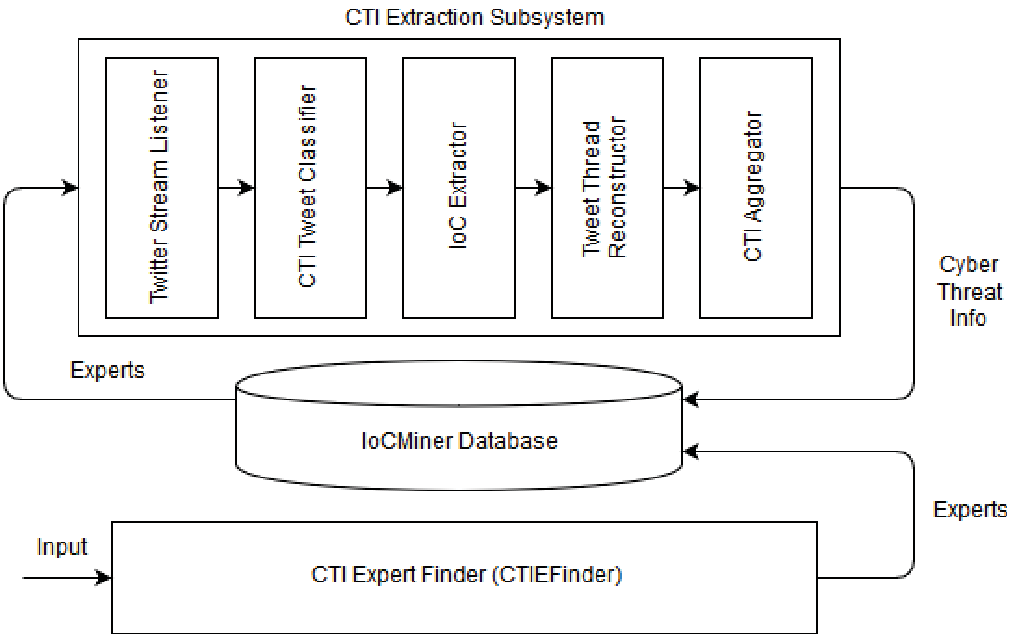
1. CTIEFinder (The Reputation Engine)
The system uses a bipartite graph to model the relationship between Twitter users and "Twitter Lists." The researchers realized that security professionals curate lists of peers. By analyzing these lists using a multi-factor scoring system, they identify credible sources.
- Relevancy Score: Uses specific keywords (e.g., threat hunt, phishing, ransomware) and generic keywords (cybersec, infosec) to weight list descriptions.
- Graph Weighting: Credibility is passed through the network—credible users follow other credible users.
2. CTI Extraction & Classification
Once the "Experts" are identified, their live stream is fed into:
- Random Forest Classifier: Distinguishes between an expert's professional posts and their personal "non-CTI" tweets.
- IoC Extractor: Uses advanced Regex to find "defanged" indicators (e.g.,
hxxp://or[.]com) specifically designed to bypass automatic clicking but remain readable to humans.
Experiments: Beating the Blacklists
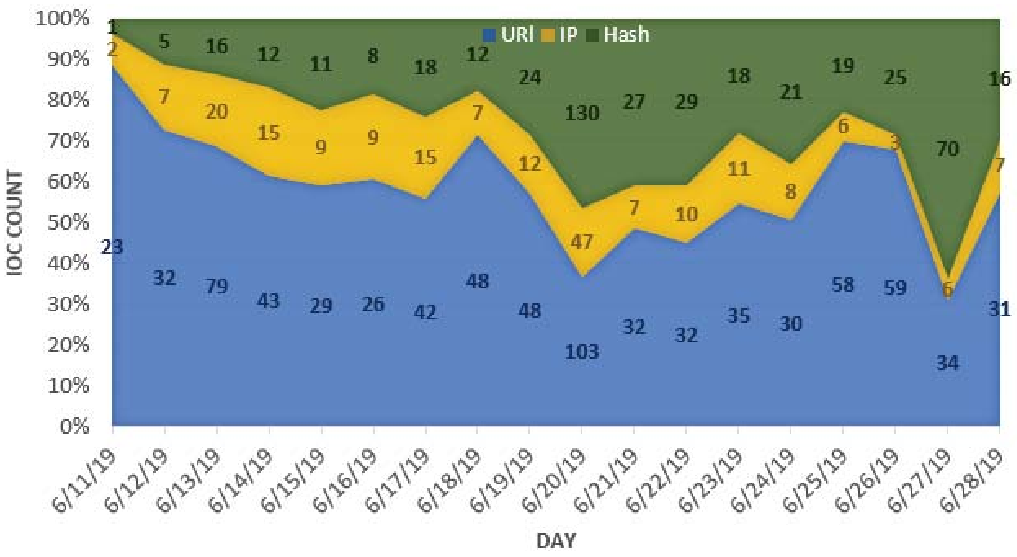
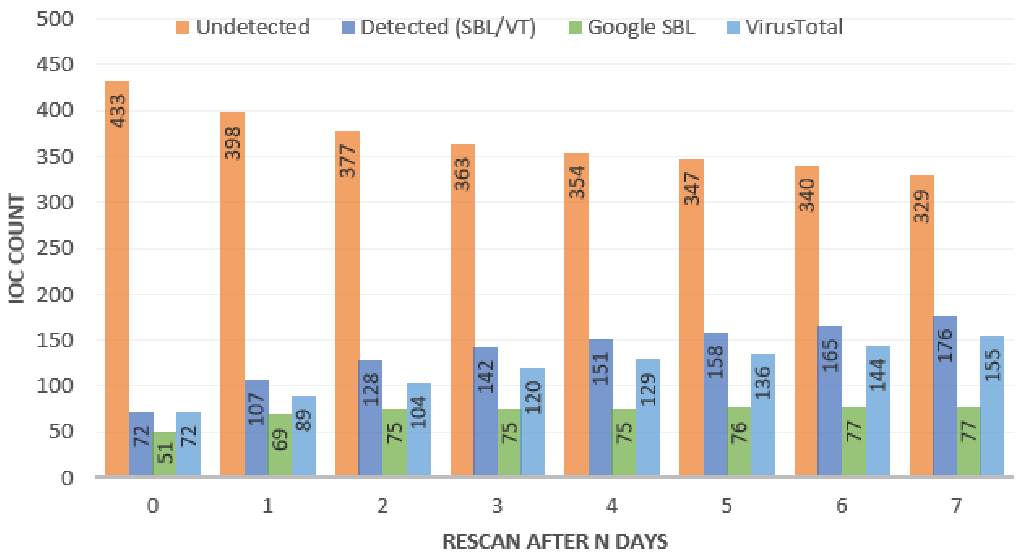
The most striking evidence of IoCMiner's value is its freshness. In a trial period, the system harvested over 1,200 malicious URLs.
The Lead Time Advantage: At the moment of extraction, 90% of the URLs were unknown to Google Safe Browsing or VirusTotal. It took a full week for the coverage of these platforms to catch up to what IoCMiner had found on Twitter in minutes. This verifies that Twitter is a "zero-day" source for threat artifacts.
Critical Insight & Conclusion
Takeaway
IoCMiner proves that human-centric curation (Twitter Lists) is a powerful feature for noise reduction in machine learning. By leveraging the collective intelligence of the security community's social structures, the framework achieves an accuracy of 97.2%.
Limitations & Future Work
- Platform Dependence: While the logic is sound, the reliance on Twitter's API (and its evolving access policies) remains a bottleneck.
- Evasion: As automated miners become more common, attackers might intentionally "poison" the stream with fake IoCs to mislead these systems.
- Contextual Intelligence: Currently, IoCMiner focuses on atomic IoCs. Future versions could aim for behavioral IoCs—linking hashes to specific TTPs (Tactics, Techniques, and Procedures).
In summary, IoCMiner demonstrates that by narrowing the observation window to a high-reputation "expert pool," we can transform chaotic social media streams into actionable, high-fidelity threat intelligence.