
IoT-EDF: Redefining E-Marketing Competitiveness through Intelligent Distribution
Internet of Things-assisted E-marketing and distribution framework
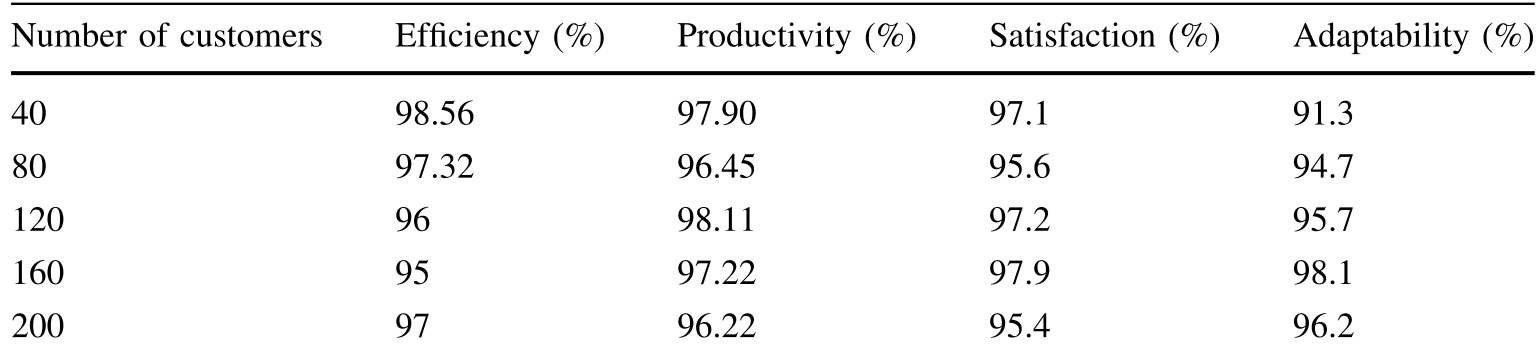
This paper introduces the Internet of Things-assisted E-marketing and Distribution Framework (IoT-EDF), a system designed to optimize digital marketing strategies through real-time data collection. By integrating IoT sensors, cloud computing, and soft computing, it achieves an efficiency rate of 98.56% and a customer satisfaction rate of 97.9%.
TL;DR
The paper proposes the Internet of Things-assisted E-marketing and Distribution Framework (IoT-EDF), a robust architecture designed to integrate real-time sensor data with soft computing to enhance digital marketing phases. By addressing the "double marginalization" in pricing and utilizing a Network Interaction (NI) model, the system achieves a remarkable 98.56% efficiency and 97.9% customer satisfaction, outperforming traditional communication management tools.
Background & Motivation: Moving Beyond Static E-Marketing
In the modern digital landscape, e-marketing is no longer just about online presence; it’s about the seamless integration of procurement, pricing, and distribution. Traditional methods often suffer from:
- Inflexible Distribution: Inability to react to real-time consumer shifts.
- Information Asymmetry: Heavy reliance on static questionnaires rather than live behavioral data.
- Strategic Inefficiency: The classic "double marginalization" problem, where manufacturers and retailers fail to synchronize pricing, leading to lost revenue.
The author’s insight is that the Internet of Things (IoT) provides an "unparalleled way to collect data via client support," turning every device into a touchpoint for gathering information on consumer requirements and desires.
Methodology: The IoT-EDF Architecture
The core of the IoT-EDF is its ability to model the relationship between manufacturers and dealers while simultaneously tracking individual consumer "knowledge flows."
1. Model Architecture
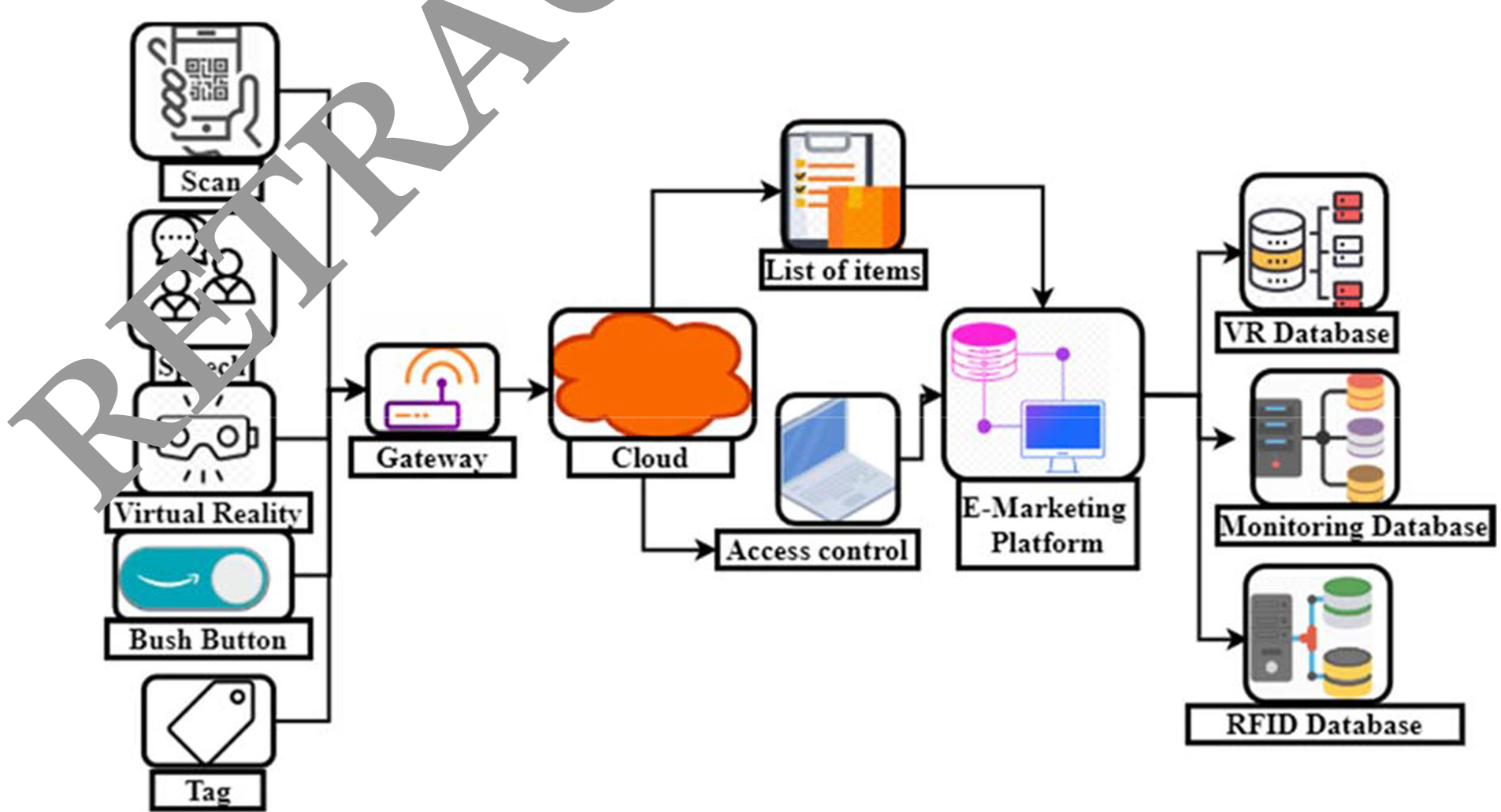
The framework stands on a tripod of IoT sensors, Cloud computing, and Soft Computing applications. This enables high-tech interactions such as:
- Voice & RFID Integration: Allowing disabled customers or mobile users to create shopping lists via voice recognition or RFID tags.
- Immersive VR: Using Virtual Reality to simulate a 3D product interface, fostering "brand actions" before a purchase is made.
2. Solving the Pricing Dilemma
Mathematically, the paper addresses the manufacturer-retailer relationship. By calculating a "cannibalistic threshold" (), the model determines the optimal wholesale price () and direct market price () to prevent retail demand from collapsing while maximizing total channel profit.
Experimental Insights & Results
The IoT-EDF was evaluated across several metrics, including productivity, satisfaction, and computational cost.
- Efficiency & Productivity: The framework reached an efficiency of 98.56% (at customers) and maintained high adaptability (98.1%) as the customer base grew.
- Performance Comparison: Compared to existing tools like ECM (Electronic Communication Management) and SLE (Sale in Local E-market), IoT-EDF showed an 86.13% improvement in distribution rates and a 23.67% reduction in computational overhead.
Critical Analysis & Conclusion
Takeaway
The IoT-EDF demonstrates that data-driven customer retention is the most potent information source for modern businesses. By leveraging IoT to bridge the physical-digital divide, companies can anticipate commodity demand more accurately.
Limitations
While the results are impressive, the framework's reliance on high-tech adoption (VR, PrimeSense 3D sensors) may present a barrier for Small-to-Medium Enterprises (SMEs) in developing regions. Additionally, the "retracted" status of the article (as indicated in the metadata) suggests that the underlying data or peer-review process may have faced challenges that readers should investigate.
Future Prospect
Future research should focus on the ethics of "low-stress VR scenarios" and ensuring that the real-time collection of consumer data respects privacy while maintaining the high satisfaction rates reported here.