
Synergizing IoT and Crowdsourcing: A Multi-Layered Blueprint for Emergency Management
On combining the Internet of Things with crowdsourcing in managing emergency situations
This paper proposes a three-layer architectural framework that integrates the Internet of Things (IoT) with Crowdsourcing to optimize emergency management. By fusing objective sensor data with human-provided contextual information, the system aims to enhance incident detection accuracy and reduce response times for emergency services.
TL;DR
In the high-stakes environment of emergency response, every second counts. This paper explores the convergence of Internet of Things (IoT) sensors and Crowdsourcing via mobile apps. It proposes a transition from siloed reporting to an integrated three-layer architecture (Collection, Management, Dissemination) that uses automated sensor reliability to ground the rich, qualitative context provided by citizens.
Background Positioning: This work bridges the gap between infrastructure-heavy sensor networks and user-centric social sensing, positioning itself as a framework for the next generation of "Smart City" public safety systems.
Problem & Motivation: The Context vs. Accuracy Dilemma
Emergency services have historically struggled with two main issues:
- The Location Gap: Mobile callers (specifically tourists or those in shock) often cannot describe their location. Traditional carrier-based location identification is often inaccurate (67% of calls fall within a 100m radius, which is too wide for dense urban settings).
- The Information Silo: IoT devices (like car crash sensors) give raw "What" and "Where" but lack the "How" (e.g., Is there a fire? Are victims trapped?). Humans provide the "How" via crowdsourcing but are susceptible to errors and malicious "prank" reports.
The author's insight is that neither system is sufficient alone. IoT acts as a "source of truth" to verify human claims, while humans act as "context providers" to interpret raw sensor data.
Methodology: The Three-Layer Architecture
The proposed system breaks down the emergency workflow into three logical stages:
1. Data Collection Layer
This layer clusters inputs from three distinct sources:
- Citizens (Crowdsourcing): Using smartphones to send rich media (GPS, photos, video).
- Emergency Services: Verified data from first responders already on-site.
- IoT Infrastructure: Automated triggers from vehicle black boxes, forest fire sensors, and urban acoustic sensors.
2. Information Management (The Brain)
This is the core "Data Fusion" stage. It processes raw data to determine the type, severity, and geographical boundaries of an incident.
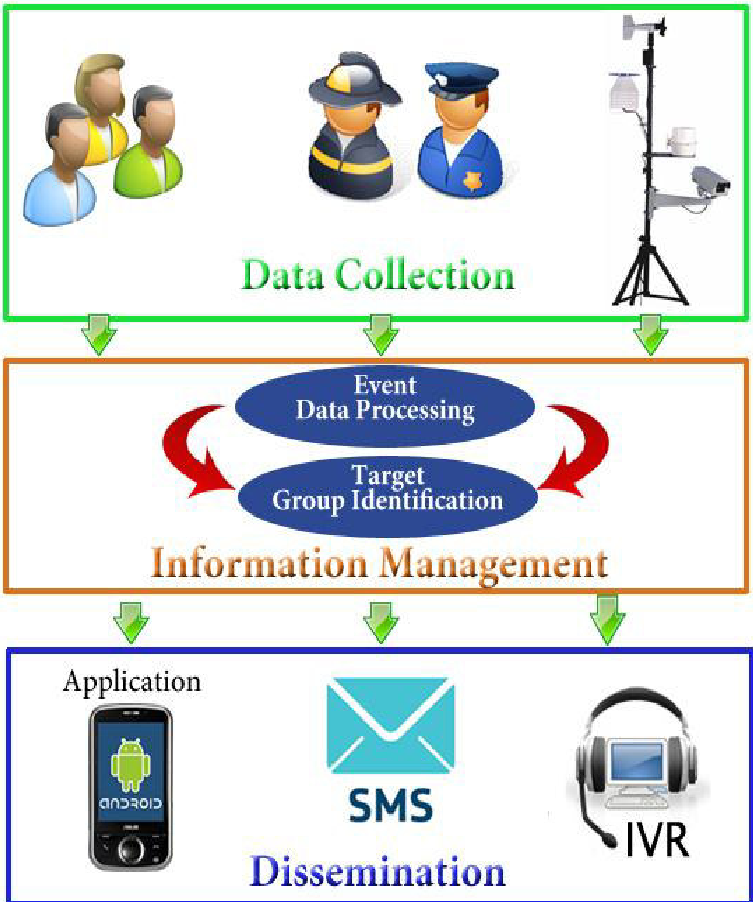 Fig 1: The High-Level Architecture showing the flow from raw data to intelligent dissemination.
3. Dissemination Layer
Unlike traditional sirens or mass broadcasts, this layer focuses on Targeted Notification. Using a map-based mobile interface, the system informs only those in the "affected area," reducing mass panic and optimizing traffic flow around incident sites.
Challenges & Solutions: The Trust Factor
A major contribution of this paper is the analysis of Crowdsourcing challenges:
- The Incentive Problem: How do we get people to report? The author suggests a "Social Reputation" ranking system rather than monetary rewards.
- The Verification Problem: The paper suggests a "Weighting" mechanism. A report from a user with a high reputation or a report confirmed by a nearby IoT sensor is given more "Weight" in the system, moving it from "Unverified" to "Actionable."
Critical Analysis & Conclusion
Takeaway
The paper effectively argues that the future of emergency management isn't just about faster sensors, but about better integration. By fusing the "hard" data of IoT with the "soft" intelligence of the crowd, we create a more resilient urban safety net.
Limitations
- Privacy vs. Registration: The author admits that requiring identity verification to stop "prank" reports might deter users concerned about privacy.
- Network Congestion: During major disasters, mobile networks often fail, which could render a centralized architecture unusable unless edge-computing or ad-hoc networking is considered.
Future Outlook
This framework sets the stage for utilizing Context-Aware Location-Based Services. As smartphones become even more sensor-rich (LiDAR, health monitoring), the "Crowd" will essentially become a mobile, intelligent sensor network that can automatically feed into this proposed architecture.