
IoT Forensics: Accelerating Criminal Investigations with Lambda Architecture and AI
Using Traces from IoT Devices to Solve Criminal Cases
This paper presents a robust Big Data platform leveraging a Lambda architecture to automate the forensic analysis of data traces from IoT devices (smartwatches, drones, smart TVs, etc.). By integrating Hadoop, Kafka, Spark, and YOLO-based object detection, the system accelerates criminal investigations by identifying illicit objects and geolocation patterns in massive evidence datasets.
TL;DR
Law enforcement is drowning in data from smart devices. This paper introduces a specialized Big Data platform designed for the State Attorney Office of Rio Grande do Norte (Brazil) that uses a Lambda Architecture (Hadoop, Kafka, Spark) and YOLO object detection to automate the triage of criminal evidence. It transforms weeks of manual image browsing into hours of automated, high-priority discovery.
Problem & Motivation: The "Digital Tsunami" in Forensics
In modern criminal investigations, the first 48 hours are decicive. However, a single suspect might carry multiple IoT devices—smartwatches, drones, and AI speakers—each generating gigabytes of traces.
The Pain Points:
- Inertia: Manual analysis of thousands of images is slow and psychologically taxing for investigators.
- Volume: Traditional forensic tools struggle with the high velocity and variety of IoT data.
- Time Constraints: Prosecutors must file legal complaints quickly, often while suspects are in temporary custody.
The authors' insight is that forensics must shift from "device-centric" manual inspection to "data-centric" automated pipelines where AI handles the heavy lifting of classification.
Methodology: The Architecture of Evidence
The core of the solution is a Lambda Architecture, designed to handle both massive "at rest" data and high-speed "in motion" data.
1. The Multi-Layer Pipeline
The system is divided into four functional stages:
- Importation Layer: Extracts raw data and XML metadata from forensic images.
- Batch Layer (HDFS): Stores immutable raw evidence for long-term legal preservation.
- Speed Layer (Spark & Kafka): The "engine room" where real-time analysis occurs. It uses Kafka to stream images to specialized AI containers.
- Serving Layer: A web-based dashboard for prosecutors, featuring heat maps of geographical traces and galleries of AI-flagged illicit objects.
2. AI Support for Solving Cases
Instead of browsing every folder, investigators receive alerts from a YOLO (You Only Look Once) object detector. If the system detects a firearm, a drug-related item, or a document, it flags the file for immediate human review.
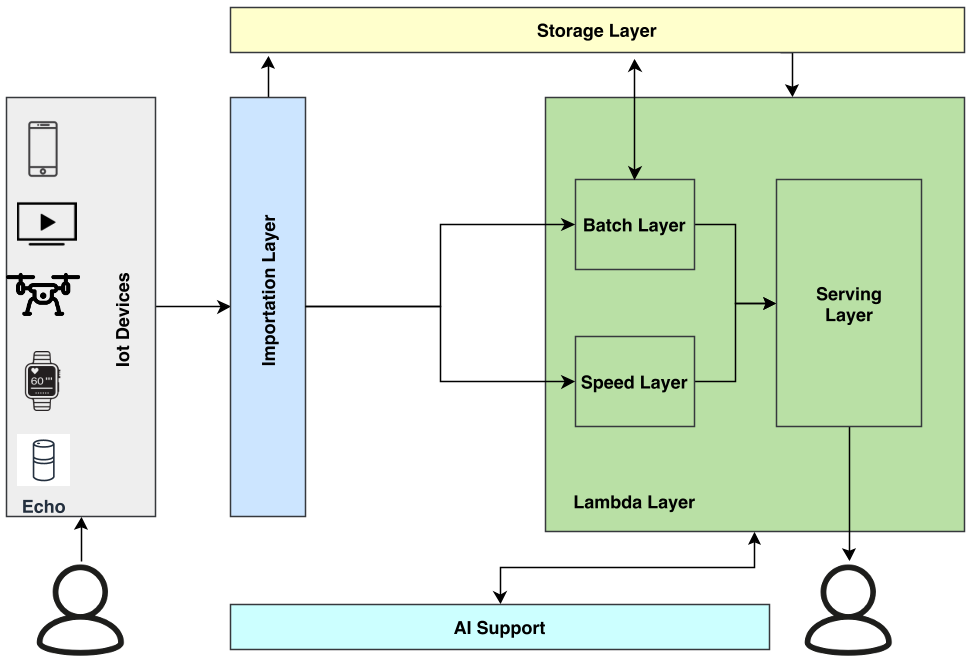 Fig 1. The proposed platform architecture, illustrating the flow from IoT devices to the Serving Layer.
Experiments & Results
The platform was tested against evidence provided by the Brazilian State Attorney Office.
Key Findings:
- Acceleration: Processing 5,000 images using the Spark-based pipeline showed a massive speedup in the preprocessing stage (Base64 conversion).
- Effectiveness: The YOLO classifier successfully identified illicit items (e.g., firearms), allowing analysts to bypass thousands of irrelevant "noise" images.
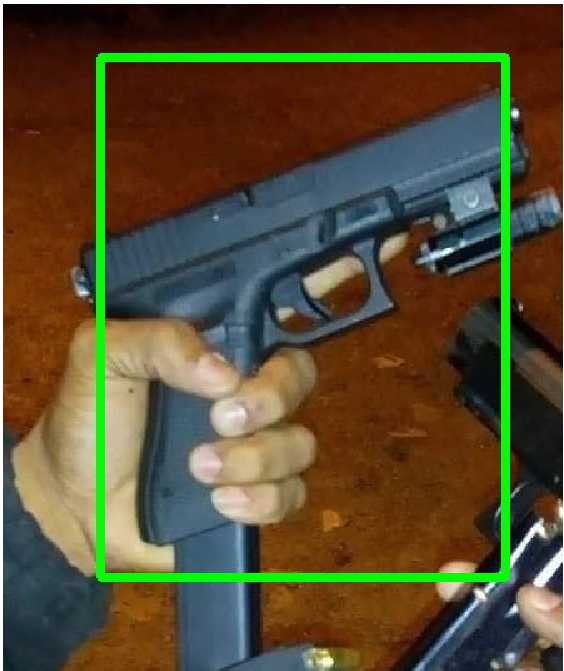 Fig 2. Example of the AI module correctly identifying a firearm within the evidence stream.
| Process Step | Serial Mean (s) | Spark Mean (s) |
|---|---|---|
| Base64 Conversion | 0.5328 | 0.0055 |
| Classification | 0.9669 | 1.0403 |
Note: While classification speed was similar due to standalone Spark limitations with Python, the data ingestion throughput was significantly enhanced by the distributed architecture.
Critical Analysis & Conclusion
Limitations
While the system provides a massive leap in speed, the authors noted that Python-based Spark classification in standalone mode didn't parallelize as expected. Future iterations will require more robust resource managers like YARN or Mesos to truly scale the Deep Learning inference across a cluster.
Final Takeaway
This work marks a shift toward Digital Forensics as a Service (DFaaS). By combining the reliability of Hadoop with the real-time capabilities of Spark and YOLO, the researchers have created a scalable blueprint for modern policing. In an era where "every object is a witness," such platforms are no longer optional—they are an investigative necessity.
Visual Insight: Geographic Proximity
The system doesn't just look at what happened, but where. By extracting GPS traces from IoT devices, it generates heat maps that can place a suspect at a crime scene with high temporal precision.
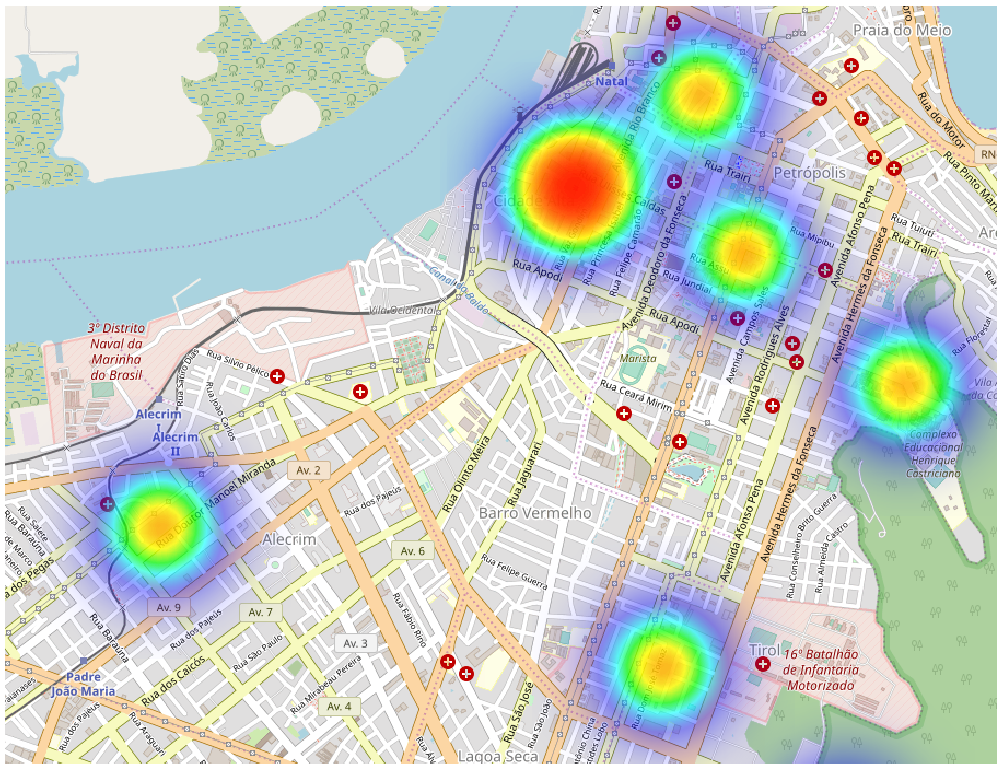 Fig 3. Geographic heat map showing the density of location traces extracted from suspect devices.