
When IoT Gets a Soul: Tackling the Social Relationship Explosion with Artificial Social Intelligence
IoT-Enabled Social Relationships Meet Artificial Social Intelligence
This paper introduces the integration of Artificial Social Intelligence (ASI) with the Social Internet of Things (SIoT) to address the "social relationships explosion." It proposes a framework where ASI-augmented IoT entities leverage social features, trust models, and context-awareness to optimize services in smart cities, healthcare, and transportation.
TL;DR
The Internet of Things (IoT) is no longer just about connecting "things"; it is evolving into a complex web of social interactions. This paper argues that the next bottleneck isn't just big data—it's the social relationship explosion. To survive this, the authors propose a paradigm shift from conventional AI to Artificial Social Intelligence (ASI), enabling devices to understand context, trust, and human personality.
The Problem: The "Social Relationship Explosion"
In the previous decade, we worried about the "Data Explosion" and the "Connection Explosion." Today, a new challenger has emerged. As devices become integrated into our social dimension (User-Device, Device-Device), the sheer volume and heterogeneity of these social links create a management nightmare.
Current systems treat a smart sensor as a cold calculator. However, in a truly social IoT (SIoT) environment, a device needs to know if it can trust another device, or if a specific service recommendation aligns with a user's current emotional state or social context. Conventional AI is "socially blind," leading to inefficient resource allocation and generic, unhelpful user experiences.
Methodology: From Smart Objects to Social Objects
The core insight of this work is the Cyber-Physical-Social System (CPSS). The authors argue that intelligence must be split into two branches:
- Thinking Intelligence: Traditional AI for logic and reasoning.
- Social Intelligence (ASI): The ability to socialize, understand context, and maintain relationships.
The Social Footprint Flow
The authors define a processing flow where raw IoT data is transformed into social features. This involves:
- Affective Computing: Detecting human emotions from voice or facial expressions.
- Personality Computing: Integrating Big-Five personality traits into recommendation engines.
- Trust Computing: Evaluating the reliability of nodes based on past interactions.
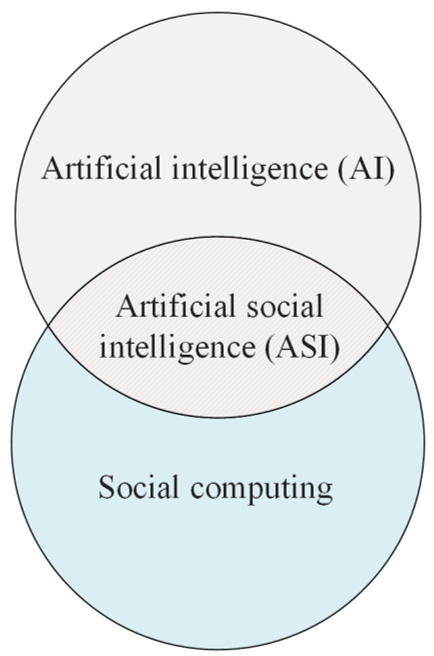 Fig 1: The convergence of AI and Social Computing into ASI.
Technological Enablers
To handle the computational load of "Social Big Data," the paper emphasizes its convergence with:
- Edge & MEC: Processing social cues locally to reduce latency.
- Network Abstraction (SDN/NFV): Decoupling social functionalities from hardware.
- D2D Communication: Leveraging social proximity to optimize data transfer.
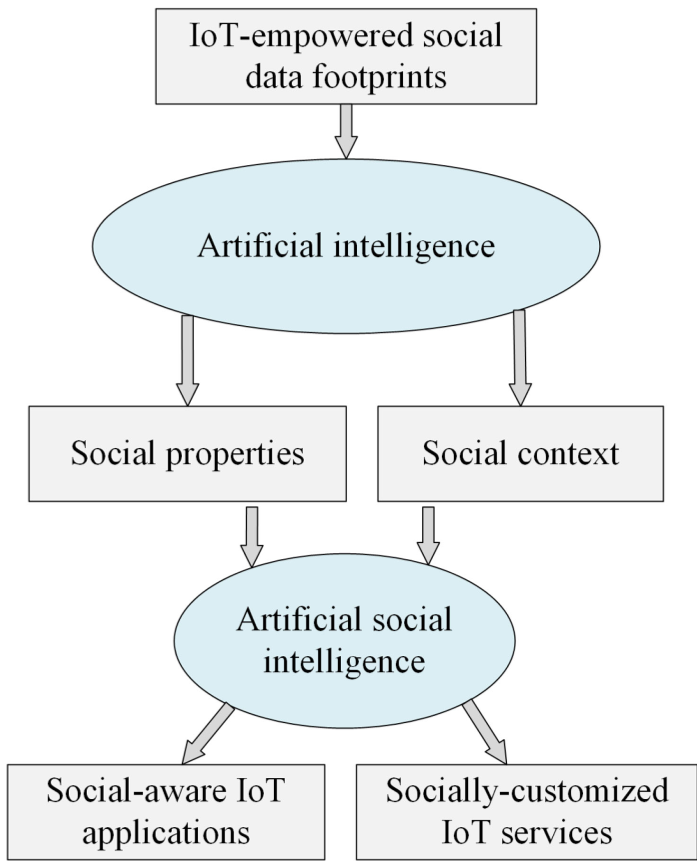 Fig 2: Mapping social footprints into actionable cyber entities.
Real-World Impact: Healthcare and Transport
The paper provides a compelling vision of ASI in action:
- Mental Healthcare: ASI-enabled robots won't just remind an elderly patient to take pills; they will detect signs of loneliness and initiate social interaction using personality traits harmonic with the user.
- Intelligent Transport (SIoV): Instead of just finding the shortest path, an ASI-car might analyze social media trends to predict crowd-triggered traffic jams or use social trust protocols to verify safety messages from surrounding vehicles.
Critical Insight: The "Unsocial Machine" Warning
A powerful takeaway from the authors is the warning against building "thinking-intelligent but unsocial machines." If AI development ignores social integration, we risk a future where robots interfere with personal space or fail to understand common-sense social rules (e.g., a delivery robot interrupting a sensitive human conversation).
Limitations and Challenges
- Social Data Privacy: How do we share "social footprints" without creating a surveillance nightmare?
- Semantic Reasoning: Interpreting the "hidden meaning" of a social interaction remains a monumental task for current LLMs and ASI agents.
Conclusion
As we head toward 41 billion connected devices by 2025, the "Social Internet of Things" needs more than just faster chips; it needs a social conscience. This paper serves as a roadmap for integrating ASI into the fabric of our digital lives, ensuring that as our world becomes more connected, it also becomes more human-centric.