
Precision Agriculture: IoT and SVMr for Real-Time Fungal Disease Forecasting
An IoT environmental data collection system for fungal detection in crop fields
This paper introduces an end-to-end IoT environmental monitoring system specifically designed for fungal disease detection in rural crop fields. The system integrates a custom hardware sensor suite with a Support Vector Machine regression (SVMr) algorithm to provide real-time data collection and short-term forecasting of critical disease-promoting variables.
TL;DR
Fungal diseases like Fusarium head blight and wheat rust cause massive economic losses globally. This paper presents a robust IoT solution that captures real-time environmental data from rural fields and uses Support Vector Machine regression (SVMr) to predict the exact conditions—temperature, humidity, and wind—that facilitate spore spread.
Problem & Motivation: The Gap in Rural Weather Data
Standard meteorological services are optimized for urban centers. In rural crop fields, micro-climates can vary significantly, making centralized weather reports unreliable for disease management. Fungal spores are highly sensitive to their immediate environment; for example, specific humidity thresholds can trigger rapid outbreaks. The authors identified two major roadblocks:
- Data Accessibility: Manual data retrieval from field loggers is inefficient.
- Predictive Granularity: Lack of local, short-term forecasting specifically tuned for agricultural variables.
Methodology: The IoT Pipeline & SVMr Optimization
The system follows a three-stage pipeline: Sensing → Cloud → Intelligence.
1. Hardware Architecture
The edge device utilizes a microcontroller to sample a suite of sensors (air/soil moisture, wind, rain, sunlight). Data is transmitted via a WiFi module to an LTE gateway, ensuring connectivity even in remote areas.
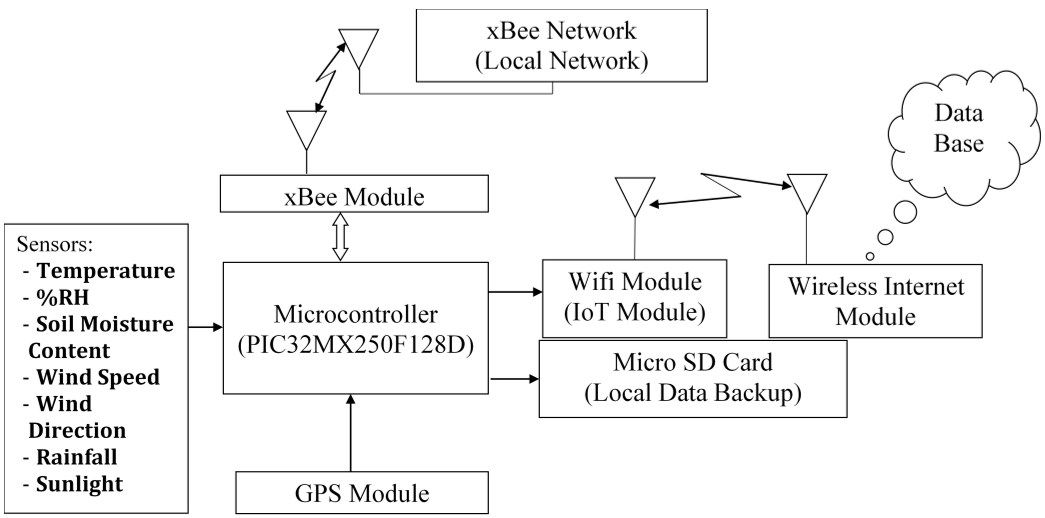 Fig 1. High-level hardware block diagram of the sensing unit.
2. The Predictive Engine (SVMr)
Rather than relying on simple linear trends, the authors used Support Vector Machine regression (SVMr) with a Radial Basis Function (RBF) kernel.
- Feature Engineering: Raw sensor data is transformed into a feature vector representing daily temporal slices.
- Iterative Training: The model uses a "sliding window" approach where it treats the average of as the ground truth for training on .
- Optimization: The team utilized a Grid Search to tune the penalty parameter and the slack parameter , ensuring the model ignores minor noise while capturing critical shifts.
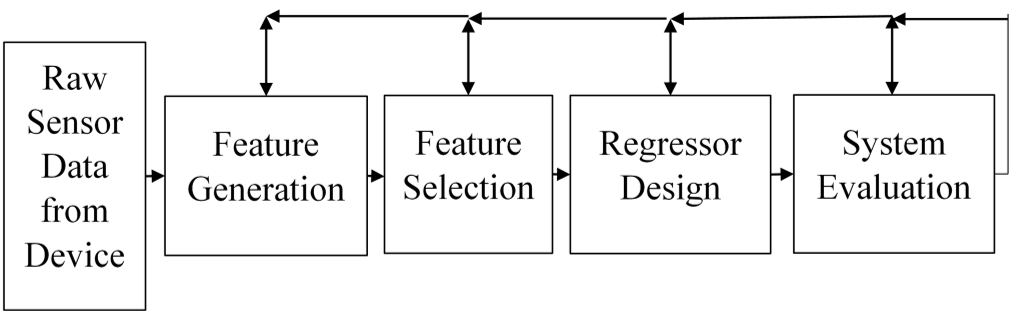 Fig 2. The software logic for short-term environmental condition prediction.
Experiments & Results: Accuracy in the Field
The system was stress-tested in Saskatoon fields during the 2016 growing season. Data sampled every 10 minutes provided a high-resolution dataset for the SVMr model.
Key Performance Metrics:
- Temperature: Prediction error
- Relative Humidity: Prediction error
- Wind Speed: Prediction error
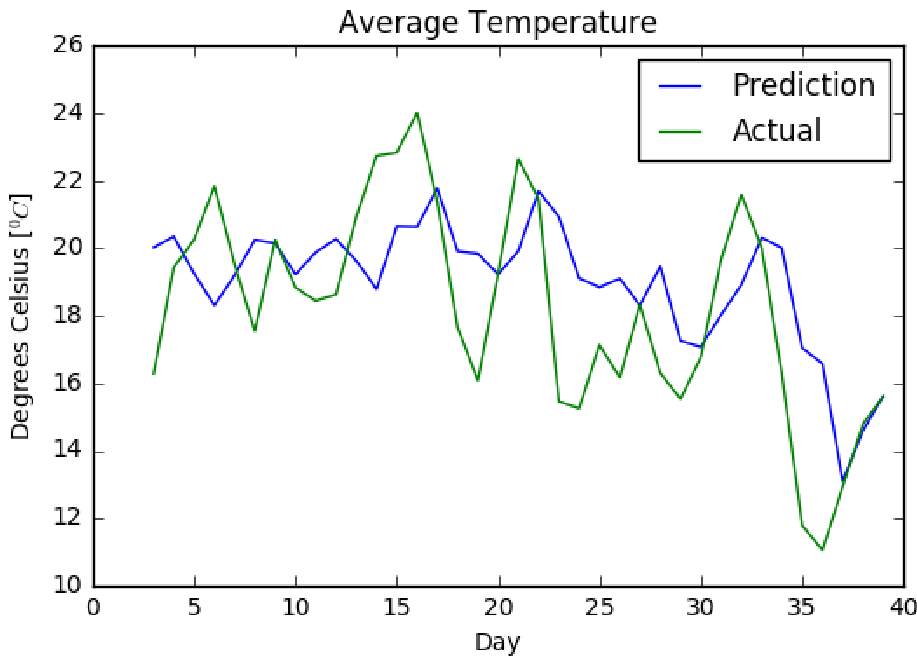 Fig 3. Comparison of predicted vs. actual daily average temperatures.
The results (as seen in the charts for humidity and wind as well) demonstrate that the model successfully tracks the "envelope" of environmental change, which is more critical for disease prevention than capturing momentary spikes.
Critical Analysis & Conclusion
Takeaway
The integration of low-cost IoT hardware with Scikit-learn based predictive modeling democratizes precision agriculture. By predicting wind speed alongside humidity, field managers can not only anticipate if a disease will start but how it will travel across their acreage.
Limitations & Future Work
While SVMr is computationally efficient, it may struggle with very long-term seasonal shifts without retraining. Future iterations could incorporate Transductive Learning or Deep Temporal Networks (LSTMs) to handle larger datasets. Additionally, integrating actual spore trap sensors (fungal spore detectors) directly into the feature vector would move the system from "environmental proxy" to "direct detection."
Ultimately, this work serves as an essential blueprint for building resilient, data-driven agricultural ecosystems.