
Transforming Vitals into Vision: The IoT Tiered Architecture for Modern Healthcare
A review on IoT healthcare monitoring applications and a vision for transforming sensor data into real-time clinical feedback
This paper reviews the role of Internet of Things (IoT) in remote healthcare monitoring and proposes a five-layer IoT Tiered Architecture (IoTTA). It aims to transition away from ad-hoc monitoring toward a systematic approach that transforms raw sensor data into real-time clinical feedback.
Executive Summary
TL;DR: This paper addresses the global crisis of ageing populations and rising medical costs by proposing a structured IoT Tiered Architecture (IoTTA). By moving beyond simple data collection to a multi-tiered approach—specifically focusing on Data Mining and Machine Learning—the research provides a roadmap for turning wearable sensor data into real-time clinical feedback that empowers patient self-care.
Positioning: This work serves as a foundational architectural review and synthesis, positioning itself as a bridging framework between isolated IoT hardware implementations and the future of AI-driven autonomous healthcare.
Problem & Motivation: The Burden of Traditional Care
The global healthcare system is at a breaking point. With the number of people aged 60+ projected to reach 2.1 billion by 2050, the economic pressure of chronic diseases like Heart Failure (CHF) and Diabetes is skyrocketing.
The authors argue that current IoT solutions are fragmented. Most researchers build "one-off" systems that monitor a single vital sign but fail to offer a holistic view or provide actionable feedback. The "Bottleneck" isn't the data collection—it's the interpretation. Clinicians are overwhelmed by raw data, while patients remain passive observers rather than active participants in their own recovery (Self-care).
Methodology: The IoT Tiered Architecture (IoTTA)
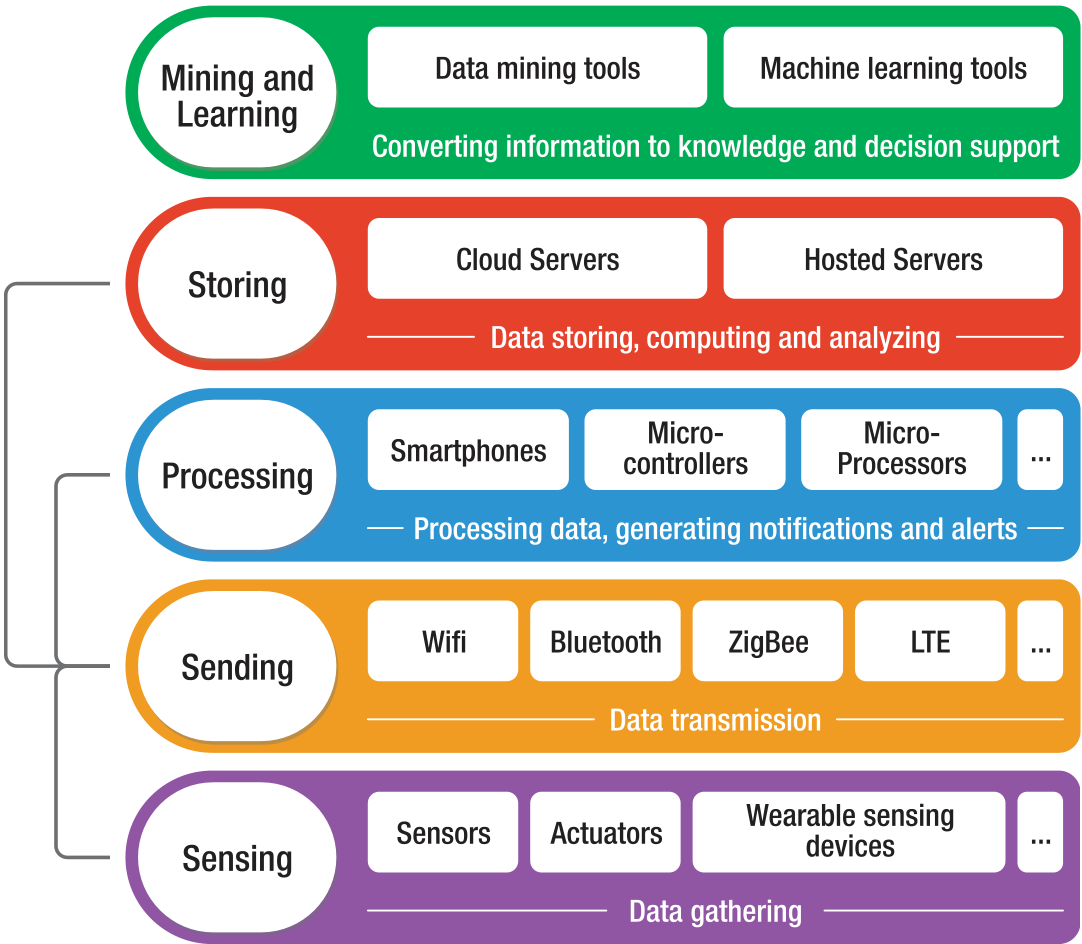
The core contribution of this paper is the IoTTA, a five-layer blueprint designed to standardize how we build medical monitoring systems.
The Five Tiers of Intelligence:
- Sensing Layer: The "Nervous System." Uses invasive and non-invasive sensors (ECG, SpO2, Accelerometers) to capture physiological signals.
- Sending Layer: The "Circulatory System." Utilizing protocols like Bluetooth/ZigBee for local tasks and 4G/LTE/WiFi for global connectivity.
- Processing Layer: The "Reflex Arc." Local units (Raspberry Pi, Smartphones) that aggregate and pre-process data for immediate alerts.
- Storing Layer: The "Memory Bank." Leveraging Cloud platforms (AWS, Google Cloud) to manage massive "Big Data" medical sets.
- Mining & Learning Layer: The "Brain." This is the critical frontier. It uses supervised and unsupervised learning to discover patterns and provide predictive rather than just reactive care.
Experiments & Results: The Clinical Edge
The review synthesized findings from dozens of SOTA (State-of-the-Art) studies. Key evidence for the efficacy of this tiered approach includes:
- Accuracy Boost: Systems like WANDA achieved 74% prediction accuracy for heart failure symptoms, significantly outperforming traditional daily weight monitoring (which improved by only 20%).
- Fall Detection: Wearable-based systems utilizing IoT processing achieved an overall accuracy of 96.4%.
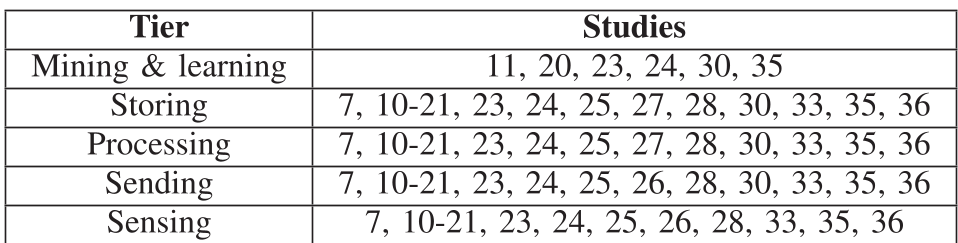
- Adoption Gap: Analysis of current research reveals a significant gap—while almost all studies cover "Sensing" and "Sending," only a fraction implement the "Mining and Learning" layer effectively.
Critical Analysis & Conclusion
Insight: The Shift to Self-Care
The most profound takeaway is that next-generation IoT must bypass the clinician for routine feedback. By leveraging the "Mining and Learning" layer, the system can provide step-by-step instructions directly to patients—effectively automating the "triage" process and promoting medical adherence.
Limitations & Future Work
- False Alarms: The authors warn that notification mechanisms should be a "last resort" to avoid placing a burden on emergency services.
- Privacy & Security: While the tiers are defined, the security protocols between the "Sending" and "Storing" layers remain a significant challenge for future development.
- Upcoming Focus: The authors intend to apply this IoTTA framework specifically to fall detection and prevention, moving from theoretical review to clinical validation.
Final Thought: The future of healthcare isn't just about "wearing" a sensor; it's about the intelligence that lives in the tiers above it.