
Open iPaaS: Forging the Future of Agriculture 4.0 with Explainable AI
iPaaS in Agriculture 4.0: An Industrial Case
This paper presents an open-source Integration Platform as a Service (iPaaS) architecture tailored for Agriculture 4.0, specifically for grain storage processes. By integrating Apache Camel, Camunda BPM, and a custom Machine Learning module (ANFIS), the system automates decision-making to optimize energy consumption and moisture control.
TL;DR
Agriculture 4.0 demands more than just connectivity—it requires intelligent orchestration. This paper introduces an open-source iPaaS architecture using Apache Camel and Camunda BPM to automate grain storage. By incorporating an ANFIS (Adaptive-Network-Based Fuzzy Inference System) module, the system achieves high-precision predictions for energy optimization while maintaining the explainability that industrial experts require.
Background: The Limits of Proprietary Giants
While Industry 4.0 has popularized cloud-based integration, current market leaders like Microsoft Azure and Dell Boomi often trap users in high-cost silos. In the context of the MAÏSADOUR grain cooperative, these platforms fail to offer the deep customization needed to deploy complex decision models that manage physical variables like humidity, gas consumption, and transport logistics simultaneously.
Problem: The Heterogeneity Gap
The core challenge in modernizing grain storage is the diversity of "actors." You have IoT sensors (humidity/temperature), external APIs (weather forecasts), industrial hardware (automated boilers), and human logistics. Synchronizing these while optimizing for energy efficiency is a high-dimensional problem that manual operation can no longer handle efficiently.
Methodology: A Hybrid Architecture for Industrial Autonomy
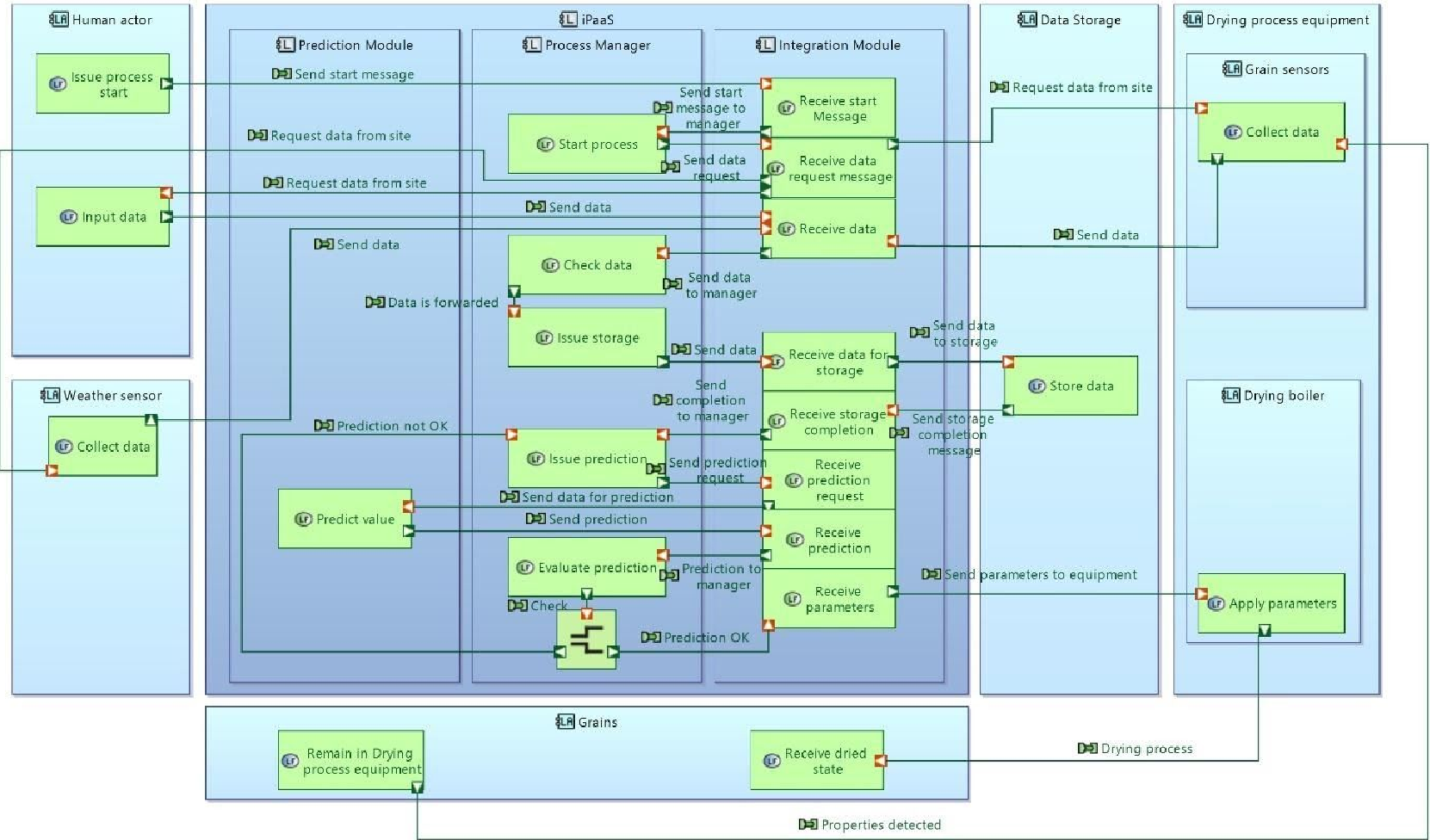
The authors utilize the ARCADIA system engineering method to design a three-pillar architecture:
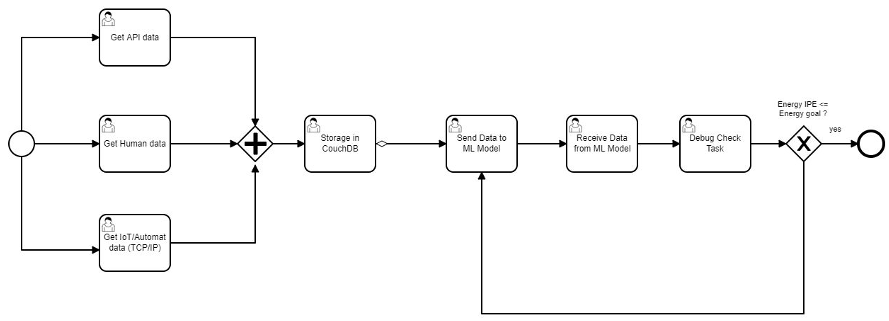
- Orchestration: Camunda BPM manages the "Business Logic," defining the sequence of tasks through BPMN diagrams.
- Integration: Apache Camel acts as the glue, utilizing Enterprise Integration Patterns (EIP) to connect CouchDB, Kafka, and various IoT protocols.
- Intelligence: A dual-approach prediction module utilizing both traditional Machine Learning (Gaussian Process Regression) and ANFIS.
Why ANFIS?
The physical intuition here is crucial. Pure Deep Learning models are often "black boxes." In industrial settings, if a boiler is told to run for 5 hours, an operator needs to know why. ANFIS provides an auditable framework where fuzzy rules (based on expert knowledge) are refined by neural networks, combining human intuition with data-driven precision.
Experiments: Performance vs. Interpretability
The authors compared the ANFIS approach against a standard ML approach (Exponential Gaussian Process Regression).
- ML Approach: Achieved a stellar R-Squared of 0.87 with extremely fast training (0.53s). However, it struggled with "explainability."
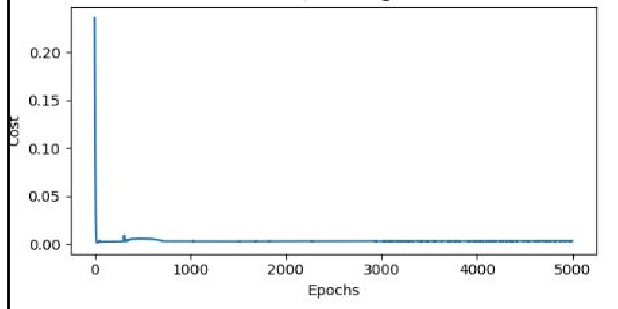
- ANFIS Approach: Showed satisfactory performance (RMSE/MSE close to 0) and, more importantly, high flexibility and auditability. It was less sensitive to outliers in the sensor data, which is frequent in rugged agricultural environments.
Critical Insights & Conclusion
This paper serves as a blueprint for moving away from "Brand Locking." The choice of Apache Camel and Kafka ensures that as new sensors or standards emerge, the platform can evolve without a total rewrite.
Industrial Takeaway: The hybrid nature of this iPaaS—hosting both rule-based fuzzy logic and high-performance ML in parallel—allows Cyber-Physical Systems (CPS) to leverage the strengths of AI without losing the safety and interpretability provided by human-defined constraints.
Limitations & Future Work
While the integration logic is sound, the researchers note a steeper learning curve for open-source stacks compared to "out-of-the-box" commercial tools. Future iterations will focus on multi-tenant scalability and testing the architecture's elasticity in massive cloud deployments.