
Is More Always Merrier? The Hidden Privacy Cost of Your Multi-Platform Social Life
Is More Always Merrier? A Deep Dive Into Online Social Footprints
This study investigates the "online social footprint" of users across 10 major Online Social Networks (OSNs), involving over 180,000 profiles. It introduces novel measures for information complementarity, consistency, and granularity to quantify how profile aggregation increases privacy risks.
TL;DR
Think your private life is safe because you only share a "little bit" on Facebook, a "little bit" on LinkedIn, and a "little bit" on Twitter? Think again. This research proves that by aggregating these snippets, a third party can reconstruct a highly granular identity. Using data from 35,000+ users, the authors show that cross-platform aggregation can increase the success of identifying your home address and phone number by up to 500%.
Background: The Illusion of Siloed Privacy
In the early 2010s, the "social footprint" emerged as a critical metric for digital privacy. However, the fundamental question remained: Is a user with five OSN profiles five times as exposed, or is the exposure exponential? This paper positions itself as a deep dive into the complementarity and consistency of our digital twins.
The Core Motivation: Why Aggregation Matters
The researchers identified a psychological gap: users often provide different details to different platforms based on the platform's purpose (e.g., job history on LinkedIn vs. favorite movies on Facebook).
- Prior Work mostly counted the number of attributes.
- This Work explores the quality and overlap of those attributes, asking if patterns of "what we hide" and "what we show" are consistent enough to serve as a secondary fingerprint.
Methodology: Quantifying the Footprint
The authors crawled 179,188 profiles across 10 OSNs (Google, Facebook, Twitter, LinkedIn, etc.). They moved beyond simple counting by introducing two key metrics:
- Complementarity (Jaccard Distance): Measuring how much new info is gained by adding a second profile.
- Consistency (Sokal & Michener): Measuring how reliably a user follows their own "privacy policy" across sites.
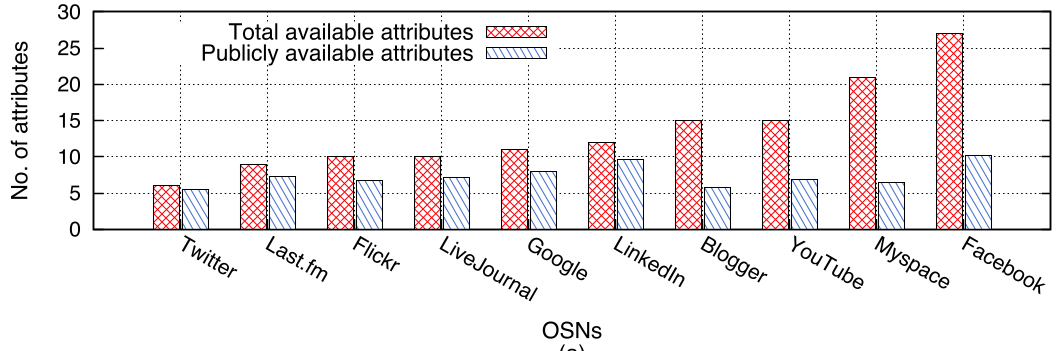 Figure 1: Comparison of available vs. actually populated attributes across different OSNs.
The study reveals a startling "Behavioral Correlation": Users who own more profiles are inherently more inclined to share more information on each individual profile.
Experimental Results: The Linking Attack
The most chilling part of the paper is the "Australian Phonebook Case Study." By taking location data (often just a city name) from multiple profiles, the researchers could narrow down a search in a public residential database.
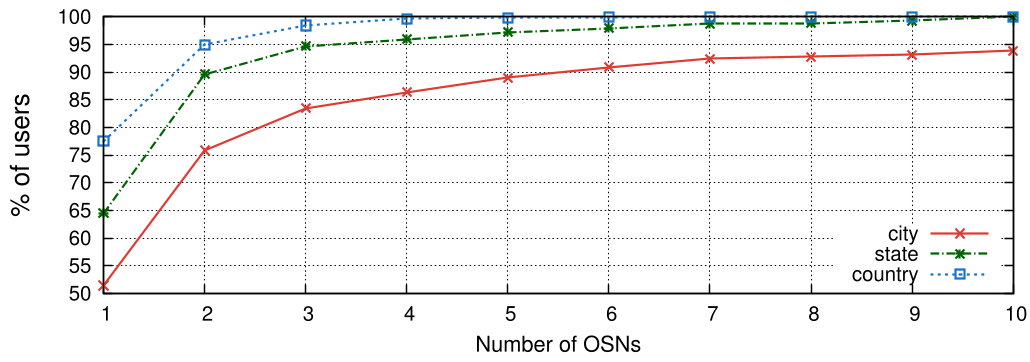 Figure 2: How aggregating profiles dramatically increases location granularity.
Key Findings:
- Identity Unmasking: Using aggregated OSN data made it 5x easier to uniquely identify a person’s residential address and phone number compared to using a single source.
- Value Consistency: 85% of users were found to have over 50% matching values across their profiles, meaning we rarely lie—we just provide different pieces of the same truth.
- Occupation Bias: People in customer-facing roles (Real Estate, Marketing) have significantly larger social footprints than educators or students, making them prime targets for social engineering.
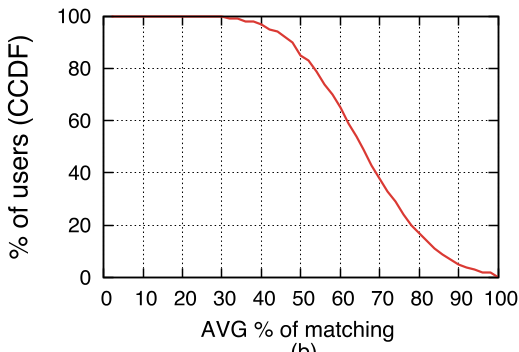 Figure 3: Distribution of attribute value consistency; note the high peak around 0.6-0.8.
Critical Insight & Summary
The paper concludes that we are more predictable than we think. We have "preferred patterns" for revealing information. This consistency is a goldmine for attackers.
Takeaways for the Industry:
- For Users: Using pseudonyms on "fun" OSNs (like YouTube) significantly reduces your footprint compared to using your real name.
- For Platforms: OSNs should alert users when their "aggregate" profile across the web becomes too identifiable.
- Limitations: The study is historical (2012) and biased toward users who have Google profiles, but the mathematical logic of "cross-linking attacks" remains a foundational threat in the age of AI-driven OSINT.
The "Social Footprint" isn't just a list of what you've shared—it's a puzzle that, once assembled, reveals the parts of your life you never intended to put online.