
From Ivory Tower to Symbiosis: The Socialization and Industrialization of Deep Learning
From Ivory Tower to Democratization and Industrialization: A Landscape View of Real-World Adaptation of Artificial Intelligence
This paper explores the transition of Deep Learning from an "Ivory Tower" academic specialty to a socialized technology through democratization and industrialization. It characterizes this shift via a 3-stage interaction model—Isolation, Influence, and Symbiosis—highlighting how tools like fast.ai and AWS SageMaker bridge the gap between experts and the public.
TL;DR
Artificial Intelligence is no longer a "mysterious" discipline confined to elite labs. This paper argues that through Democratization (making tools accessible) and Industrialization (automating the pipeline), AI has entered a "Socialization" phase. We are moving toward a state of Symbiosis, where AI is not just a tool but an inseparable core of modern social trust, economy, and safety.
The "Ivory Tower" Problem: Why AI Was Isolated
For decades, Deep Learning was viewed as an academic curiosity. The author identifies a fundamental friction: Deep Learning programming is isolated from traditional coding.
- The Transparency Gap: Unlike modular software engineering, the "last mile" between chaotic data and a learned model remains largely invisible.
- Resource Barriers: High-level value creation required massive data and computing power that ordinary practitioners simply couldn't access.
The author observes that while the math existed in the 1980s, the "Ivory Tower" remained locked until the 2010s when cloud computing and smartphones provided the necessary "keys": Data and Elastic Infrastructure.
Methodology: The Landscape of Socialization
The paper suggests a shift from Network Integration (the 1990s struggle to connect computers) to Intelligence Integration (the current struggle to integrate learned models into business).
1. Democratization (The "Fast.ai" Effect)
Democratization is the "commoditization" of technology. The author highlights several catalysts:
- Transfer Learning: Allowing non-experts to use models like ResNet-50 without training from scratch.
- Open Access: Platforms like Kaggle and Google Colaboratory.
- Uncool AI: Referencing Jeremy Howard's mission to make "neural networks uncool again"—meaning widely accessible and utilitarian.
2. Industrialization (The "SageMaker" Effect)
If democratization allows people to use AI, industrialization allows businesses to scale it. This is achieved through the Softwarization of Operations.
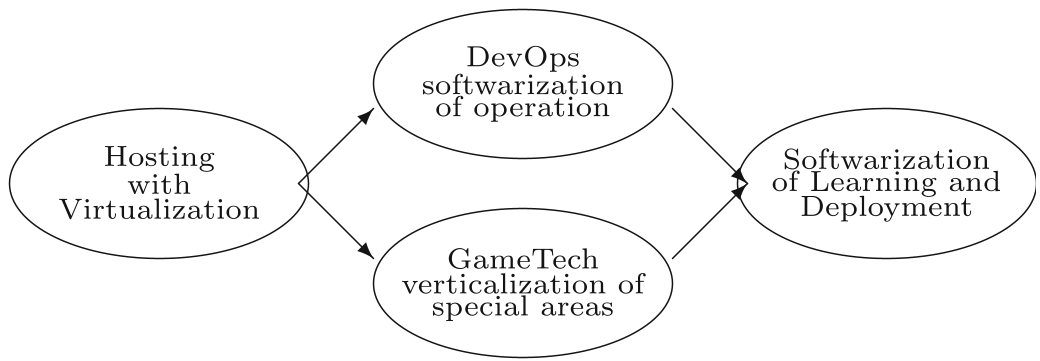 Fig 1: The transition from simple virtualization to integrated learning platforms like SageMaker.
Industrialization bridges the gap between researchers and practitioners, automating the messy backend of data gathering, learning, and deployment through a seamless pipeline.
The 3-Stage Interaction Model
The core contribution of this work is the proposed model of how technology and society interact over time:
| Stage | Role of Technology | Impact on Society |
|---|---|---|
| Isolation | A replaceable tool | Zero-to-low impact; used only for specific purposes. |
| Influence | A functional driver | Starts to change business workflows and human habits. |
| Symbiosis | An inseparable core | Qualitative transformation; technology becomes the foundation of trust and economy. |
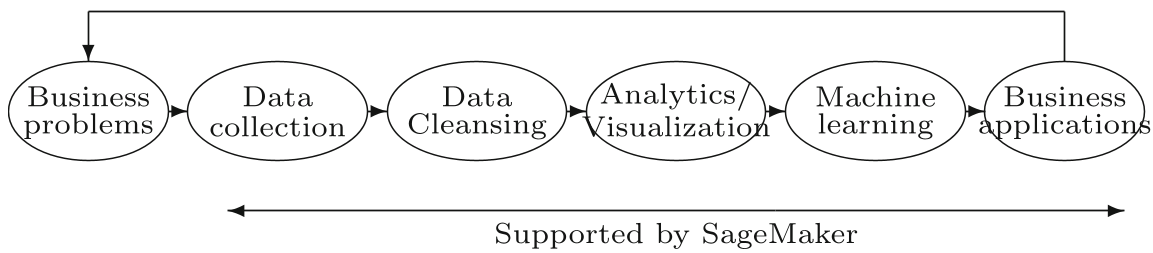 Fig 2: The industrial workflow required to solve real-world problems using ML.
Critical Insight: Towards Symbiosis
The author concludes that we are entering the Symbiosis phase. In this stage, AI moves beyond being a "method" and becomes part of the social collective.
- Economy: AI enables the sharing economy.
- Trust: AI becomes a mechanism for social verification.
- Defense: Safety depends on IoT and ML integration.
Limitations and Future Work
The paper is admittedly qualitative. It lacks specific quantitative metrics to measure perfectly when a technology shifts from "Influence" to "Symbiosis." However, it provides a crucial theoretical framework for understanding the "Socialization" of technology.
Conclusion: A New Social Identity
The "Singularity" is often discussed as a threat, but this paper views the democratization of AI as an opportunity for the "Democratization of Intelligence." By moving out of the Ivory Tower, Deep Learning is not just solving math problems; it is reshaping the landscape of human interaction.
Takeaway for Practitioners: Don't just build a better model; build a more "industrial" and "democratized" workflow. The value of AI in the 2020s lies in its integration, not just its accuracy.