
Predictive Diffusion: Synchronizing Social Dynamics with Wireless Scheduling
Joint optimization for social content dissemination in wireless networks
This paper introduces a social-lookahead scheduling framework that jointly optimizes wireless resource allocation and social content dissemination. By utilizing a Monte Carlo-based prediction of social dynamics, the authors propose a hybrid "push-pull" system to precache content and mitigate wireless delivery delays, achieving SOTA performance in reward maximization.
TL;DR
In the era of mobile-first social networking, the "viral" spread of content is often stifled by the physical limitations of wireless bandwidth. This paper presents a Joint Optimization Framework that uses Monte Carlo simulations to predict social shifts, allowing the network to "look ahead" and precache content. The result is a system that effectively eliminates delivery delay for viral content while maximizing the total utility (reward) of the network.
The Bottleneck: When Social Viral Speed Hits Wireless Latency
Most social network models assume an idealized environment where content flows instantly between friends. In reality, the wireless environment is a constrained resource. When a celebrity shares a video, the resulting "cascade" creates a massive spike in demand.
The Problem: Current scheduling algorithms are reactive. They wait for a user to request content (the "pull") or use static recommendation scores (the "push"). This leads to:
- Delivery Delays: High-value content is delivered too late, missing the peak social relevance window.
- Resource Waste: Multiple independent transmissions of the same content to users in the same cell.
- Broken Cascades: If an "influencer" cannot receive content due to congestion, the entire downstream branch of potential viewers is lost.
Methodology: The Social-Lookahead Mechanism
The core innovation lies in treating the social network and the wireless physical layer as a single coupled system.
1. Modeling Social Diffusion
The authors model the reward for delivering content as time-variant, influenced by a Markov Chain state transition process. If your friend "activates" (likes/shares), your probability of activation increases.
2. Monte Carlo Estimation
To solve the computationally expensive problem of predicting activations in complex graphs with loops, the authors use a fast Monte Carlo approach. By simulating multiple "instances" of the diffusion process, the system generates a probability map of who is likely to need content in the next (scheduling horizon).
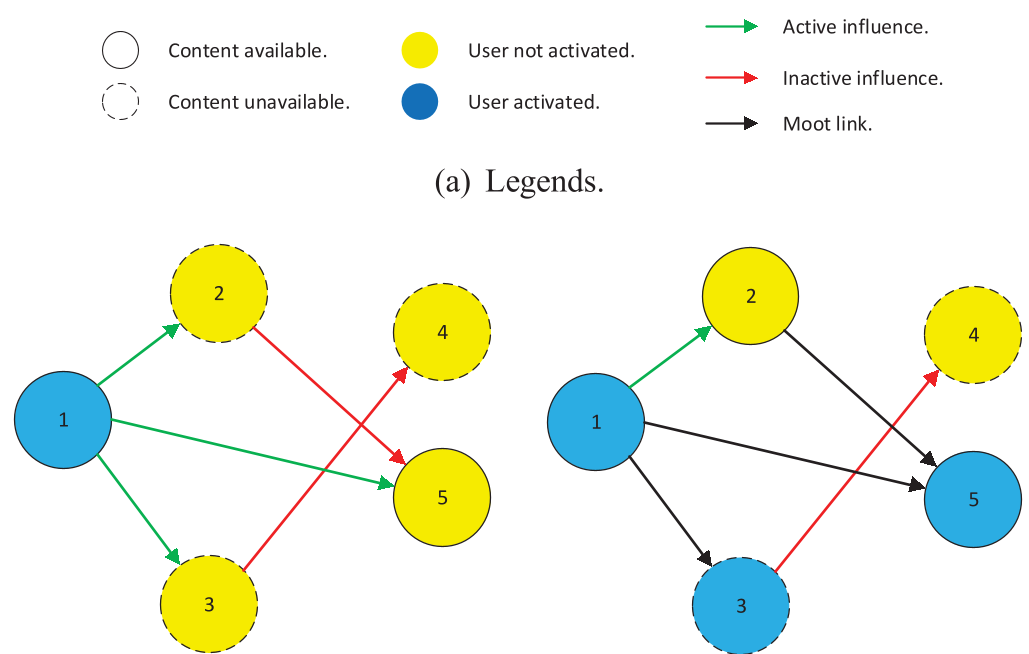 Fig 1: The dual-layer approach: Influencers drive the social graph, while the wireless layer proactively delivers content based on predicted edges.
3. The Hybrid Optimization Objective
The system solves a Mixed Integer Programming (MIP) problem every slot, balancing:
- Intrinsic Reward: The base value of the content.
- Social Reward: The predicted reward from future activations.
- Delay Penalty: An unbounded reward growth for unserved active requests to prevent starvation.
Experimental Validation: Cutting the Delay
The authors tested their framework using synthetic Kronecker graphs (to simulate realistic social structures) and the MovieLens dataset for reward values.
Key Findings:
- Efficiency: As shown in the "Users per Transmission" metric, the social-lookahead system serves more users with fewer radio resources by grouping precaching tasks.
- Zero Latency: For disseminating contents, the delay actually reaches zero because the content arrives on the device before the user's social trigger is pulled.
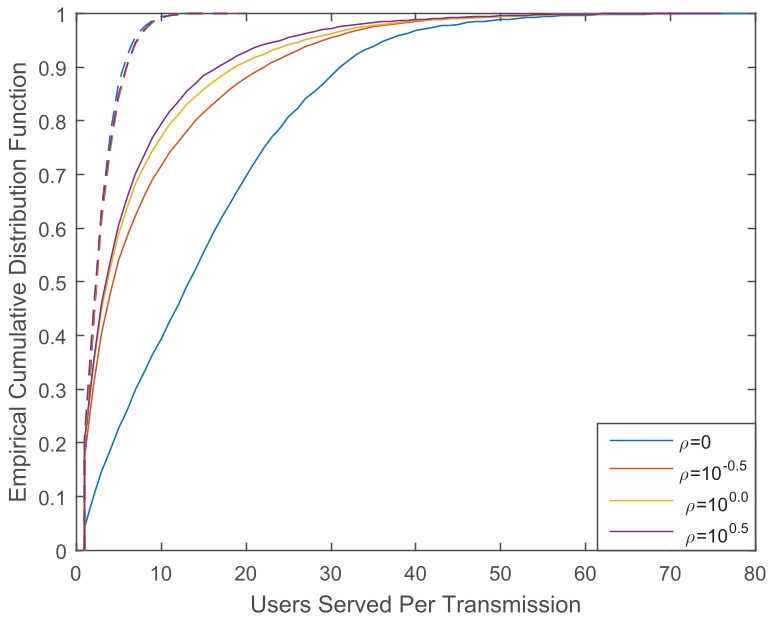 Fig 2: Normalized performance showing that predicted delivery (solid lines) significantly tracks closer to the ideal activation curve than reactive methods (dashed lines).
Critical Insight: Feedback Improves Prediction
One of the most profound observations in this work is that a Hybrid System (part push, part pull) actually makes the predictions more accurate. By prioritizing active requests, the system accelerates real-world activations, which in turn provides more data points to the Monte Carlo estimator. This creates a "virtuous cycle" where better scheduling leads to better data, which leads to even better scheduling.
Conclusion & Future Directions
This research proves that "Social-Aware Networking" is not just a high-level application concept but a necessary component of the physical resource allocation layer.
Limitations: The current model assumes a single base station and stationary users. Future Outlook: The next frontier is extending this to Multi-BS environments and High Mobility scenarios, where the system must predict not just who will want content, but which cell they will be in when they want it.
Academic Takeaway: By moving from reactive "Demand-Response" to proactive "Prediction-Precache" models, wireless networks can finally keep pace with the exponential speed of social media trends.