
Smart Supply Chains: The "Hematopoietic" Engine of Modern Poverty Alleviation
Journal of Computational and Applied Mathematics
This paper develops a multi-agent evolutionary game model to analyze the "Farmers + Cooperative + Smart Supply Chain Platform + Government" poverty alleviation ecosystem. It utilizes evolutionary game theory and numerical simulations to identify how intelligence degrees and financial incentives drive sustainable "hematopoietic" (self-generating) poverty relief.
TL;DR
This research moves beyond static economic models to explore a dynamic ecosystem involving governments, cooperatives, and AI-driven smart platforms. By analyzing the "intelligence degree" of supply chains through evolutionary game theory, the paper demonstrates how technology reduces market risks, balances profit distributions, and eventually allows poverty-stricken regions to survive without government "blood transfusions."
The "Blood Transfusion" Trap in Poverty Relief
Historically, poverty alleviation has been a top-down process of direct financial aid—a "blood transfusion." However, without a functional market mechanism, these areas revert to poverty once the aid stops. Current supply chain research often ignores the bounded rationality of the participants: farmers and platforms don't always make the "perfect" choice immediately; they learn and adapt over time.
The authors identify three primary hurdles:
- High Unsalable Risk: Poor infrastructure leads to high waste and low market confidence.
- Free-Rider Effects: Participants may benefit from the "poverty relief" brand without contributing to the costs.
- Dependency: A lack of "intelligence" in the supply chain makes government subsidies a permanent necessity rather than a temporary spark.
Methodology: The Evolutionary Game
The core of this paper is the Replicator Dynamic equation. Unlike standard game theory, this assumes participants adjust their strategies based on observed payoffs over time.
The Intelligence Variable ()
The most critical innovation is the introduction of (Intelligence Degree). It scales the platform's ability to process big data and machine learning to:
- Reduce the risk of products being unsalable ().
- Influence the price sensitivity of consumers who have a preference for "poverty alleviation" labels ().
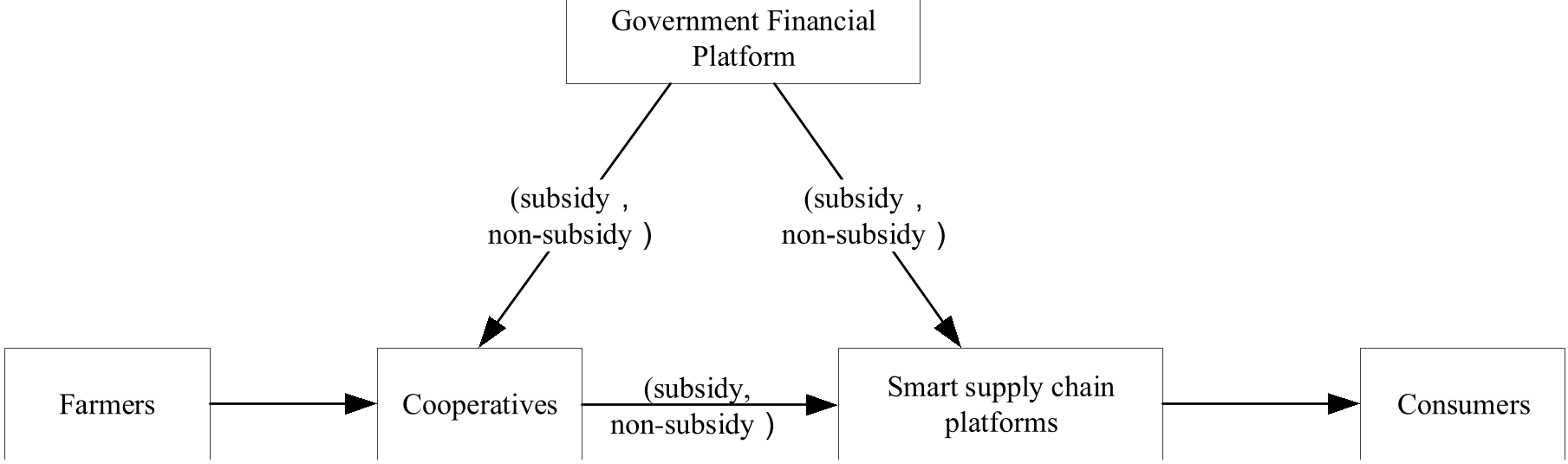 Figure 1: The "Farmers + Cooperative + Smart Supply Chain + Government" Ecosystem.
Key Insights from Stability Analysis
Through Jacobi matrix analysis, the paper determines the conditions for an Evolutionary Stable Strategy (ESS).
- The Threshold of Intelligence: There is a "sweet spot" for technology. If the intelligence degree is too low, the risk remains too high to cooperate. If it is too high, the cost of the technology () outweighs the benefits.
- Dependency Inversion: As increases, the necessity of government subsidies () decreases. This is the mathematical proof of the "hematopoietic" transition.
- Consumer Power: Consumer preference () doesn't just increase demand; it acts as a stabilizer for the entire ecosystem, making cooperation the "rational" choice for the platform.
Experimental Evidence & Simulations
Using data from a Sichuan Mango orchard cooperative and the Pinduoduo platform, the study simulated various scenarios.
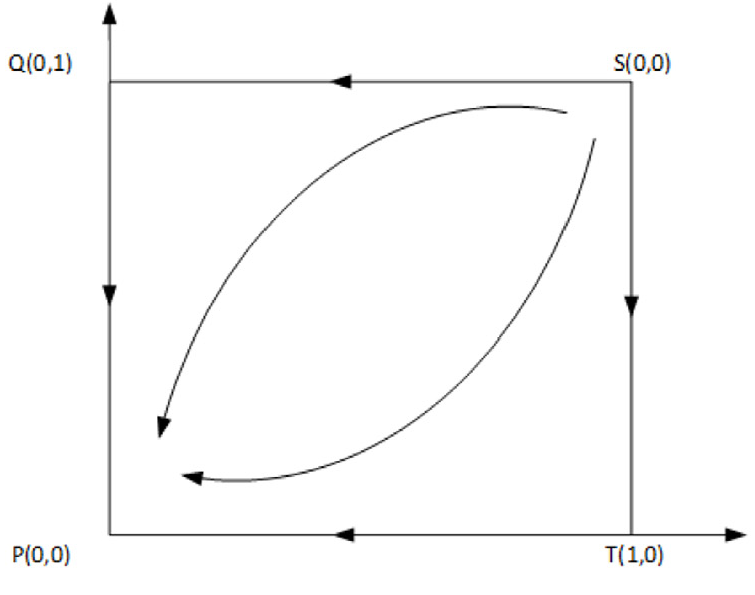 Figure 2: Phase diagrams showing how the system converges to (1,1) (Cooperation) or (0,0) (Non-cooperation) based on initial parameters.
One of the most striking findings involves the Fixed Cost vs. Intelligence trade-off (Fig 3 in the paper). As fixed costs for platform construction fall—enabled by more efficient AI—the probability of reaching a cooperative equilibrium surges.
Final Thoughts: Designing for Resilience
The study concludes that the future of social welfare lies in Smart Infrastructure. By subsidizing the intelligence of the platform rather than the unit price of the product, governments can exit the cycle of aid more quickly.
Limitations: The model assumes a uniform distribution of consumer willingness to pay. In reality, market segments are much more fragmented. Future research should integrate "Precision Marketing" variables where the platform uses AI to target specific consumer cohorts directly, further reducing the cost-to-benefit ratio.
Takeaway: To solve poverty, don't just give money; build a smarter link to the market.