
RF+BP Hybrid: Intelligent Risk Assessment in the Age of Internet Finance
Journal of Computational and Applied Mathematics
This paper explores risk assessment in the Internet finance sector by proposing a hybrid machine learning approach. It evaluates the performance of Random Forest (RF) and Back Propagation (BP) neural networks against traditional statistical methods for identifying and predicting financial risks.
TL;DR
As Internet finance shifts from niche services to mainstream platforms like Alipay and WeChat, the complexity of risk has exploded. This paper presents a hybrid machine learning framework combining Random Forest (RF) and BP Neural Networks to categorize and predict risks. The result? A significant leap in accuracy (90.89%) and a clear directive: Personal information security and credit risk are the new frontlines of financial stability.
Context: Beyond Traditional Banking
Since the mid-2010s, China’s financial landscape has been transformed by "Green Innovation" and platforms like Yu’E Bao. However, the "zero intermediation" nature of the Internet also brings extreme subjectivity and technical loopholes. The authors argue that traditional risk models are no longer sufficient to handle the non-linear, high-dimensional data generated by millions of mobile transactions.
Why Machine Learning?
The study pivots away from traditional statistics toward two powerful paradigms:
- Random Forest (RF): Selected for its ability to handle unbalanced data without "transition fitting" (overfitting). By using the Gini Index, it can rank which risks—like legal ambiguity or technical glitches—actually matter most.
- BP Neural Network: Chosen for its self-learning and adaptive capabilities. It excels at taking the features identified by RF and mapping them to expected risk outcomes through iterative weight adjustments.
Methodology: The Hybrid Architecture
The researchers developed a workflow that merges the feature extraction prowess of RF with the predictive depth of BP.
The RF-BP Workflow:
- Feature Selection: RF builds 1,000 decision trees to determine the "Gini importance" of various risk factors.
- Neural Mapping: A three-tier BP network (Input, Hidden, Output) processes these factors. The "S-type" (sigmoid) transfer function is used to handle data propagation, while the error is backpropagated to refine weights.
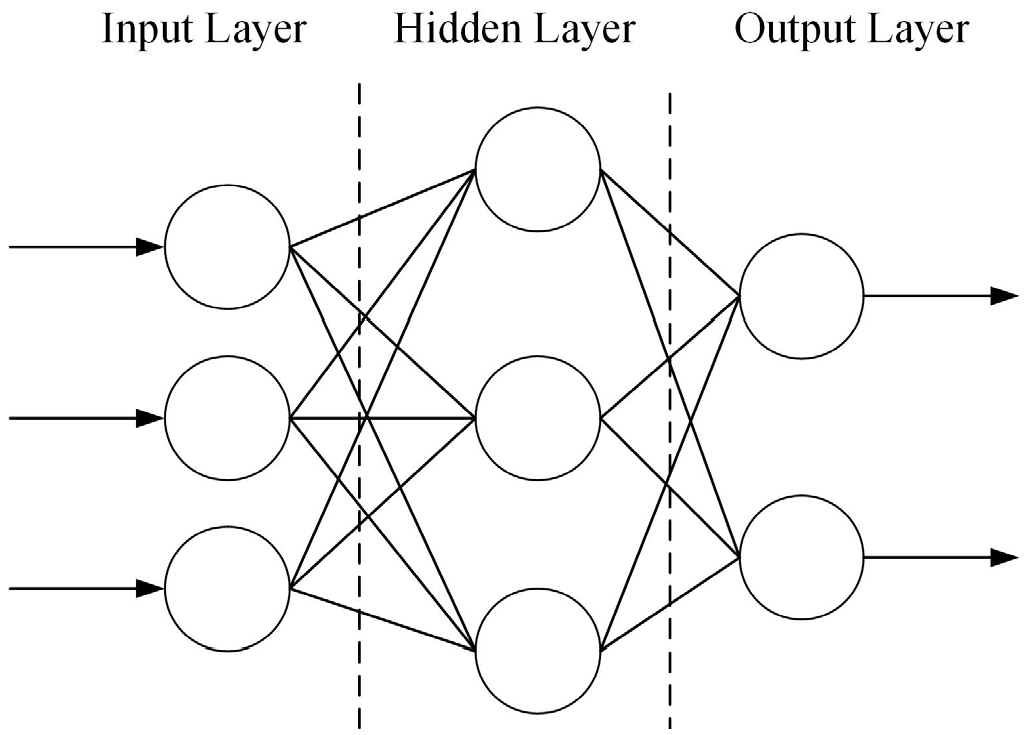 Figure: The schematic synergy between RF classification and BP prediction.
Experiments & Critical Findings
The study utilized real-world data from the "National Internet Financial Security Technology Report" and user surveys.
1. Accuracy Comparison
The hybrid model was benchmarked against classic algorithms. The performance gap was decisive:
- RF+BP: 90.89% (Accuracy)
- SVM: 76.05%
- KNN: 67.24%
2. Identifying the "Red Zones"
The study quantified risk weights through the hybrid lens. Surprisingly, Personal Information Disclosure and Borrower Credit emerged as the dominant threats, carrying significantly more weight than market or liquidity risks.
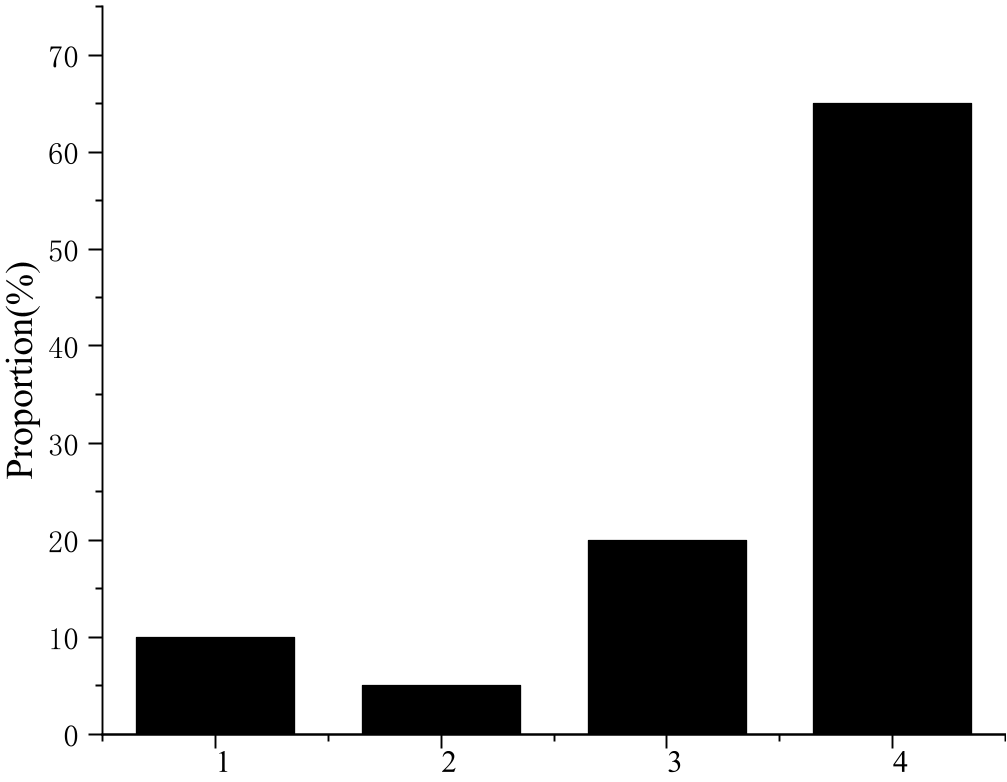 Figure: Credit and Information Disclosure risks dominate the future landscape.
Critical Insight: The Shift in Risk Paradigm
The most profound takeaway is the technologicalization of credit. The paper reveals that credit risk is no longer just about financial history; it is inextricably linked to the "transmission path" of personal data.
Key Takeaways for the Future:
- Privacy is Profit: Protecting personal information is now a core financial asset, not just a legal requirement.
- Adaptive Systems: The high performance of the BP network suggests that financial institutions must move toward "living" models that update weights in real-time as transaction environments change.
Limitations & Moving Forward
While the RF+BP model shows high accuracy, the paper acknowledges a lack of deep dive into the mechanics of how personal information is leaked—whether through technical hacking or social engineering. Future research will likely need to integrate Deep Learning and Natural Language Processing (NLP) to analyze the fuzzy "legal risks" more effectively.
Conclusion
This work provides a rigorous mathematical foundation for the next generation of fintech risk management. By combining the stability of Random Forest with the flexibility of Neural Networks, the authors offer a robust roadmap for securing the volatile world of digital finance.