
Crowdsourcing as a Strategic IS Sourcing Phenomenon: A Systematic Re-Evaluation
Journal of Strategic Information Systems
This paper provides a critical review of crowdsourcing as a strategic Information Systems (IS) sourcing phenomenon, synthesizing 99 high-quality studies into a cohesive framework. It establishes clear ontological boundaries for crowdsourcing and proposes a roadmap for future research focusing on its long-term organizational impact.
TL;DR
Crowdsourcing has evolved from a grassroots buzzword into a complex organizational sourcing model. However, academic research has often struggled to keep pace, frequently confusing individual tasks with strategic value. This paper by Nevo and Kotlarsky provides a rigorous "clean-up" of the field, defining what is (and isn't) crowdsourcing and providing a roadmap to move from simple task-completion to strategic organizational impact.
Background & Positioning
The paper positions crowdsourcing not just as an "innovation contest" but as a subset of Strategic IS Sourcing. It differentiates crowdsourcing from related phenomena like crowdfunding (capital) and crowd-wisdom (aggregated estimation), defining it strictly as a participative online activity involving a task, an open call, and mutual benefit for both the organization and the crowd.
The Problem: Beyond the "Jigsaw Puzzle"
The authors argue that current research is like a collection of "colorful jigsaw pieces" that haven't been put together. Specifically:
- Construct Overload: Too many things are called crowdsourcing, diluting the term's value.
- Static Perspective: Many studies look at a single point in time (e.g., "why does a worker join a contest?") rather than the long-term relationship between the firm and the crowd.
- Strategic Gap: There is an over-emphasis on the What (task design) and not enough on the Why (strategic alignment with firm goals).
Methodology: The Three-Dimensional Lens
To synthesize the literature, the authors look at 99 premium papers through three specific lenses:
- Stakeholder View: Firm vs. Crowd vs. Platform.
- Lifecycle View: From the initial decision to crowdsource, through execution, to termination and ongoing learning.
- Componential View: Motivation, Performance, Value, and Governance.
1. The Road Map for Research
The paper presents a vital framework for integrating these disparate pieces of the puzzle:
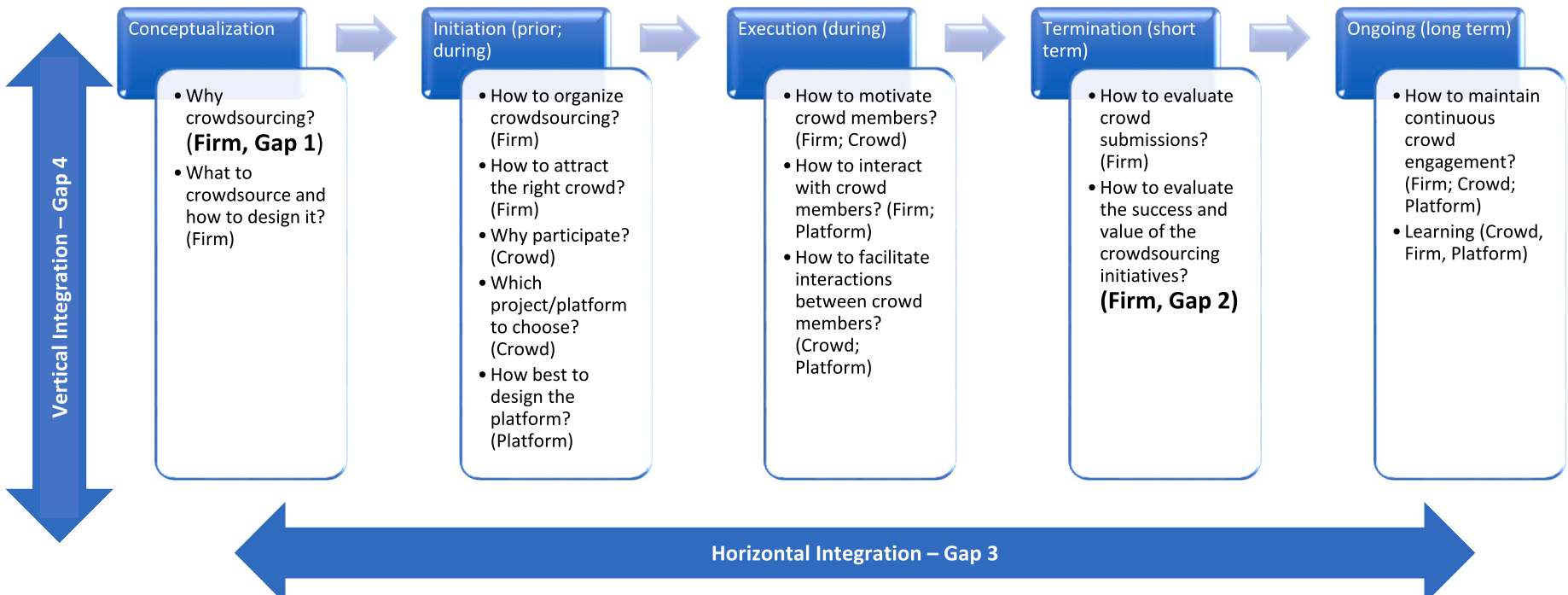 Figure 1: The Integrated Framework for Crowdsourcing in an Organizational Context.
Key Findings & Critical Analysis
The Stakeholder Perspectives
- The Focal Firm: Most research focuses on design—how to set fees and incentives. There is a "dark side" emerging: firms often struggle with "crowding" (too many ideas to filter), leading them to fall back on familiar (non-novel) solutions.
- The Crowd: Motivation is the most saturated area. We know why individuals join (monetary + intrinsic rewards), but we know less about how they manage their effort across multiple competing tasks.
- The Platform: This is the most "siloed" area. Research needs to move from platform design to platform governance—how intermediaries build trust and facilitate long-term strategic value.
The Lifecycle Disconnect
Most studies focus on project execution, but the authors find massive gaps in the Conceptualization (the strategic decision to use a crowd vs. internal R&D) and Ongoing (long-term organizational learning) phases.
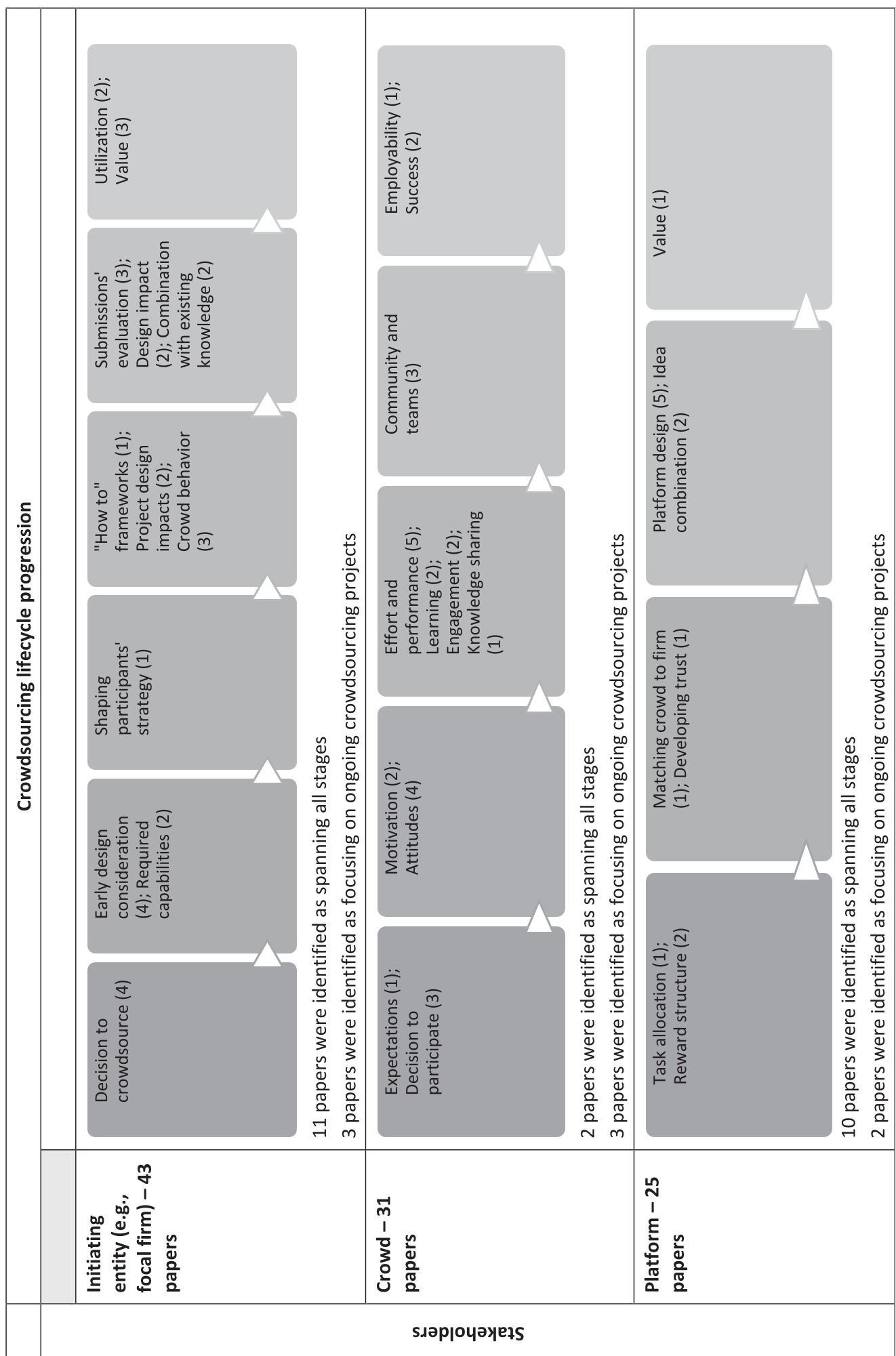 Table 1: Classification of Literature by Stakeholders and Lifecycle Stages.
Deep Insight: Why Crowdsourcing Fails Strategically
The authors highlight a critical example: Netflix. While Netflix famously used a $1 million crowd tournament to improve DVD recommendation algorithms, the firm's true strategic pivot was toward streaming. If Netflix had relied only on the crowdsourced algorithm, they would have missed the infrastructural shift. This underscores that crowdsourcing must be a complement to internal R&D, not a replacement.
Future Research Road Map
The paper identifies four primary gaps for future scholars:
- Gap 1: Strategic Fit: Researching how crowdsourcing aligns with high-level firm objectives.
- Gap 2: Value Metrics: Developing ways to measure indirect value (e.g., brand awareness, marketing) beyond the task result.
- Gap 3: Platform Integration: Examining platforms as longitudinal intermediaries rather than static tools.
- Gap 4: Lenses: Adopting social, strategic, and industry-level lenses to synthesize micro-level findings.
Conclusion
Nevo and Kotlarsky successfully move the needle for crowdsourcing research. By treating crowdsourcing as a strategic sourcing phenomenon rather than a tactical novelty, they provide the necessary academic rigor to evaluate how digital labor and open innovation truly impact the modern enterprise.