
JPEG-AR: Standardizing the Future of Immersive Digital Marketing
JPEG-AR Standard Enabling Augmented Marketing
The paper introduces the JPEG-AR (ISO/IEC 19710) standard designed to harmonize the fragmented Augmented Reality (AR) ecosystem. It proposes a specific "Augmented Marketing" service scenario utilizing standardized interfaces, metadata, and file formats to enable immersive consumer experiences through common JPEG-based image processing.
TL;DR
Despite the rapid advancement of mobile hardware, the Augmented Reality (AR) market is hindered by fragmentation. This paper presents JPEG-AR (ISO/IEC 19710), a standardization effort aimed at creating a unified ecosystem through standardized interfaces and metadata. By applying this to "Augmented Marketing," the authors demonstrate how brands can create interoperable, immersive experiences using the world's most common image format.
The "Wild West" of Augmented Reality
The current AR landscape is a collection of "walled gardens." If a developer creates a high-performance food recognizer or a sophisticated 3D tracker, there is rarely a standard way to plug that component into a different company’s AR app. Previous attempts, like the Augmented Reality Application Format (ARAF), often assumed the existence of a specific "AR Browser," which failed to account for the diversity of existing commercial applications.
The JPEG-AR standard addresses this by focusing on the interoperability of modules rather than the behavior of a single browser.
Methodology: The Modular Architecture
The core philosophy of JPEG-AR is to decouple the AR pipeline. Instead of a monolithic app, JPEG-AR defines strict interfaces for:
- Sensors: Data acquisition (e.g., cameras).
- Recognizer/Tracker: Identifying objects and their spatial coordinates.
- Event Handler: Managing logic and retrieving 3D objects.
- Renderer: Visualizing the result.
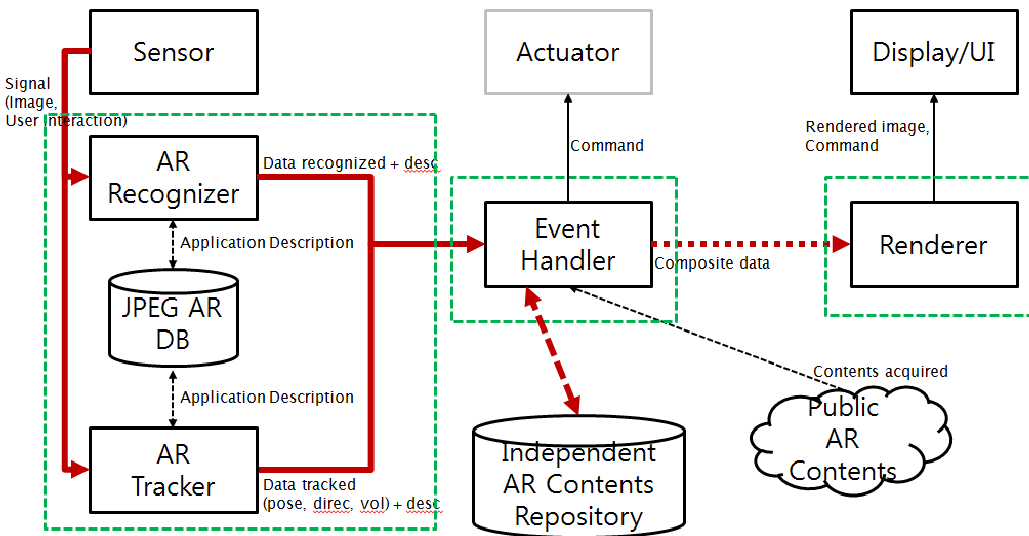
By establishing these clear boundaries, a developer can swap a "product recognizer" for a "street sign recognizer" without rewriting the rendering or sensor logic, provided both are JPEG-AR compliant.
Augmented Marketing: From Static to Dynamic
The paper highlights a high-value application: Augmented Marketing. In this scenario, a consumer points their mobile device at a physical magazine or newspaper advertisement. The application captures a JPEG, which is then processed through a JPEG-AR compliant interface:
- The Recognizer identifies the product and fetches the Application Description.
- The Event Handler prepares the 3D media.
- The Renderer displays an immersive product view to the consumer.
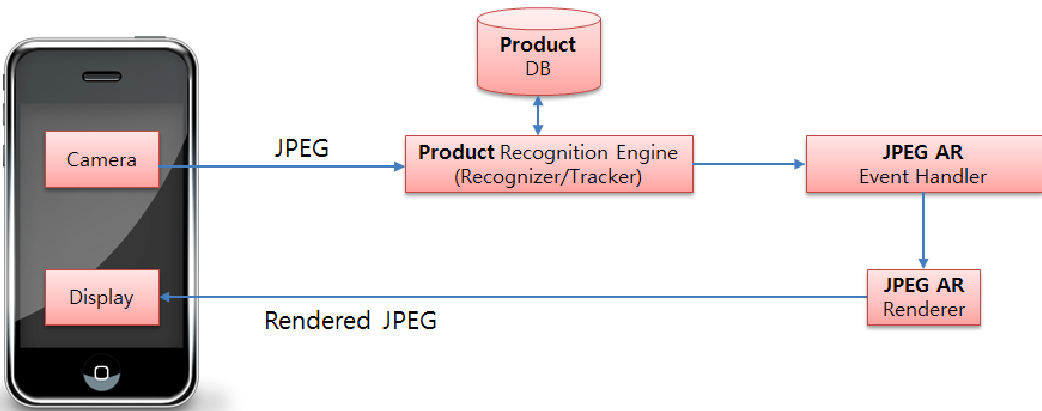
This standardization allows marketing departments to deploy interactive content across different apps and platforms easily, maximizing the ROI on emotional and immersive brand storytelling.
Critical Insight & Future Outlook
The genius of JPEG-AR lies in its reliance on the JPEG ecosystem. By building on existing standards like JPSearch, it ensures that the metadata required for AR is embedded or linked in a way that remains compatible with traditional digital imaging infrastructure.
Limitations: While the paper focuses on marketing, the success of JPEG-AR depends heavily on industry-wide adoption. Without a significant push from hardware manufacturers and major software players (like Apple's ARKit or Google's ARCore), these standards risk remaining academic frameworks.
Takeaway: JPEG-AR represents a much-needed shift toward an open, modular AR economy. For the marketing industry, it provides a roadmap to bridge the gap between physical collateral and digital immersion through a standardized, low-friction pipeline.