
Beyond the Contract: How Justice and Autonomy Shape Global Supplier Harmony
An Investigation of Justice, Conflict, and Moderating Effects of Supplier Autonomy and Cultural Distance in Buyer–Supplier Relationships
2017-10-25
Summary
Problem
Method
Results
Takeaways
Abstract
This paper investigates the interplay between justice dimensions (procedural, distributive, and interactional) and conflict types (task and relationship) in buyer-supplier relationships. Using survey data from 218 managers, it demonstrates that procedural and interactional justice are primary drivers in mitigating conflict, significantly achieving SOTA-level insights into inter-organizational governance.
## TL;DR
In the high-stakes world of global procurement, conflict is often viewed as a contractual failure. However, this research reveals that conflict—both task-based and personal—is effectively managed not through rigid legalism, but through perceived **justice**. By analyzing 218 buyer-supplier relationships, the authors demonstrate that being "fair" in process and interaction is the ultimate "soft" power for reducing "hard" friction, particularly when dealing with the complexities of cultural distance and supplier independence.
## The Core Intuition: Conflict as a Social Exchange
Why do some supplier disagreements remain professional while others turn personal and destructive? The authors argue that relationship conflict is often the "shadow" of task conflict. When a supplier perceives a lack of fairness—be it in the decision-making process (**Procedural Justice**) or the quality of interpersonal treatment (**Interactional Justice**)—misunderstandings regarding technical tasks quickly spiral into affective, emotional hostility.
## Methodology: A Nuanced Look at "Fairness"
The researchers broke down the "Black Box" of supply chain friction into two distinct types:
1. **Task Conflict**: Disagreements over *how* things are done.
2. **Relationship Conflict**: Friction involving tension, annoyance, and personality clashes.
Using **Social Exchange Theory (SET)**, they tested whether fairness in treatment can act as a buffer. Crucially, they added two modern business realities as moderators: **Cultural Distance** and **Supplier Autonomy**.
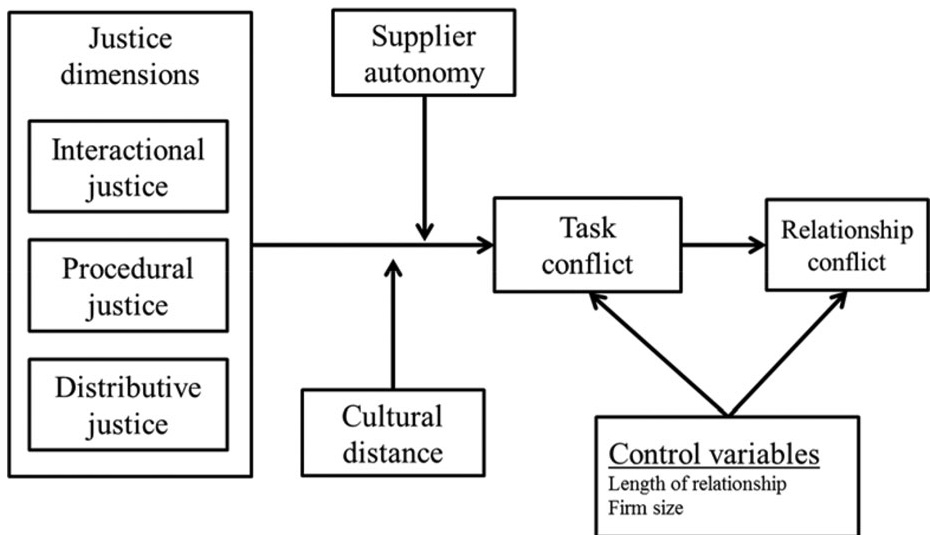
*Fig 1: The proposed framework highlighting the mediating role of Task Conflict and the moderating effects of Autonomy and Culture.*
## Key Insights from the Data
### 1. The Interactional Justice Imperative
The study found that **Interactional Justice** (the quality of explanation and respect) is the MVP of conflict reduction. In cross-cultural settings, where communication gaps are the norm, high interactional justice becomes the primary tool for preventing task-related disagreements from being misconstrued as "us versus them" attacks.
### 2. The Autonomy Paradox
One of the most striking findings involves **Supplier Autonomy**.
* **The Positive**: High autonomy *amplifies* the power of interactional justice. When suppliers have the freedom to act, respectful communication leads to even greater reductions in conflict.
* **The Negative**: High autonomy actually *weakens* the effect of Distributive Justice (rewards). The authors suggest that autonomous "partner" suppliers may focus more on the complexity of effort-reward negotiation, potentially increasing task-related debate.
### 3. Task Conflict as the Gatekeeper
The evidence shows that relationship conflict rarely happens in a vacuum—it is mediated by task conflict. If managers can solve the "how-to" problems fairly, they prevent the "who-is-to-blame" emotional fallout.
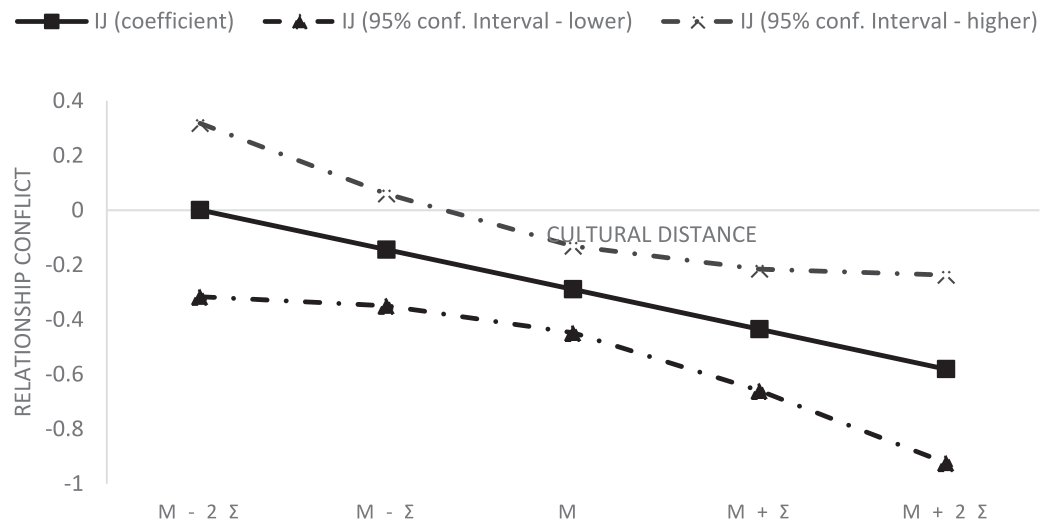
*Fig 2: Statistical evidence showing that interactional justice is most effective at reducing relationship conflict when cultural distance is high.*
## Deep Insight & Management Takeaways
This paper signals a shift from **Transactional Governance** to **Relational Sovereignty**.
* **Prioritize the "Voice"**: Procedural justice (giving the supplier a voice) works regardless of culture. It is a universal stabilizing force.
* **Communication is the Shield**: When offshoring to high cultural-distance regions (e.g., US firms sourcing from Asia), interactional fairness isn't just "nice to have"—it is a strategic requirement to prevent relationship breakdown.
* **Autonomy Requires Attention**: Granting a supplier autonomy doesn't mean "hands-off." It means shifting from monitoring *outputs* to fostering high-quality *interactions*.
### Limitations
As with any cross-sectional study, causality is inferred but not longitudinal. Furthermore, the data relies on buyer perspectives only; future research should reconcile this with supplier-side perceptions to see if the "fairness gap" creates its own set of problems.
## Conclusion
In the end, the research proves that in inter-organizational relationships—where there is no boss to settle the score—justice is the only viable arbiter. By focusing on consistent processes and respectful interactions, firms can navigate the "animated discussions" of task execution without letting the relationship go up in flames.