
IMK: Revolutionizing Information Diffusion Modeling via K-Core Structural Insights
Information diffusion model based on k-core for social networks
The paper introduces IMK (Information Diffusion Model based on k-core), a novel framework that leverages the structural properties of social networks to predict information spread. By mapping diffusion phases to the centrality and compactness of k-core layers, it transitions from node-level probability to mesoscale structural analysis, enhanced by a controlled-release factor and adaptive feedback.
TL;DR
Predicting how a rumor or a piece of news "goes viral" is notoriously difficult. While classic models treat it like a biological virus spreading node-by-node, the IMK (Information Diffusion Model based on k-core) treats the network's structural "skeleton" as the primary driver. By focusing on k-core layers—groups of highly connected users—and applying an adaptive feedback mechanism, IMK achieves superior accuracy in predicting the scale and speed of information dissemination compared to traditional methods like SpikeM.
Problem & Motivation: Why Node-Level Models Fail
Standard epidemic models (SIR, SIS) assume a uniform or per-node infection probability. However, social networks are not uniform; they are stratified. Previous research noticed that users in high-density areas (high k-cores) spread information much further than those on the periphery.
Existing machine learning methods attempt to fit these curves, but they face a "cold start" problem: they need too much historical data to predict a new, emerging event. The authors' insight was to shift the perspective from "What is the probability of node A infecting node B?" to "How does information flow within and between structural layers (k-cores)?"
Methodology: The Core of IMK
The IMK model operates on two distinct structural levels:
1. The Internal Infection (Intra-layer)
The authors define the Basic Kernel (a complete sub-graph) and the Extra Kernel (peripheral nodes within the same k-core level). By calculating the probability of the Basic Kernel being "saturated" with information, they can extrapolate the infection rate for the entire k-core layer.
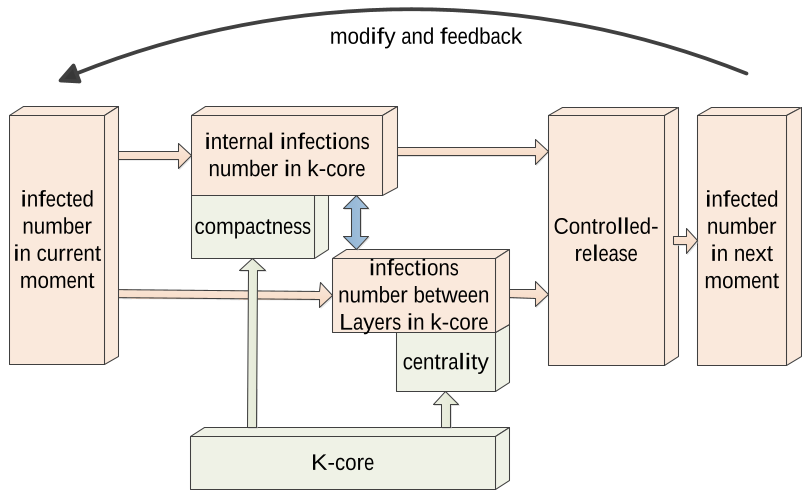 Figure 1: The overarching logic of the IMK model, combining structural decomposition with temporal factors.
2. The External Communication (Inter-layer)
Information doesn't stay in one core. IMK models two types of inter-layer spread:
- Node Diffusion: Based on shared nodes between non-complete sub-graphs.
- Edge Diffusion: Direct connections between complete sub-graphs in different layers.
3. Controlled-Release & Feedback
To handle the temporal "burstiness" of social media, the model uses a controlled-release factor. This mathematical function mimics how interest in a topic peaks and then rapidly decays. Crucially, the model is adaptive; it uses the error between its prediction and actual data in a time window to tune its parameters in real-time.
Experiments: Real-World Performance on Weibo
The authors tested IMK against the popular SpikeM model using datasets from Weibo, focusing on famous rumors like the "Orange Maggots" event.
Key Findings:
- Smoother Prediction: Unlike SpikeM, which can be erratic, IMK’s use of mesoscale units makes its prediction curves more stable and reflective of actual user behavior.
- Accuracy Boost: IMK achieved a Root Mean Square (RMS) error of 6.49, significantly better than SpikeM’s 7.41 in early-stage fitting.
- Reduced Error: Compared to traditional AR (Auto-Regressive) models, IMK reduced relative error by about 15%.
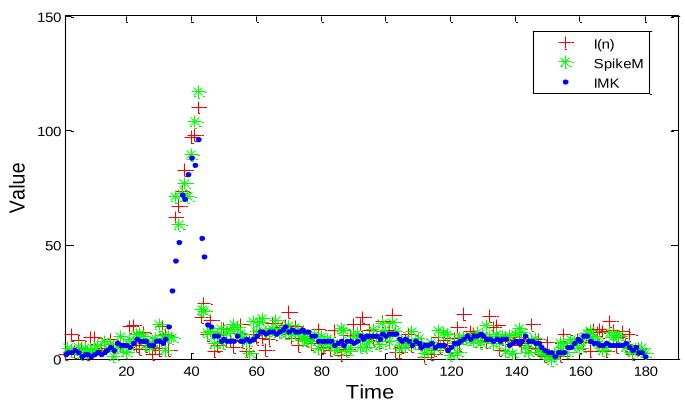 Figure 2: Information dissemination fitting for the "Orange Maggot" event. Note how IMK tracks the "burst" and "tail" of the event more closely.
Critical Analysis & Future Outlook
The strength of IMK lies in its resilience. Because it relies on the network structure—which is relatively static compared to the speed of a tweet—it can start predicting with very little initial data.
Limitations: The model currently assumes the network structure remains constant during a single diffusion event. In reality, large events might cause users to follow/unfollow each other, changing the k-core landscape. The authors acknowledge this "feedback loop" between information and structure as the next frontier for their research.
Conclusion: IMK represents a significant step toward "structural intelligence" in social media monitoring, offering a practical tool for early rumor detection and management by focusing on the backbone of social connectivity.