
Aging Model 2.0: Shattering Myths through Touch-Screen Empowerment
Keeping in Touch: Mobile Apps Use by Older Adults
This paper presents a qualitative ethnographic study on how adults aged 65+ adapt to touch-screen tablets. It introduces "Aging Model 2.0," a framework that explores the intersection of Gerontechnology and Web 2.0 tools to enhance elderly independence and social connectivity.
TL;DR
This study explores the transformative impact of tablet computers on "Third Age" (65+) individuals. By moving beyond the physical barriers of traditional PCs, the research proposes Aging Model 2.0: a framework where touch-screen technology serves as a bridge to "World 2.0" connectivity, fostering independence, lifelong learning, and a profound shift in intergenerational family dynamics.
Context: The Confluence of Two Trends
We are currently witnessing a global increase in longevity paired with a rapid digital revolution. While the "Digital Divide" has historically isolated the elderly, the rise of the Post-PC era—characterized by intuitive, tactile interfaces—offers a unique opportunity for reintegration.
Problem & Motivation: The Mouse vs. The Finger
The primary pain point for older adults has long been the psychomotor demand of traditional computing. A standard mouse requires fine motor coordination that can be frustrating for those with tremors or arthritis. Furthermore, social myths suggest that seniors are "uninterested" or "incapable" of mastering new tech.
The authors’ intuition was that the direct manipulation offered by touch-screens would bypass long-standing accessibility barriers, turning the internet from a source of frustration into a "treasure of services."
Methodology: The Four Dimensions of Aging 2.0
The researchers conducted ethnographic observations, literally entering the homes of seniors to watch them interact with their devices. They identified four critical dimensions that define the modern aging experience with technology:
- Activity: From reading medical journals to "flying" through apps while in bed.
- Learning: The use of tablets for professional updates and cognitive stimulation.
- Independence: Reducing reliance on others for information and decision-making.
- Barriers: Addressing remaining hurdles like complexity, cost, and physical decline.
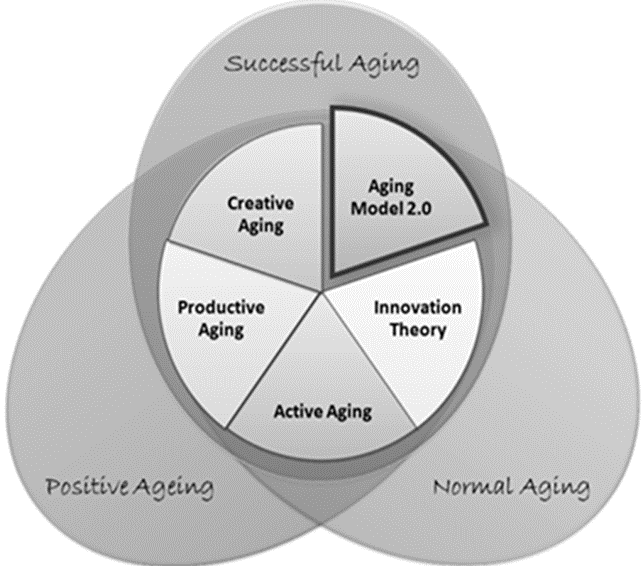 Above: The proposed integration of Aging Model 2.0 within existing sociocultural aging theories.
Key Insights and Experimental Results
The study highlights significant quantitative and qualitative benefits:
- Efficiency: Tablets reduce sensory-motor movement time by 35% compared to a mouse, with fewer errors.
- Role Reversal: A fascinating social insight emerged where seniors began as "advisees" to their tech-savvy children but used the tablet to maintain their own professional status and social circles.
- Emotional Connection: One participant named his tablet "Vasia," treating it as a new "family member" that kept his mind active and engaged.
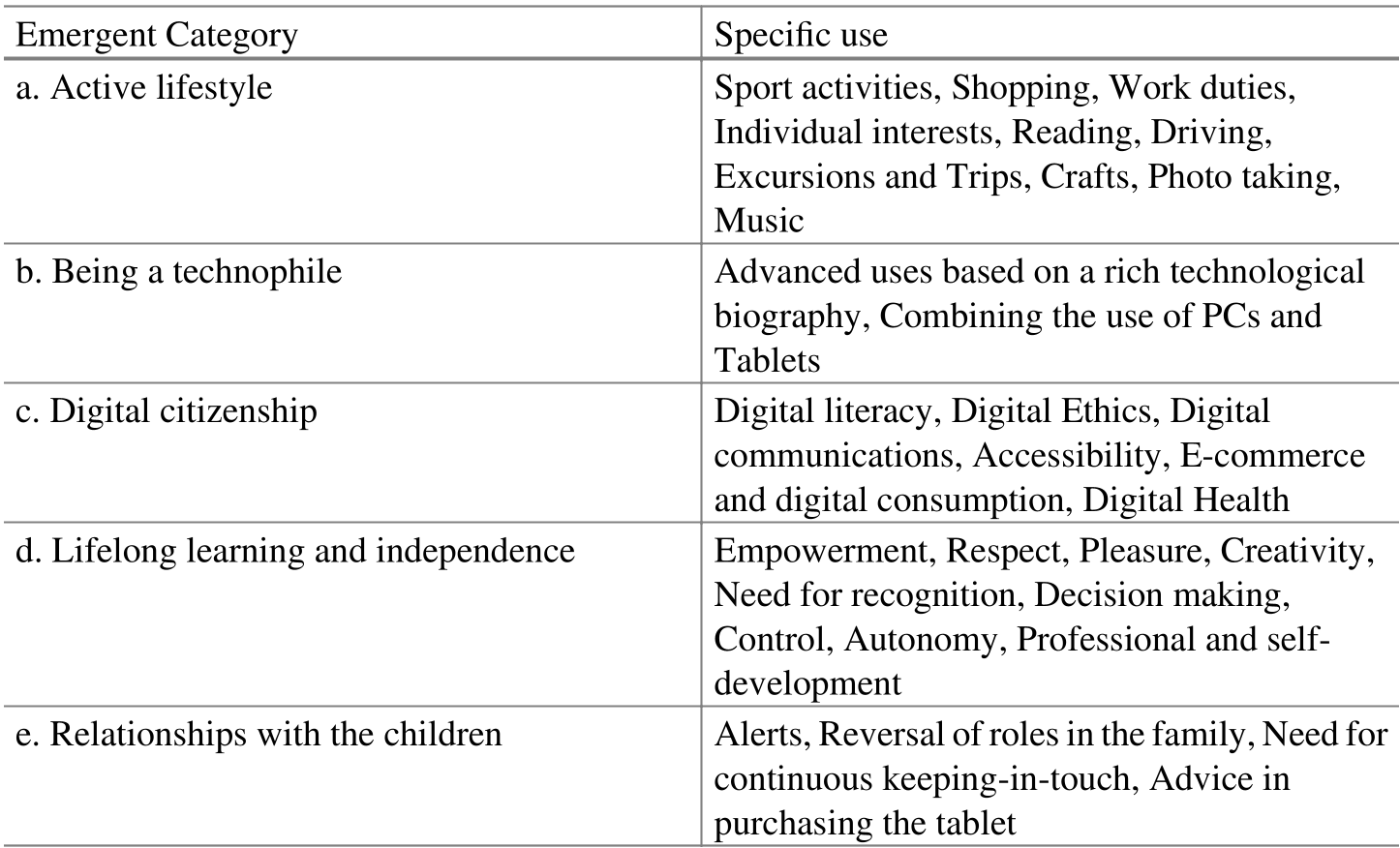 Above: Categorization of mobile app uses, showing a heavy emphasis on digital citizenship and lifelong learning.
Critical Analysis & Conclusion
Takeaway
The paper successfully argues that technology for the elderly should not be viewed merely as "assistive" (like a hearing aid) but as "lifestyle-enhancing." Aging Model 2.0 provides a roadmap for designers to stop neglecting this demographic.
Limitations
- The "Gold Cage" of Privacy: While sensor-based health monitoring (Gerontechnology) is mentioned, the study briefly touches upon the potential for an "invasion of privacy" without diving deep into the ethics of surveillance for the elderly.
- Sample Size: With only nine participants, the qualitative depth is excellent, but broader socio-economic generalizations are difficult.
Future Outlook
As "World 2.0" evolves into an era of Ambient Intelligence and AI, the foundations laid by Aging Model 2.0 will be vital. Future research should investigate how Voice User Interfaces (VUI) combined with touch might further lower the barrier to "Active Aging."
Professional Verdict: A foundational qualitative work that bridges the gap between Sociology and Human-Computer Interaction (HCI), proving that "old age" is not a limitation of the mind, but often an artifact of poor interface design.