
From Keywords to Context: Deciphering the Digital Footprints of Radicalization
A Study on Keyword Analytics as a Precursor to Machine Learning to Evaluate Radicalisation on Social Media
This study investigates keyword analytics as a precursor for machine learning to detect radicalization on social media. It compares mined Twitter data with official extremist publications (Dabiq and Rumiyah) to identify linguistic patterns and behavioral markers.
TL;DR
This research explores whether simple keyword analytics can serve as a reliable foundation for Machine Learning (ML) models designed to identify radicalization on social media. By comparing 17,000 pro-ISIS tweets with official recruitment magazines, the study finds that while ideology is constant in literature, social media radicalization is highly reactive to current events—suggesting that future AI must look beyond "what" is said to "how" and "where" it fits in a broader psychological context.
Background & Positioning
In the landscape of digital counter-terrorism, this work acts as a foundational methodology study. Rather than claiming a new SOTA (State-of-the-Art) algorithm, it provides a critical examination of the features we feed into our models. It bridges the gap between sociological theories (like Borum’s and Moghaddam’s models) and data mining practices.
The Problem: The Noise of the "Digital Limbic System"
The primary challenge identified by Chelvachandran and Jahankhani is that social media has become an "integrated digital limbic system"—a space where raw emotion and unfiltered information collide.
Current detection methods face three major hurdles:
- Decontextualization: A single keyword (e.g., "Jihad") can have multiple meanings depending on the sentence.
- Algorithmic Complexity: Extremist mindsets represent a "motivated deviance" from behavioral norms, making them difficult to model using standard Gaussian distributions.
- Data Authenticity: The "cat-and-mouse" game where accounts are deleted and recreated under variations makes longitudinal tracking difficult.
Methodology: Comparative Linguistic Analysis
The researchers utilized two distinct datasets to build a baseline and a comparative profile:
- The Baseline (Control): 2,685 texts from ISIS magazines Dabiq and Rumiyah.
- The Social Dataset: 17,000 tweets from 100+ pro-ISIS accounts.
By employing Word Frequency Analysis, they looked for "Linguistic Fingerprints"—the idea that important concepts are repeated frequently. However, they also utilized Specialization Queries, which grouped synonyms and stemmed words to capture the underlying theme rather than just the literal string.
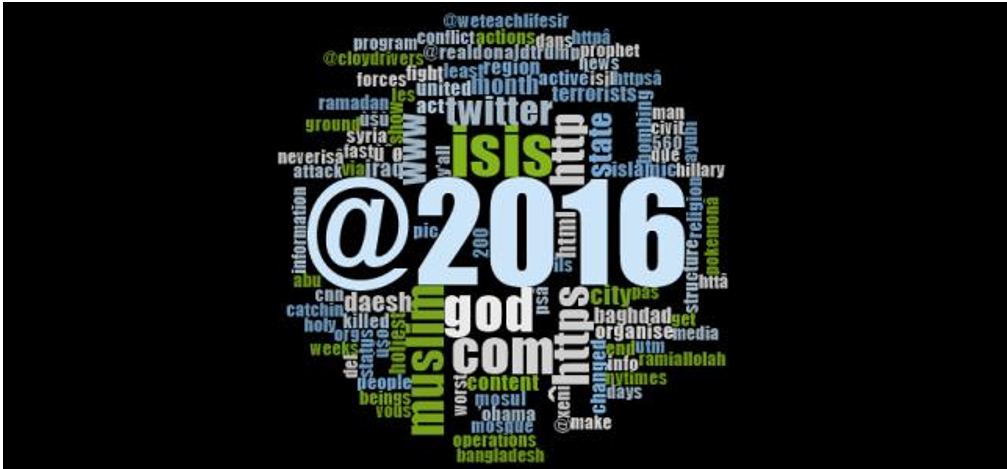 Figure 1: Word Cloud showing the dominance of ideological and religious terminology in official publications.
Key Insights & Experimental Results
The comparison yielded a fascinating dichotomy:
- Publications are Ideological: The frequency focus remains on religious ideology and long-term goals, unaffected by specific dates.
- Social Media is Event-Driven: Pro-extremist tweets heavily utilize "trending" keywords. This suggests that extremist accounts use current news as a "gateway" or "hook" to attract vulnerable individuals before directing them to deeper ideological content.
- The Challenge of Short-Form Content: The 140-character limit of early Twitter data often stripped away the necessary indicators of "frustration" or "introversion" required for psychological profiling.
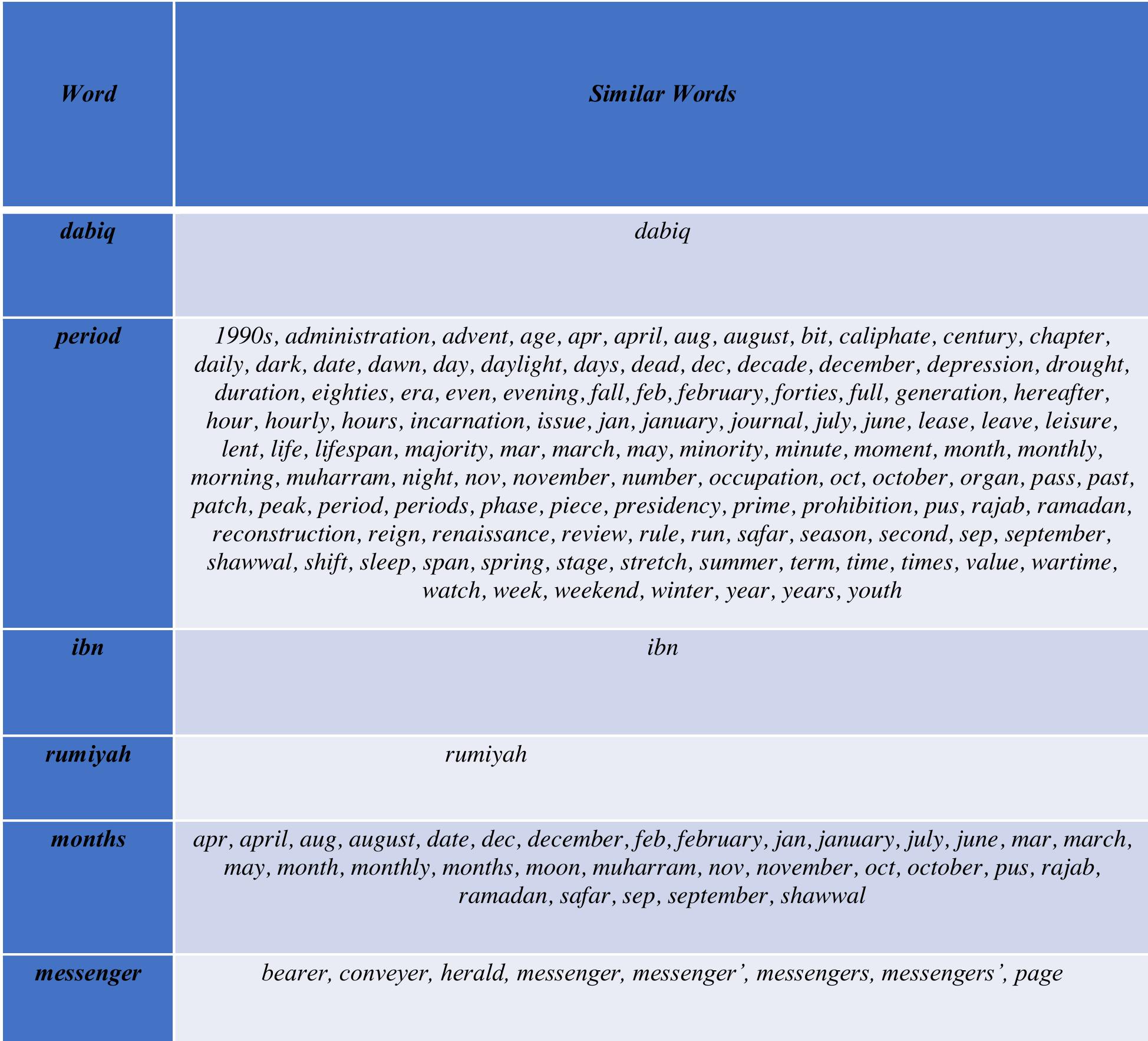 Figure 2: Analysis of similar words and specializations used to broaden the context of raw keyword counts.
Critical Analysis: The Path to Machine Learning
The authors conclude that keyword metrics are a precursor, not a solution. The transition to effective Machine Learning for law enforcement requires:
- Keywords-in-Context (KWIC): Analyzing the words before and after a trigger word to determine intent.
- Psychological Modeling: Integrating frustration indicators (e.g., use of swear words, sentence formatting) and introversion markers (sentence strength/length).
- Automated Grading: Using the identified themes to create an automated "risk score" that allows human reviewers to focus on the highest-probability threats.
Conclusion & Future Outlook
This paper serves as a sober reminder that in the fight against online extremism, context is king. While keyword monitoring is a useful starting point, the next generation of detection systems must be "psychologically aware," blending linguistic theory with dynamic algorithmic modeling. The evolution of social media platforms (such as the increase in character limits) provides richer data, but also requires more sophisticated NLP architectures to process the nuanced path of radicalization.