
Unmasking Blood Ties: Determining Kinship through Mobile Social Networks
Kinship Determination in Mobile Social Networks
This paper introduces a kinship determination model for mobile social networks by mining call behavior and SMS data from a massive dataset provided by a Chinese telecommunications corporation. Using a feature engineering approach centered on interaction patterns and the XGBoost classifier, the study achieves a SOTA classification accuracy of 81.04% in identifying blood or marriage relations.
TL;DR
Can your mobile carrier know you're calling your mother just by looking at the timing and duration of your calls? This paper says yes. By analyzing nearly 5 billion Call Data Records (CDRs) from a major Chinese telecom provider, researchers have built an XGBoost-based model that identifies kinship with over 81% precision. The secret lies not in what you say, but in the rhythm and asymmetry of your interactions.
Problem & Motivation: The Digital Shadow of Family
In sociology, kinship is the most stable and fundamental social unit. Traditionally, mapping these ties required tedious questionnaires. However, as our lives move into the digital realm, our "Mobile Social Networks" (MSNs) become a mirrors for real-world intimacy.
The challenge? MSNs are noisy. A 10-minute call could be to a spouse or a persistent insurance salesman. Previous research focused on "strong vs. weak ties" (Granovetter's theory), but few have attempted to isolate kinship specifically from the massive, imbalanced streams of metadata generated by hundreds of millions of users.
Methodology: Feature Engineering the "Family Rhythm"
The authors argue that the key to kinship isn't a single data point, but a signature behavior pattern. They extracted 75 unique features from CDRs and SMS data.
1. Key Feature Metrics
- Interaction Mode (): Measures call symmetry. Kinship usually displays a balanced "give and take" in initiating calls compared to professional relationships.
- Weekend Asymmetry (): Does the communication happen only during office hours? Kinship ties show higher resilience across weekends and holidays.
- Call Interval (): Family members tend to have shorter, more regular intervals between contacts.
2. The Model Architecture
The researchers opted for XGBoost (eXtreme Gradient Boosting). Given its ability to handle non-linear interactions between features and its robustness against outliers, XGBoost provided the necessary generalization to process the desensitized, large-scale dataset. To combat the fact that kinship is a minority class (9:1 ratio), they employed SMOTE (Synthetic Minority Over-sampling Technique) to balance the training data.
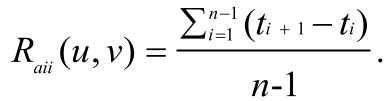 Above: Example of the mathematical formulation for Average Call Interval (), a critical feature in the model.
Experiments & Results: Mapping the Social GPS
The study compared XGBoost against a battery of traditional classifiers, including Support Vector Machines (SVM), Random Forests (RF), and Logistic Regression (LR).
| Model | Precision | Recall | Accuracy | F1-Score |
|---|---|---|---|---|
| SVM | 73.74% | 68.74% | 72.64% | 0.7115 |
| GBDT | 73.33% | 72.16% | 73.13% | 0.7274 |
| XGBoost | 81.04% | 75.24% | 79.18% | 0.7803 |
 Figure: The XGBoost model clearly dominates across all evaluation indexes (EIs).
Key Insights from the Data:
- Stability: Kinship call durations are more "stable" (less variance) than other ties.
- Volume: Kinship accounts for a disproportionately large percentage of a user’s total annual call volume.
- Proximity: The average daily call time for relatives is significantly higher than for acquaintances.
Critical Analysis & Conclusion
This paper provides a robust framework for Social Computing. By moving from "node-centric" analysis to "edge-centric" analysis (focusing on the relationship itself), the authors have created a tool that has profound implications for:
- Public Safety: Quickly identifying relatives of victims or suspects.
- Marketing: Understanding household purchasing units.
- Sociology: Mapping the erosion or strengthening of family ties in urban environments.
Limitations & Future Work
While the 81% precision is impressive, the model currently ignores the structural network characteristics (e.g., common neighbors or triadic closures). Future iterations combining these behavioral signatures with Graph Neural Networks (GNNs) could likely push accuracy toward the 90%+ range. Additionally, as SMS usage declines in favor of instant messaging (like WeChat or WhatsApp), the model must evolve to incorporate multi-platform data.
Final Takeaway: Your calling habits are a digital DNA—highly unique, remarkably stable, and surprisingly revealing of your most private biological bonds.