
KMUL: Bridging Social Identities via Spatiotemporal Clustering
KMUL: A User Identity Linkage Method across Social Networks Based
This paper introduces KMUL, a User Identity Linkage (UIL) method that utilizes k-means clustering to map spatiotemporal profiles across social networks. By representing user identities as a set of cluster centers, the method achieves state-of-the-art performance and efficiency in linking the same individual across platforms like Foursquare, Twitter, and Instagram.
TL;DR
KMUL (K-Means User Linkage) is a streamlined framework designed to solve the "User Identity Linkage" (UIL) problem—identifying if accounts on different platforms (e.g., Twitter and Instagram) belong to the same person. Instead of comparing messy, sparse raw trajectories, KMUL extracts "spatial signatures" using k-means clustering. This method proves that focusing on user anchors (the places people frequent) is far more efficient and accurate than analyzing every single data point.
Background: The Sparse Data Challenge
In the world of social networks, spatiotemporal data is notoriously difficult to handle. Unlike a vehicle's GPS, which pings every few seconds, a user might only "check-in" on Foursquare once a week. This leads to several major headaches:
- Sparsity: Huge gaps in time and space between records.
- Heterogeneity: Different apps capture different behaviors.
- Grid Anomalies: Standard grid-based methods lose precision at the boundaries.
The authors of KMUL realized that despite these inconsistencies, human behavior is remarkably predictable—we all have a "home base" and a few routine spots.
Methodology: From Points to Cluster Centers
The core innovation of KMUL is transforming a collection of noisy GPS points into a fixed-size representation of cluster centers.
1. Vector Representation
For each user, the algorithm performs k-means clustering on their latitude and longitude data. This reduces a massive, irregular dataset into a concise set of coordinates:
2. Similarity Metric
To compare two users' profiles, the authors developed a specific distance function: The use of the square root is a deliberate choice: it rewards "overlapping" centers, making user pairs with similar geographic habits appear closer in the latent space.
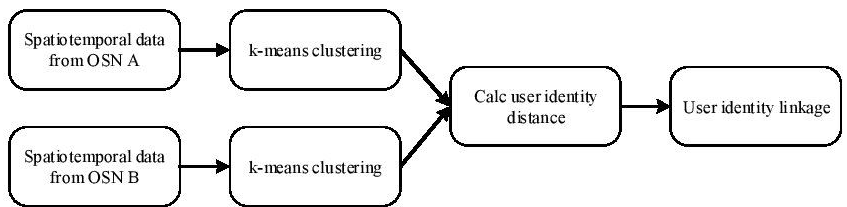 Figure 1: The KMUL workflow, from data acquisition to clustering-based linkage.
Experiments and Benchmarking
The researchers tested KMUL against heavyweights like GKR-KDE and BIN using two major datasets: FS-TW (Foursquare-Twitter) and IG-TW (Instagram-Twitter).
Performance Gains
KMUL consistently outperformed baselines in the sparser FS-TW dataset. On the denser IG-TW dataset, it remained a top contender, nearly matching the performance of much more complex kernel density estimation (KDE) methods while being significantly faster.
Computational Efficiency
Efficiency is where KMUL truly shines. Since it calculates distances between centers (usually ) rather than hundreds of raw points, the computational load is drastically reduced.
 Table 1: KMUL demonstrates significantly lower running time compared to BIN and DG methods.
Parameter Analysis: Finding the Sweet Spot
The paper includes an extensive ablation study on two key parameters:
- k (Number of Clusters): Increasing improves Accuracy (less information loss) but increases runtime. was identified as the ideal balance.
- dist_upper (Threshold): This mimics the "Precision-Recall Trade-off." A lower threshold yields high precision (sure bets), while a higher threshold increases recall (finding more links).
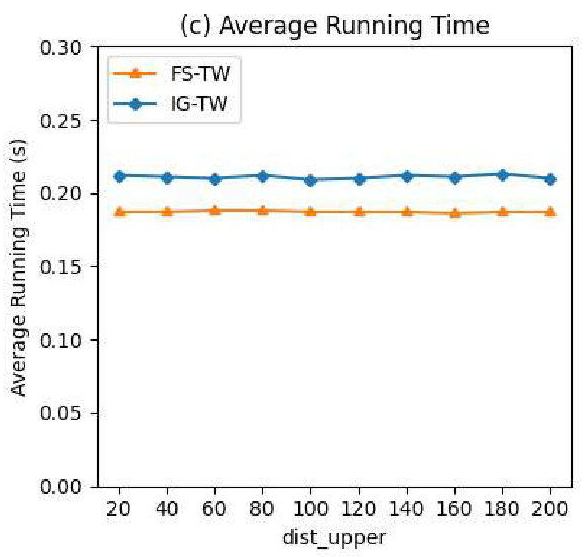 Figure 2: Impact of the distance threshold on Precision and Recall.
Comprehensive Insight
KMUL succeeds because it respects the physical constraints of human mobility. By ignoring the "noise" (a one-off vacation check-in) and focusing on the "signal" (the workplace or home), it bypasses the sparsity problem that cripples trajectory-based models.
Limitations: The method relies on users having at least records to form meaningful clusters. In Extremely sparse scenarios where users only have 1 or 2 data points, the clustering logic may falter.
Future Work: The integration of temporal "rhythms" (e.g., when a user is at a location) could further refine the linkage accuracy without sacrificing the speed KMUL has established.