
CSIT: Integrating Individual Trust and GMM for Advanced Context-Aware Social Recommendation
KNOWLEDGE‐BASED SYSTEMS
2024-01-10
Summary
Problem
Method
Results
Takeaways
Abstract
The paper presents CSIT, a context-aware social recommendation method that integrates individual trust into a Probabilistic Matrix Factorization (PMF) framework. It establishes a dual-space optimization approach and utilizes a Gaussian Mixture Model (GMM) to handle multi-dimensional contexts, achieving state-of-the-art performance on Epinions and Douban datasets.
## TL;DR
The CSIT (Context-aware Social recommendation via Individual Trust) model addresses the limitations of standard collaborative filtering by simultaneously optimizing user latent features and item ratings using social trust. By replacing traditional decision trees with a **Gaussian Mixture Model (GMM)**, it handles complex contexts—both categorical and continuous—to significantly boost recommendation accuracy in sparse environments.
**Academic Positioning**: This work bridges the gap between pure Social Recommendation and Context-Aware Recommender Systems (CARS), refining the way trust-based regularization is implemented in Matrix Factorization.
## Problem & Motivation: Beyond Simple "Friends"
Existing recommendation engines often fail because they treat users as independent entities. In reality, our decisions are heavily influenced by our social circle. While "Social Recommendation" isn't new, prior works generally suffered from:
- **Dimensional Myopia**: They optimized either the *Latent Feature Space* (making vectors similar) or the *Rating Space* (predicting scores based on friends), but rarely both.
- **Contextual Inflexibility**: Methods like *SoCo* used decision trees to handle contexts, which effectively ignored continuous data like "time of day" or "average rating" by forcing them into categorical buckets.
The authors' insight is simple yet powerful: Trust is a spectrum. The more you trust someone, the more your latent preferences *and* your specific item ratings should align.
## Methodology: Dual-Space Optimization & GMM
### 1. The CSIT Objective Function
The core of CSIT is a unified objective function that applies individual trust in two ways:
- **Feature Space Regularization**: It minimizes the squared distance between user $U_i$ and friend $U_f$, weighted by the trust value $T_{if}$.
- **Rating Space Fusion**: It predicts a rating as a weighted combination ($\alpha$) of the user’s own taste and the aggregate taste of their trusted friends.
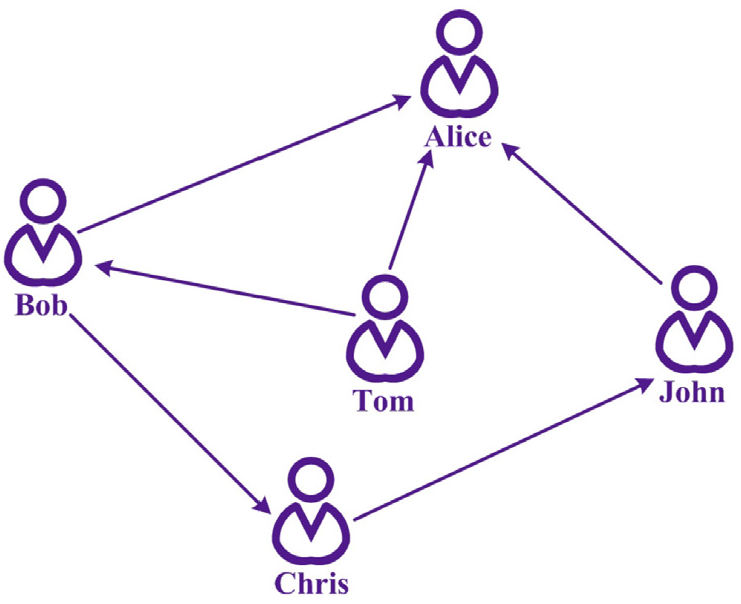
*Fig 1: Graphical representation of the CSIT model, showing the interplay between user latent features, items, and social trust.*
### 2. Contextual Subgrouping via GMM
To handle data sparsity and contextual variance, CSIT clusters user-item-rating triplets using a **Gaussian Mixture Model**. Unlike decision trees, GMM provides a probabilistic framework to group similar "situations" (e.g., "watching a movie on a weekend evening"). This localizes the Matrix Factorization, making it more sensitive to the specific context in which a rating was given.
## Experiments: Proving the Gains
The authors tested CSIT on **Epinions** (sparse) and **Douban** (dense) datasets.
### Key Findings:
- **Sparsity Mitigation**: CSIT showed the most dramatic gains on the highly sparse Epinions dataset (0.08% density), improving RMSE by **16.09%** over standard PMF.
- **The Power of $\alpha$ and $\lambda_f$**: Hyperparameter analysis revealed that recommendation on Douban is more sensitive to $\alpha$ (the scale of friend influence), whereas Epinions is more influenced by $\lambda_f$ (the strength of trust regularization).
- **GMM Efficiency**: The model performs best with a small number of clusters (2-3). Beyond this, the sub-matrices become too sparse, leading to a drop in accuracy.
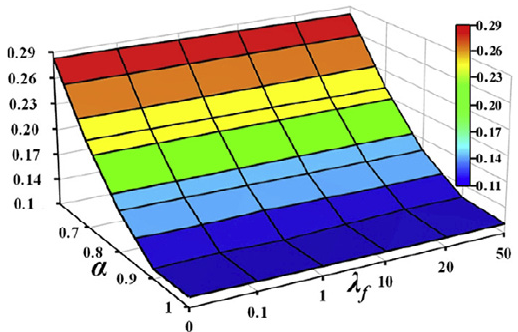
*Fig 2: 3D Visualization of the impact of social parameters on model performance.*
## Critical Analysis & Conclusion
**Takeaway**: CSIT proves that social trust is not a monolithic feature but a multi-layered constraint that operates both on who we *are* (latent features) and what we *do* (ratings).
**Limitations**:
1. **Computational Overhead**: Using GMM for clustering adds a pre-processing step that might be difficult to scale for billion-user datasets.
2. **Trust Dynamics**: The model assumes static trust values, whereas trust in social networks often evolves over time based on interaction quality.
**Future Prospect**: Moving forward, integrating these dual-space constraints into **Graph Neural Networks (GNNs)** could capture higher-order social influences that simple Matrix Factorization might miss.