
m-GA + wgt-PCA: A Potent Hybrid Strategy for Precision Agriculture
KNOWLEDGE‐BASED SYSTEMS
This paper introduces a hybrid data pre-processing strategy for agricultural yield prediction, combining a modified Genetic Algorithm (m-GA) for feature selection with Weighted Principal Component Analysis (wgt-PCA) for feature extraction. The approach optimizes input variables for downstream machine learning models like ANN and ANFIS, achieving SOTA performance across 8 real-world and 3 benchmark datasets.
TL;DR
Crop yield prediction is notoriously difficult due to the complex interplay of soil chemistry, meteorology, and agricultural practices. This paper presents a sophisticated pre-processing pipeline: it uses a modified Genetic Algorithm (m-GA) to pick the most meaningful features and Weighted-PCA (wgt-PCA) to compress them into high-signal components. The result? A significant boost in accuracy across multiple ML models, including a ~20% improvement in R-squared for Neural Networks.
Why Standard Methods Fail in the Field
In agricultural data, more isn't always better. Features like "Soil pH" and "Rainfall" might be highly correlated, creating redundancy that confuses standard regressors.
- Filter Methods (like Correlation) often miss non-linear relationships.
- Wrapper Methods are computationally expensive.
- Standard PCA can lose vital information if the variance is dominated by noise.
The authors recognized that agricultural data is inherently non-linear and noisy, requiring a selection mechanism that looks at both Statistical Information (MutInf) and Predictive Power (RtMSE).
Methodology: The Hybrid Engine
The core innovation lies in the Stage 2 workflow, which bridges evolutionary search and linear algebra.
1. The Modified Genetic Algorithm (m-GA)
Unlike standard GAs that might only look at accuracy, the authors designed a "Multi-Objective" fitness function:
- MutInf: Measures how much information the feature shares with the target yield .
- RtMSE: Ensures the selected subset actually works in a real model (ArtNN). By weighting (0.7 vs 0.2), the algorithm prioritizes predictive accuracy while ensuring the features are informationally rich.
2. Weighted-PCA (wgt-PCA)
After m-GA selects the "VIP" features, wgt-PCA takes over. Unlike standard PCA, it uses a weighted covariance matrix. This is crucial for localizing the impact of training records, ensuring that the extracted principal components (PCs) are not skewed by distant outliers in the feature space.
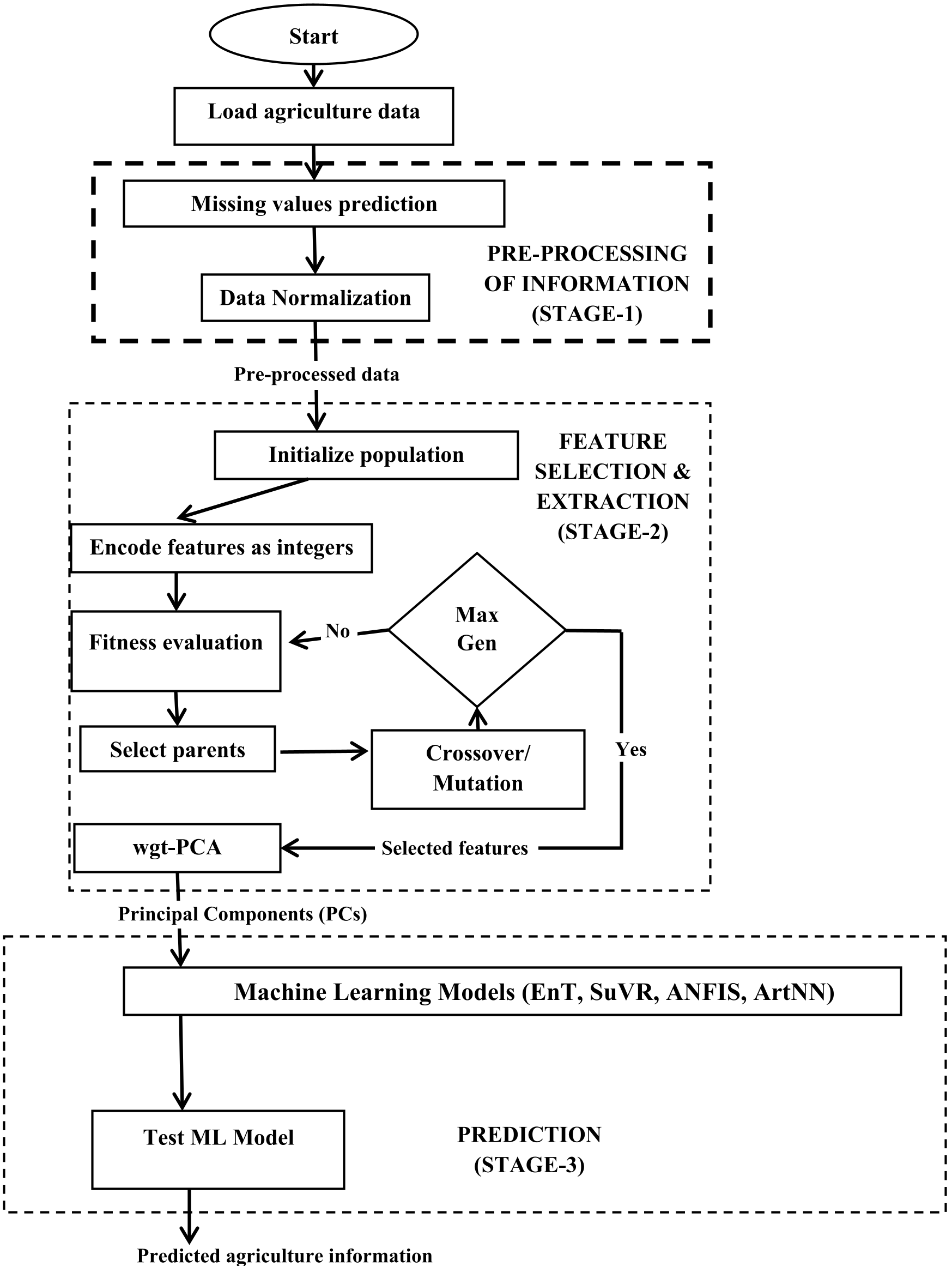 Figure 1: The three-stage pipeline from raw data to final prediction.
Experimental Results: SOTA Performance
The authors didn't just test on one crop; they validated across 8 Indian staples (Wheat, Maize, Bajra, etc.) and 3 international benchmarks.
Key Finding: Variance Capture
In the Wheat dataset, the m-GA selected 14 features, which wgt-PCA then compressed into 9 principal components. These 9 PCs captured 94.61% of the data's variance, effectively removing noise without losing the "essence" of the data.
 (Note: Placeholder for performance comparison vs baselines)
Head-to-Head Comparison
The hybrid approach consistently outperformed:
- Full Data: Proving that some features are better left out.
- Correlation (CA): Showing that linear associations aren't enough.
- Standard GA: Proving that the new fitness function (MutInf + RtMSE) is superior.
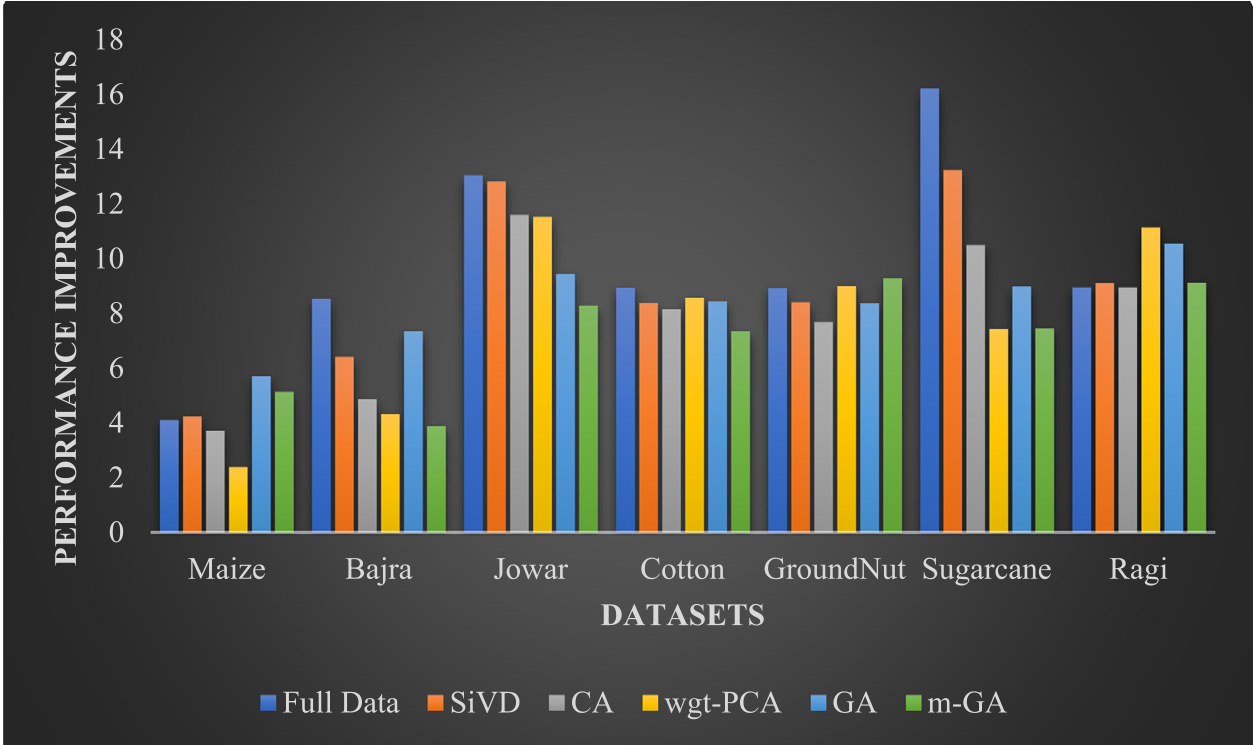 Figure 2: Performance gains of m-GA+wgt-PCA over traditional methods across different crop types.
Critical Analysis & Conclusion
The real value of this paper is the hybridization philosophy. While GA is great at global search (finding the right features), it's not a dimensionality reduction tool. PCA is great at reduction but is "blind" to which features actually matter for a specific target.
Limitations:
- The weights ( and ) in the fitness function were found via trial-and-error. An adaptive weighting scheme could be a future improvement.
- The use of "Mean Imputation" is primitive; more advanced techniques like K-Nearest Neighbors (KNN) or MICE imputation might further boost the stability of the m-GA.
The Takeaway: For domain-specific AI, the pre-processing stage is where the battle is won. By combining evolutionary intelligence with weighted statistics, we can build models that are both lighter and more accurate.