
Decoding the Digital Heart: A Feature-Driven Approach to Email Emotion Recognition
KNOWLEDGE‐BASED SYSTEMS
This paper presents a machine learning framework for identifying dominant emotions in short email texts, categorizing them into six classes including neutral, happy, sad, angry, positively surprised, and negatively surprised. Utilizing a combination of 14 in-text features and an SVM-based classifier, the proposed system achieves a state-of-the-art average accuracy of 83% on a newly developed balanced dataset.
TL;DR
Communication via email often lacks the tonal and visual cues of face-to-face interaction, leading to frequent misinterpretations. This paper introduces a supervised learning framework that utilizes 14 specific in-text features to identify six dominant emotions in email text. By moving away from complex deep learning architectures toward transparent, feature-engineered models, the authors achieved an average accuracy of 83%, setting a new benchmark for short-text affective computing.
Background: Beyond Simple Sentiment
In the landscape of Affective Computing, most tools focus on Sentiment Analysis—is the text positive, negative, or neutral? However, human emotion is far more nuanced. An "angry" email requires a different organizational response than a "sad" one, even though both are "negative." The challenge lies in the "Short Text Problem": emails are often too brief for traditional Bag-of-Words models to find meaningful patterns, leading to severe feature sparsity.
The Core Insight: In-Text Features
The authors argue that the structure of our writing betrays our emotions. Instead of looking just at what we say, they look at how we say it using 14 linguistic markers:
- Lexical Counts: Verbs, Adjectives, Adverbs, Conjunctions, and Nouns.
- Syntactic Presence: Boolean flags for the existence of the above categories.
- Punctuation Prosody: The frequency of "?" and "!" (key indicators of surprise or anger).
- Sentiment Polarity: Counts of positive and negative words derived via SentiWordNet.
Methodology: The Framework
The system follows a rigorous pipeline:
- Preprocessing: Tokenization, stop-word removal, lemmatization, and Parts-of-Speech (PoS) tagging.
- Feature Selection: Using PCA, Information Gain (IG), and Mutual Information (MI), they identified that verb, adjective, and adverb counts are the most predictive "Top Features."
- Classification: Comparing Artificial Neural Networks (ANN), Random Forests (RF), and Support Vector Machines (SVM).
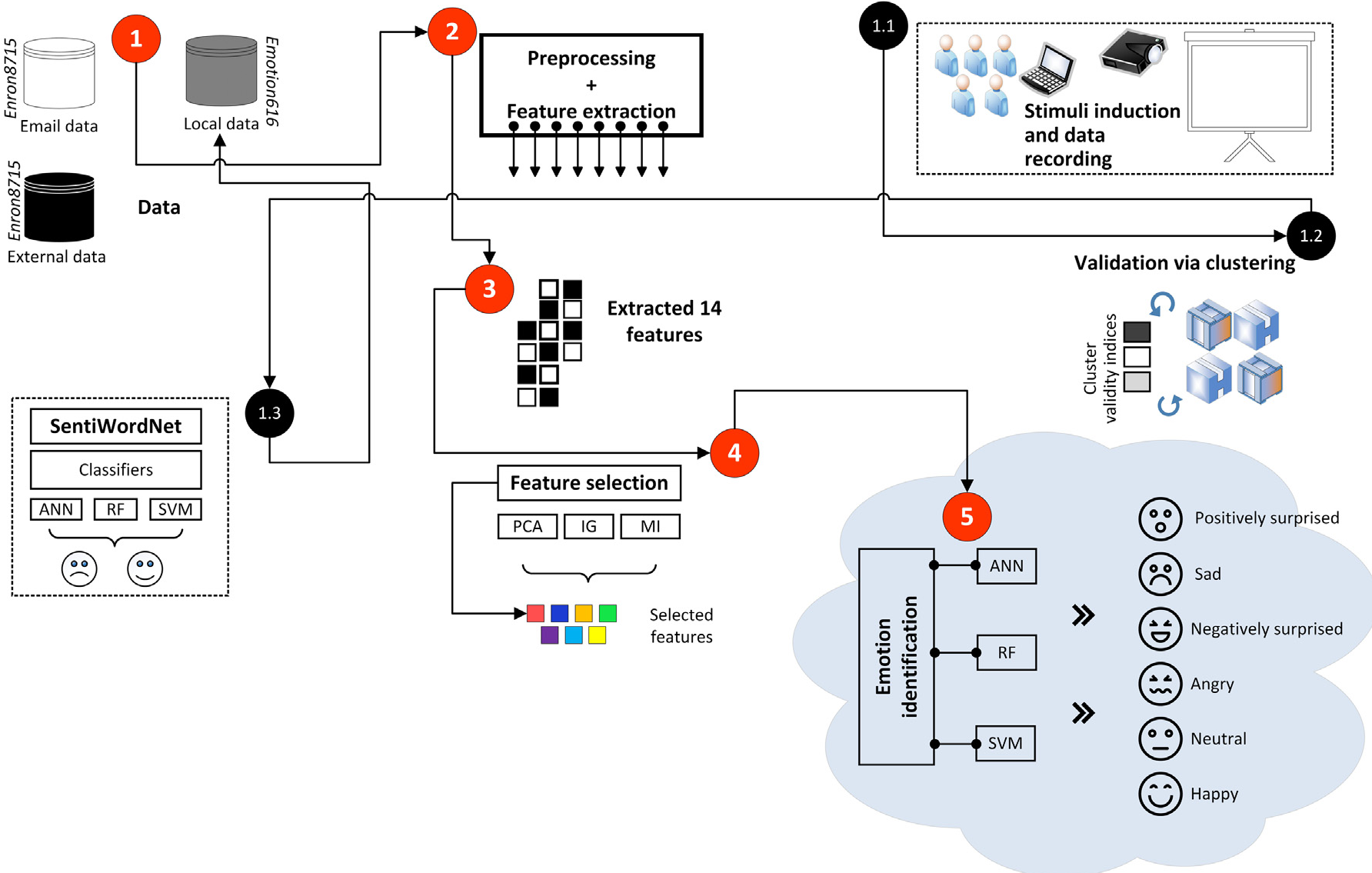 Figure 1: Overview of the proposed emotion identification framework.
The Data Challenge
To train the model, the authors created Emotion616, a novel dataset. They induced real emotions in 61 participants using stimulus videos (e.g., inspirational clips for "Happy," Syrian civil war footage for "Angry/Sad") and then had them write emails under that influence. This "non-posed" nature makes the dataset more reflective of real-world triggers compared to standard datasets.
Experimental Showdown
The results were conclusive: SVM (Support Vector Machine) is the king of short-text emotion.
- SVM Performance: Achieved 83% accuracy on the Emotion616 dataset.
- Model Comparison: ANN and Random Forest struggled, trailing significantly behind SVM in the multi-class (6-emotion) task.
- Granular Success: When tasked with identifying a single emotion against all others, the model reached 97% accuracy for "Negatively Surprised" and 95% for "Sad."
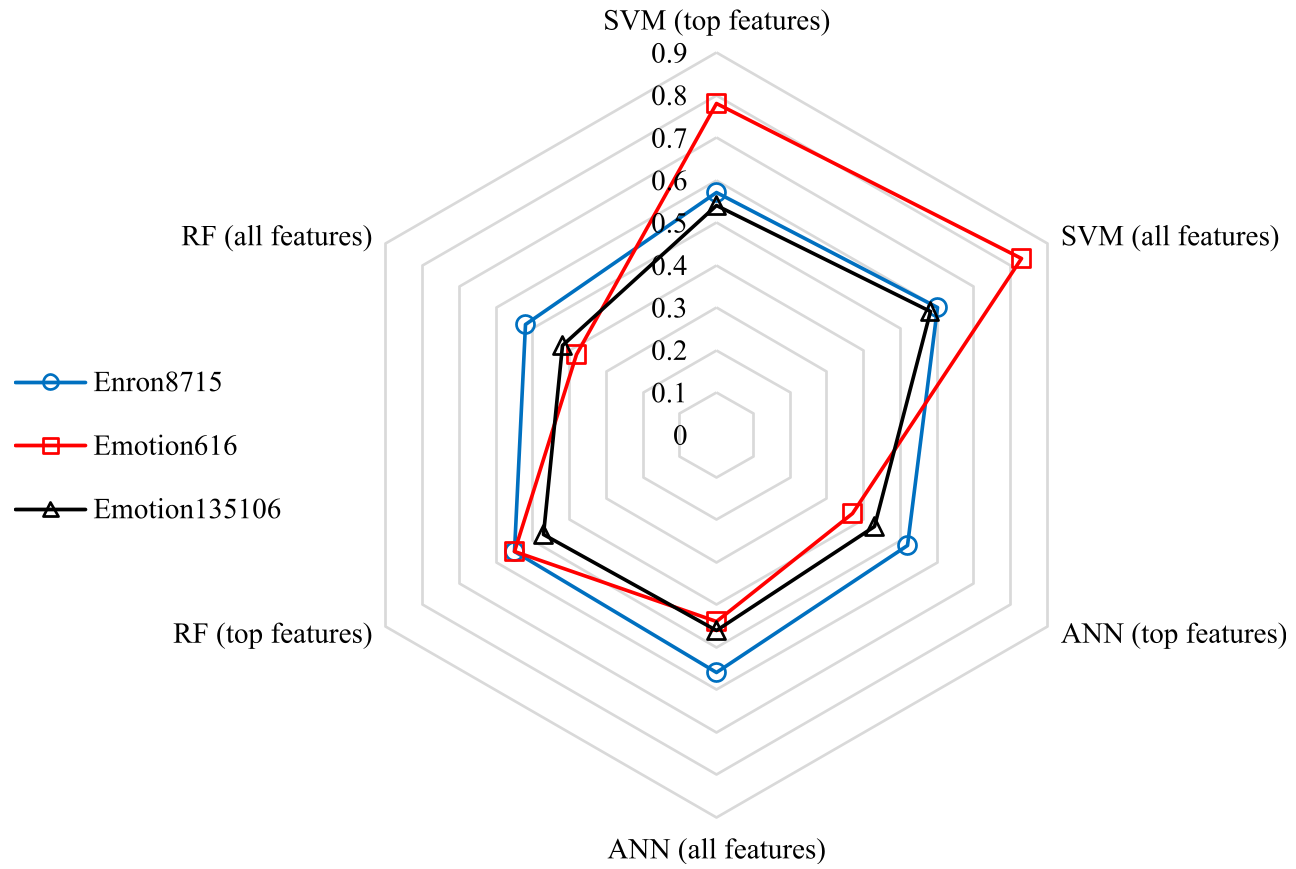 Figure 2: Comparative performance of SVM, ANN, and RF across different datasets.
Why It Works: The "Why" vs. "What"
The success of this framework over Deep Learning (DL) approaches (like Kratzwald’s RANN) lies in its transparency. Deep learning models are "black boxes" that require massive datasets to learn semantic nuances. By contrast, by manually identifying "in-text features" like the high density of adverbs or exclamation points, the authors gave the SVM a high-signal, low-noise input that is perfectly suited for short documents where context is limited.
Future Outlook and Limitations
While the results are impressive, the authors acknowledge the "Role of Gender" and "Culture" as overlooked variables. Future iterations could integrate gender-specific linguistic patterns to further refine accuracy.
For the industry, this technology acts as a powerful HCI (Human-Computer Interaction) add-on. Imagine an email client that warns you: "The tone of your draft sounds 'Angry.' Are you sure you want to send this?" Or a customer support dashboard that prioritizes "Negatively Surprised" queries over "Neutral" ones.
Conclusion
By leveraging the physical structure of text—the PoS tags and punctuation—Halim et al. have proven that you don't always need massive neural networks to solve complex human problems. Sometimes, the most powerful insights are hidden in the way we use our verbs and adjectives.