
DRHGA: Mastering Influence Maximization from the Follower's Perspective
KNOWLEDGE‐BASED SYSTEMS
This paper introduces the Competitive and Complementary Independent Cascade (CCIC) model and a Deep Recursive Hybrid (DRH) model to solve the "follower-based influence maximization" task. It enables a follower company to select top-K seed nodes for a target product in a market already populated by multiple competing and complementing items.
TL;DR
In a crowded market, how does a newcomer (the "follower") maximize the spread of a new product when the social network is already saturated with competing and complementary goods? This paper moves beyond simple "one-product" models by introducing the CCIC diffusion model and DRH, a deep recursive hybrid model that uses LSTM architectures to predict influence probabilities based on both adoption history and user ratings.
Academic Positioning: This work bridges the gap between traditional graph-based influence maximization and modern sequential deep learning, specifically targeting the "Follower-based" IM niche.
Problem & Motivation: The "Follower's" Dilemma
Most Influence Maximization (IM) research assumes a vacuum—a network where only one entity spreads. Even multi-entity models usually treat products as either purely competitive (Product A prevents buying Product B) or purely complementary (Buying A helps buying B).
The authors identify three fatal flaws in prior SOTA:
- Static Assumptions: Product correlations are often treated as fixed, whereas in reality, a user's interest changes dynamically as they adopt more items.
- Ignoring Side Information: User ratings (sentiments) are goldmines for predicting next-period adoptions but are rarely utilized in IM.
- The Global Fallacy: Most models aim to maximize all products, whereas a specific brand only cares about their target product (the Follower's Perspective).
Methodology: The Deep Recursive Hybrid (DRH) Model
The core innovation lies in the Competitive and Complementary Independent Cascade (CCIC) model. Unlike the standard IC model, the influence probability is not a fixed edge weight but a dynamic value that scales based on the entire sequence of previous activations.
The LSTM Architecture with Decomposition Gates
To calculate these probabilities, the authors built DRH, a specialized RNN.
- Main Sequence: Processes the history of product activations.
- Side Sequence: Processes the history of user ratings.
- The Decomposition Gate: Instead of a standard LSTM cell, they use a gate to control how much the "rating" sequence influences the "activation" cell state. This recognizes that while ratings provide context, they are not the primary drivers of the cascade geometry.
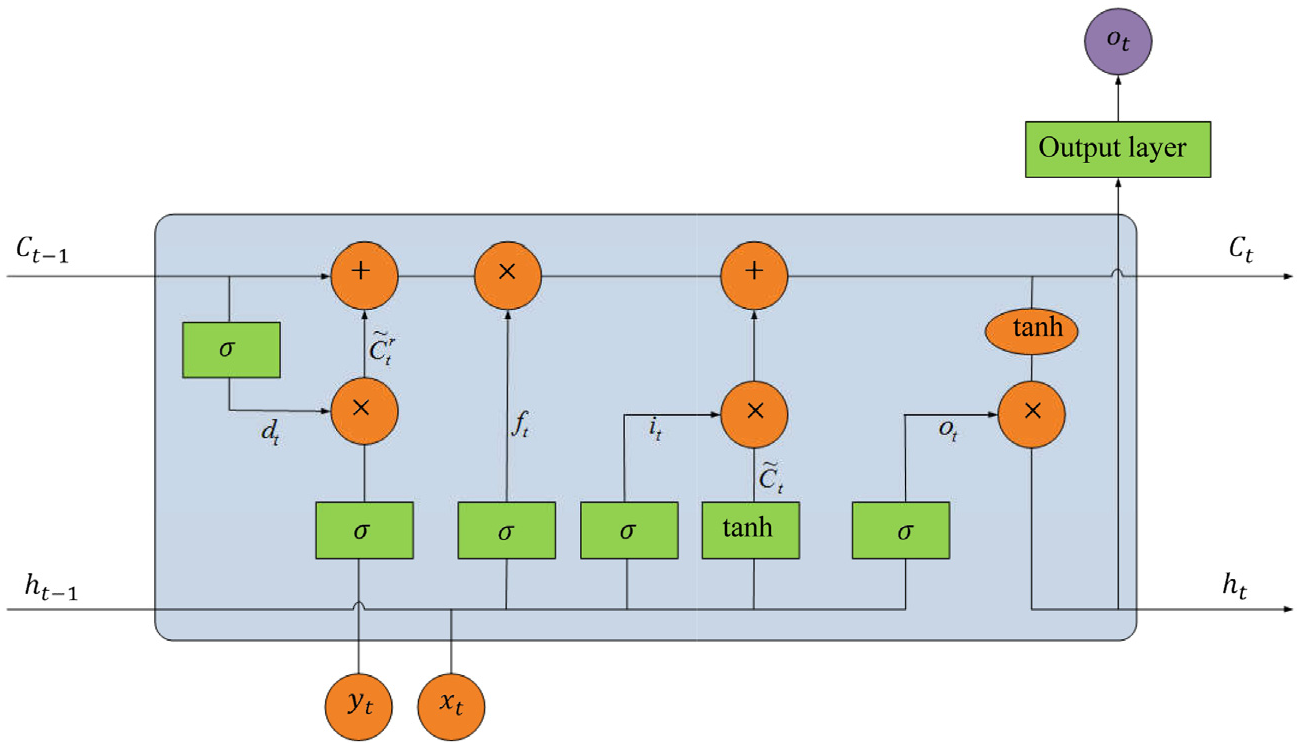 Fig 1: The DRH structure showing the dual-input sequence (activation and rating) and the decomposition gate logic.
The predicted activation probability is then plugged into the DRHGA algorithm, a greedy approach that maintains a approximation ratio by exploiting the proven submodularity of the objective function.
Experiments & Results
The model was tested on three massive datasets: Yelp, Epinions, and Flixster.
1. Superior Prediction Accuracy
DRH significantly outperformed baselines like IMM (Single-entity), Clash (Competitive), and CorrelatedC.
- Flixster Precision: DRH reached 0.5725, while the next best baseline (CorrelatedC) was only 0.2902.
- Interpretation: By looking at the order and sentiment of previous purchases, the model predicts the "next move" of a user with twice the accuracy of models that ignore sequence history.
2. Expected Influence Spread
In terms of the actual goal—maximizing reach—the DRHGA algorithm consistently outperformed others as the number of seeds () increased.
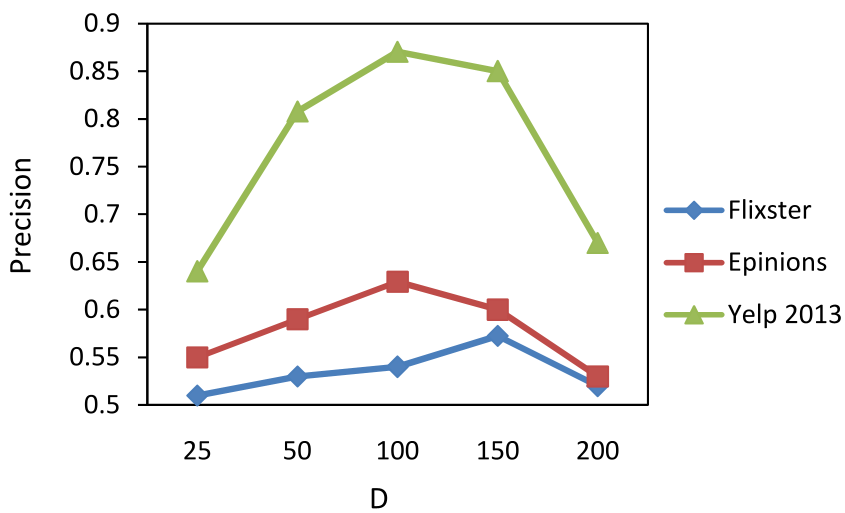 Fig 2: Expected spread comparison. DRHGA (blue line) maintains a clear lead across different seed sizes.
3. Scalability
While the DRHGA algorithm takes more time than simple heuristics (like IMM) due to the deep learning inference step, it demonstrates linear scalability as the network size grows, making it practical for real-world social graphs.
Critical Analysis & Conclusion
Takeaway
The shift from "Static Graphs" to "Dynamic Sequences" is the future of Influence Maximization. This paper proves that high-fidelity modeling of user behavior (via LSTMs) is worth the computational overhead, as it yields drastically better seed sets for target products.
Limitations
- Online Evolvement: The current model assumes a static social graph . In reality, social links are formed and broken dynamically.
- Cold Start: The model relies on activation and rating history. For brand-new networks with zero data, the model would likely revert to a standard IC model.
Future Work
The authors suggest moving toward Online Follower-based IM, where the model learns and adjusts its parameters in real-time as the cascade unfolds. This would bring IM closer to the "Reinforcement Learning" paradigm.