
Mapping Collective Intelligence: How Knowledge Cartography Bridges Scientific Silos
Knowledge Cartography and Social Network Representation: Application to Collaborative Platforms in Scientific Area
The paper introduces a collaborative framework for scientific research that utilizes <strong>Knowledge Cartography</strong> and <strong>Extended Semantic Networks (ESN)</strong>. By integrating mathematical proximity models with human expert ontologies, the system generates social network representations that map expert connections based on shared document semantics, specifically applied to the ToxNuc nuclear toxicology program.
TL;DR
In the complex landscape of multidisciplinary research, finding "who knows what" is as challenging as the research itself. This paper presents a framework that uses Extended Semantic Networks (ESN) and Knowledge Maps to transform flat document repositories into dynamic social networks. By measuring the semantic "distance" between papers, the system automatically draws a map of human expertise, enabling researchers in fields as different as nuclear physics and biology to collaborate through shared concepts.
The Motivation: High Stakes and Fragmented Knowledge
Modern scientific challenges—like understanding the impact of radionuclides on human health (ToxNuc) or developing psycho-sensitive materials (CARNOT-MINES)—cannot be solved by a single discipline. However, researchers are often trapped in their own terminological "bubbles."
The authors argue that collaboration is a form of Collective Intelligence, where the group performs better than the sum of individuals. The core obstacle is Coordination: managing the dependencies between geographically dispersed experts. To solve this, the researchers sought to build a "mirror" of group activity—a visual map that shows how ideas (and thus people) are connected.
Methodology: The Fusion of Machine Logic and Human Insight
The heart of the paper is the Extended Semantic Network (ESN). The authors recognize that purely manual ontologies don't scale, while purely mathematical models often lack nuances. They propose a two-phase hybrid approach:
- Proximal Network (The Machine): A statistical engine that processes word frequencies and physical distances between terms across thousands of documents. This ensures scalability and catches "raw" associations.
- Semantic Network (The Mind): Experts define the "core" of the domain using UML-style relationships (Inheritance, Composition, etc.).
- The "Hair Extension" Method: The system identifies common nodes between the two networks and "grafts" the mathematical proximity data onto the expert core, extending the network by up to five levels of association.
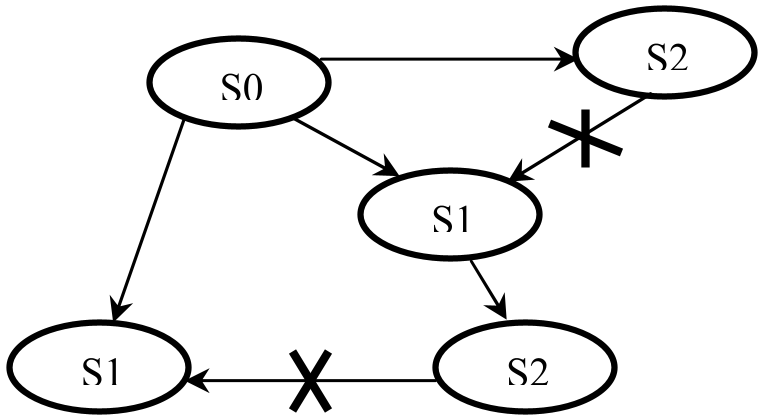 Fig. 1: The relational flow illustration showing how nodes are extended hierarchically.
From Documents to Social Networks
Once the ESN is built, the authors apply it to the documents on the platform. By treating documents as "bags of words" and applying Jaccard Distance (the ratio of shared words to total unique words), they can calculate how "close" two papers are.
Crucially, they then transpose this onto the authors. If Researcher A writes a paper semantically close to Researcher B's work, the system draws a link between them. This creates a Social Network of Knowledge, revealing that a biologist and a chemist might be working on the same concept without ever having met.
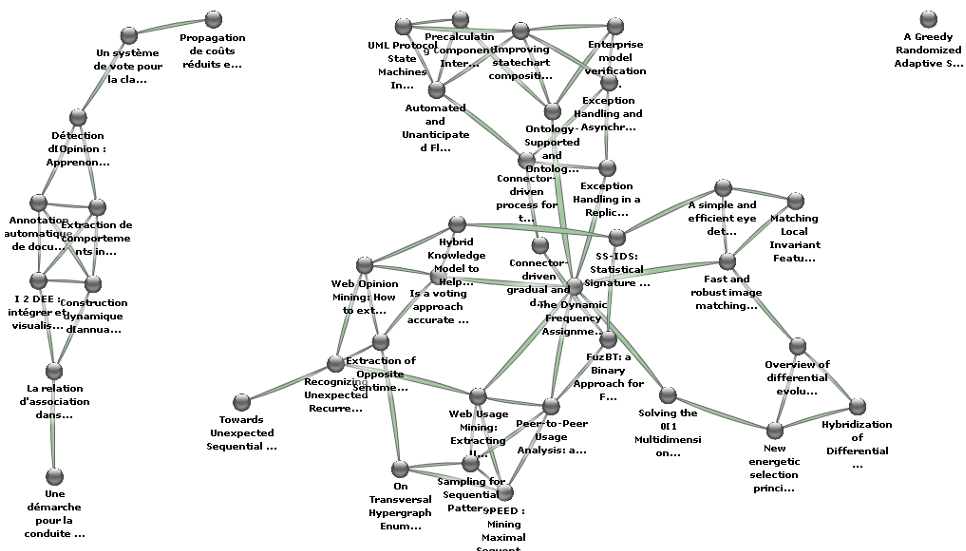 Fig. 2: A document knowledge graph using Jaccard distance to visualize semantic clustering.
Experimental Evidence & Real-World Impact
The framework was deployed across several major French scientific organizations, including INSERM and the CEA.
- ToxNuc Program: Involved over 250 researchers. The platform's tools helped manage 79 publications and 4 patents.
- Semantic Accuracy: Experts verified the ESN results, finding them "exceedingly encouraging" and very close to human-constructed concept networks but at a fraction of the cost and time.
- Redundancy Discovery: The document graphs allowed administrators to find older versions of files and redundant data that were traditional "buried" in folders.
Deep Insight: Why This Works
The brilliance of this approach lies in the Inductive Bias provided by the expert ontology. By using a "Semantic Core," the system avoids the "garbage in, garbage out" trap of purely statistical NLP. It provides a structured "anchor" for the machine's statistical findings.
Furthermore, by focusing on Nouns (POS tags) for Jaccard distance, the authors optimized for conceptual meaning rather than grammatical noise, which is vital for high-performance information retrieval in specialized scientific domains.
Conclusion and Future Outlook
The paper concludes that Knowledge Cartography is more than just a visualization tool; it is a collaborative catalyst. By making the "invisible" links between researchers visible, it encourages scientists to step out of their silos.
While the current model is robust, the authors point toward a future involving Natural Language Processing (NLP) enhancements and User Modeling—where the map doesn't just show the field, but adapts to the specific research journey of each individual user. In an era of informational overload, these "cartographic" approaches may be the only way to keep the scientific community truly connected.