
Split Up: Decoding Judicial Discretion through Neural Networks and Argumentation Theory
Knowledge discovery in discretionary legal domains
This paper introduces Split Up, a hybrid knowledge discovery system designed to predict property distribution in Australian Family Law. By combining Neural Networks for discretionary reasoning with Toulmin’s Theory of Argumentation for explanation, the researchers successfully modeled complex legal outcomes that traditional rule-based systems struggled to capture.
TL;DR
Predicting the outcome of a divorce settlement isn't just about following rules; it's about understanding how a judge balances a lifetime of contributions against future needs. The Split Up system bridges the gap between "black-box" machine learning and the rigid logic of law by using Neural Networks to model judicial discretion and Toulmin’s Argumentation Theory to explain the results.
Context: Why Traditional Legal AI Fails
In most common law jurisdictions, lawyers focus on Landmark Cases—pivotal decisions that change the course of law. However, for Knowledge Discovery in Databases (KDD), these cases are statistical anomalies. To build a system that reflects the reality of daily legal practice, we need Commonplace Cases: the thousands of unreported, "boring" property disputes that actually define the judicial "norm."
The authors argue that in discretionary domains (like Family Law), judges have the right to act according to their own judgment. This creates a "noise" in the data that traditional logic-based AI cannot handle.
Methodology: The Hybrid Architecture
The core innovation of Split Up is its decomposition of the legal task. Instead of one giant network trying to "solve" a divorce case, the authors broke the process into 35 smaller, interconnected arguments based on Stephen Toulmin’s framework (Claim, Data, Warrant, Backing).
1. The Toulmin Hierarchy
Each legal "point" is an argument. For example, "Post-separation contributions" might be a Data point that feeds into a larger Claim about the "Percentage of assets awarded."
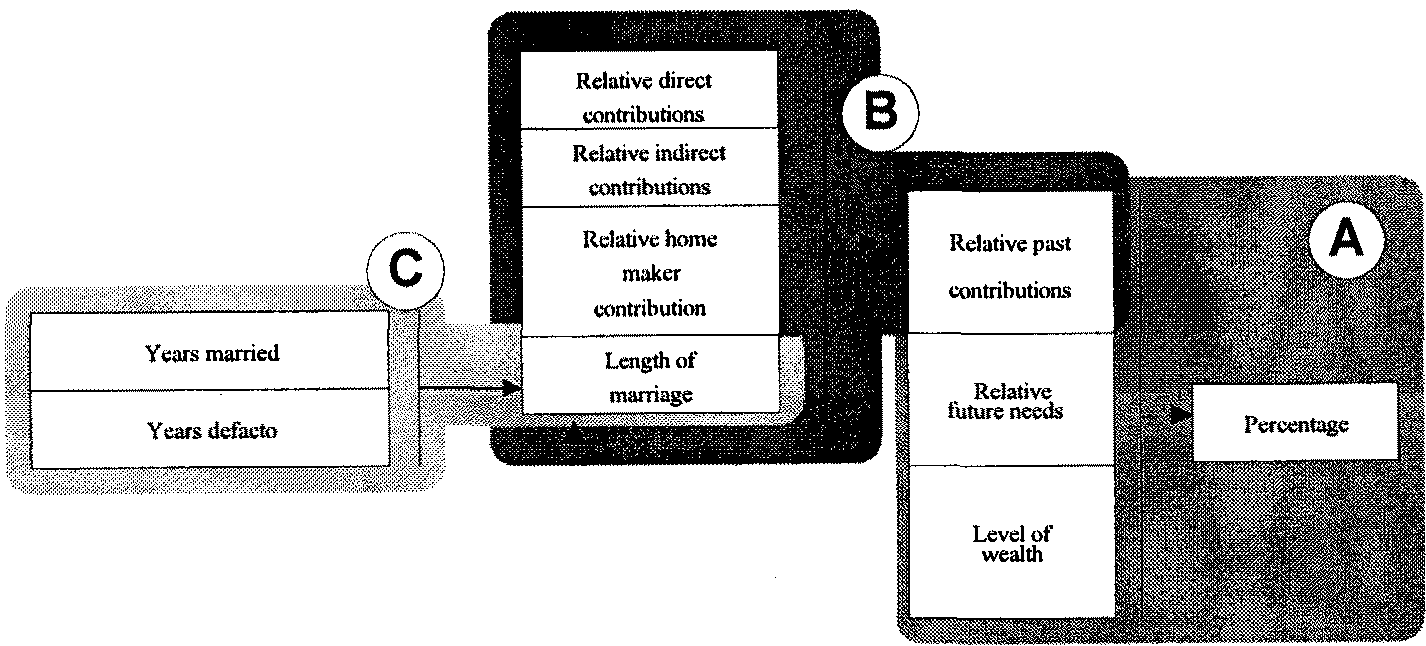 Figure 1: The hierarchy of arguments where Neural Networks (dotted arcs) and labels B and C provide data for the final claim A.
2. Neural Networks for Discretion
Where the law is "open-textured" (vague), the system uses Feed-forward Neural Networks. These networks were trained on data from the Family Court of Australia to learn the "weights" judges typically assign to various factors, such as the length of the marriage or the health of the parties.
3. Handling Contradictions
Law is inherently contradictory. Two judges might see the same facts and arrive at different splits. The authors developed a binary error metric to identify and remove "extreme" cases (outliers) that would otherwise confuse the neural network during training.
Experimental Results
The researchers found that a "flat" structure (throwing all 94 attributes into one model) performed poorly, correctly predicting only 35% of outcomes. However, by using the hierarchical Toulmin structure, they achieved significantly higher accuracy.
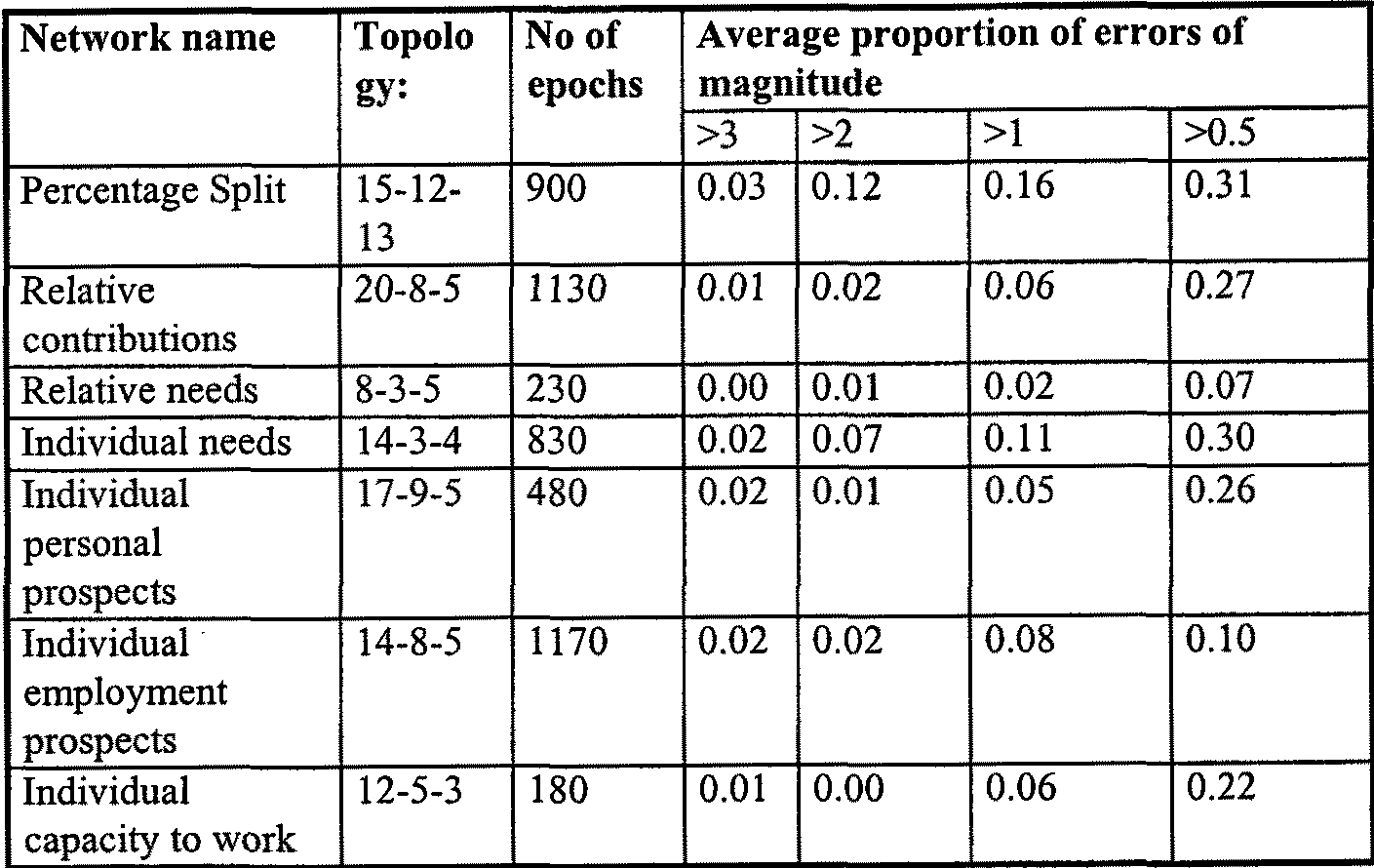 Table 2: Topology and performance showing that significant errors (magnitude >3) were minimized to just 1% to 3% across various sub-networks.
Critical Insight: Explainability is the "Warrant"
In law, the why matters more than the what. If Split Up predicts a 60/40 split, a lawyer needs to know the basis. By using the Toulmin structure, the system can "walk backward" through its logic:
- Claim: Wife gets 60%.
- Reasoning: "Although contributions were equal, the wife has greater future needs."
- Legal Backing: Citing Section 75(2) of the Family Law Act.
Challenges and Future Work
While innovative, the system relies on manual data extraction from written judgments—a labor-intensive process. The authors are exploring Genetic Algorithms to automate feature selection, helping the system identify which of the 94 attributes are truly "load-bearing" for a decision.
Conclusion
Split Up represents a major step forward in Applied AI for Law. It acknowledges that judicial discretion isn't random—it has patterns. By capturing these patterns in neural networks and wrapping them in a human-readable argumentative shell, the authors have created a blueprint for future decision support systems in complex, subjective domains.