
Edu-Affe-Mikey: Bridging the Emotional Gap in Digital Learning via Bi-Modal Fusion
Knowledge Engineering Aspects of Affective Bi-Modal Educational Applications
This paper introduces Edu-Affe-Mikey, a bi-modal affective educational application that recognizes student emotions by fusing data from keyboard dynamics and microphone input. The system utilizes a Simple Additive Weighting (SAW) multi-criteria decision-making model combined with user stereotypes to achieve higher accuracy in emotional state detection during e-learning.
TL;DR
Learning is not just a cognitive exercise; it is an emotional one. Edu-Affe-Mikey is an affective educational system designed to sense a student's feelings—such as frustration, boredom, or happiness—by monitoring how they type and what they say. By combining these two streams of data using a Multi-Criteria Decision Making (MCDM) approach, the system achieves a more nuanced and accurate "read" on the user's state than traditional methods.
Context: Why Emotion Matters in SOTA EdTech
While the AI community has historically prioritized "raw logic," the educational field recognizes that motivation and affect (emotion) are the gatekeepers of learning. The challenge lies in the Signal-to-Noise ratio: a single sigh or a typo doesn't always equal frustration. To solve this, the authors position their work as a Knowledge Engineering triumph, moving from uni-modal (single source) to bi-modal (keyboard + audio) detection to increase reliability.
The Problem: The Idiosyncrasy Bottleneck
As Rosalind Picard, the pioneer of Affective Computing, noted, human emotional expression is highly variable. A novice user might type slowly because they are confused, while an expert types slowly because they are bored. Uni-modal systems cannot distinguish these subtleties. Most existing e-learning tools are "emotionally blind," failing to adapt when a student is on the verge of giving up.
Methodology: The Fusion Logic
The core of the paper is the application of the Simple Additive Weighting (SAW) model. The authors didn't just guess which behaviors matter; they used two empirical studies (one with 50 students, one with 16 experts) to map behaviors to emotions.
1. The Bi-Modal Sensor Suite
- Keyboard (6 Criteria): Speed, Backspace frequency, "unrelated" key hits, and typing pauses.
- Microphone (7 Criteria): Volume, pitch, use of "emotion words" (e.g., "Bravo"), and exclamations.
2. Implementation with User Stereotypes
The system categorizes users into stereotypes based on age and computer experience. A "Novice Young User" has different weights for "Backspace usage" than a "Professional Adult."
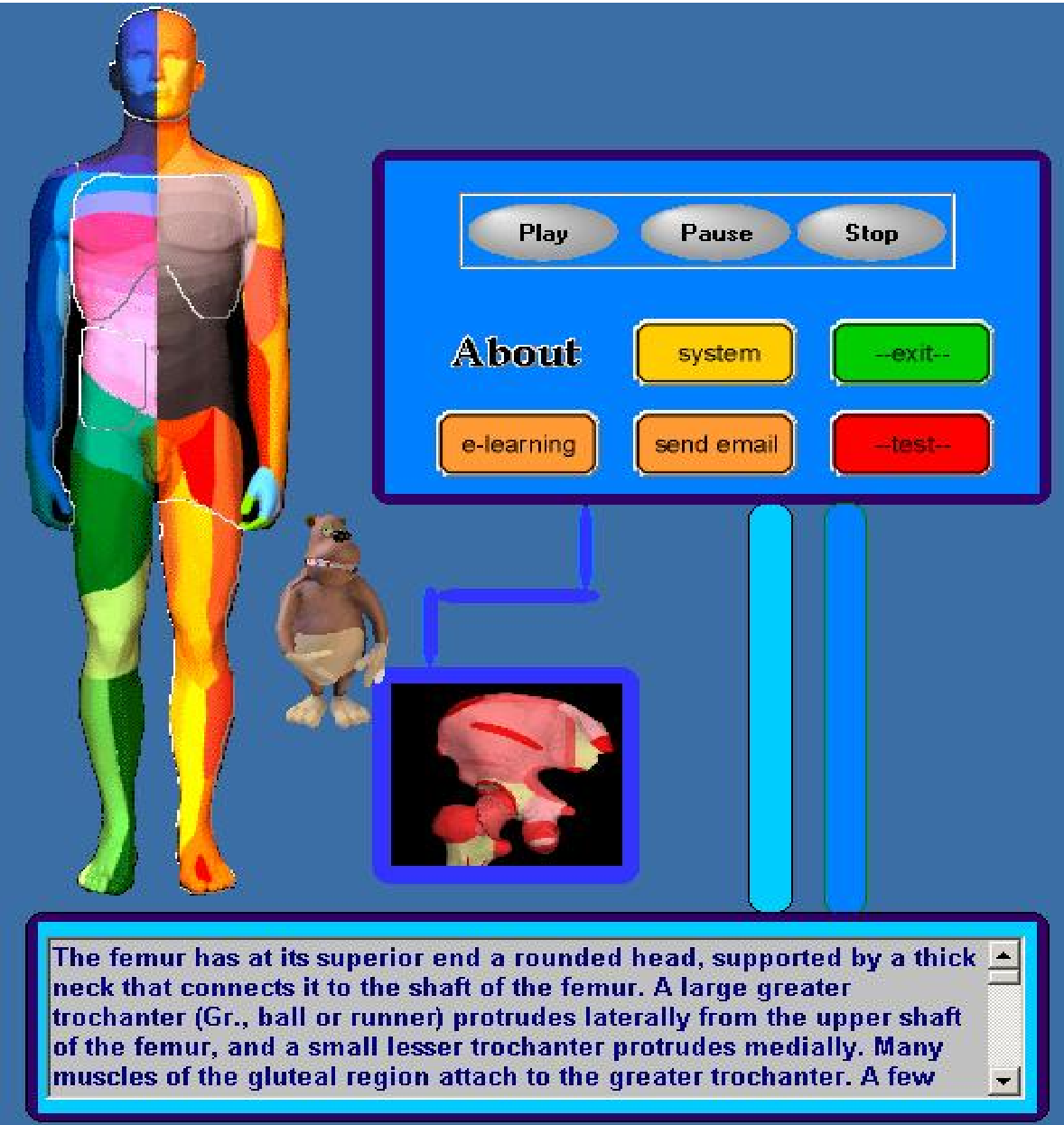 Figure 1: The system architecture, showing the monitoring component feeding data into the User Modeling database.
3. The Math Behind the Feeling
The probability of an emotion is calculated as the mean of the keyboard logic and the microphone logic: Where represents the weight (importance) of a behavior (like typing fast) for a specific emotion (like happiness) under a specific user stereotype.
Experiments & Results: Evidence of Success
The system was tested on medical students. The researchers compared the system's "guesses" against the students' own self-assessments after watching video recordings of their sessions.
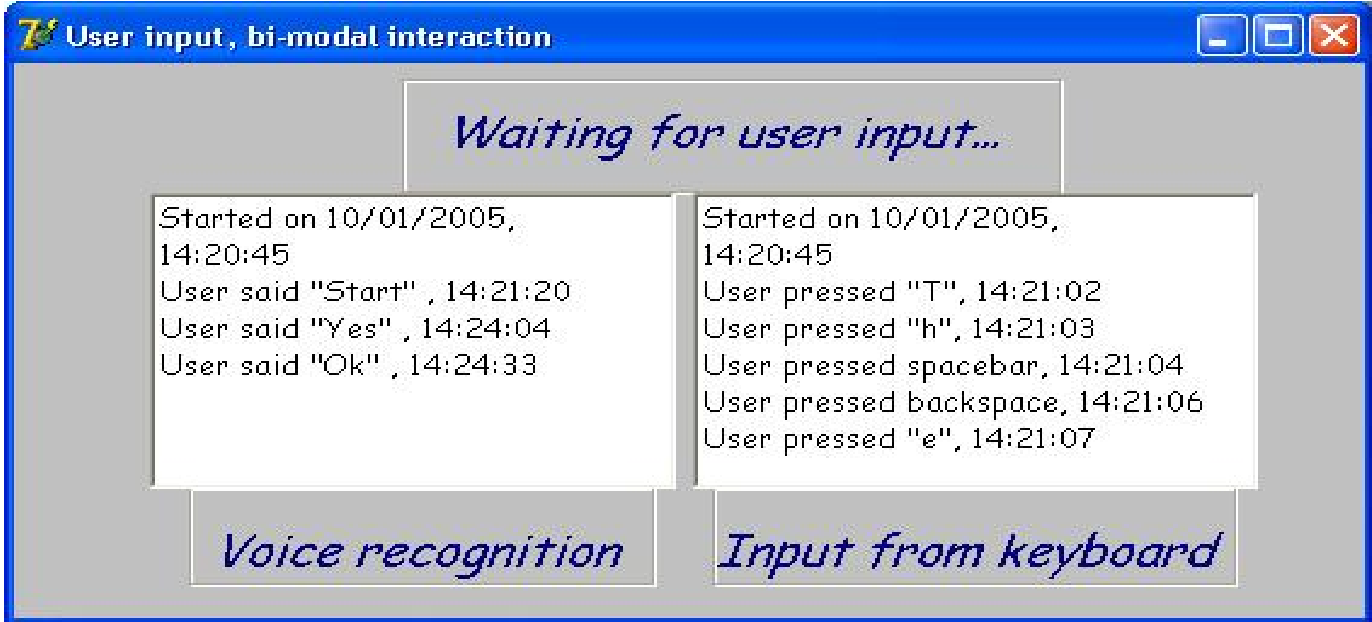 Figure 2: The interface where the student interacts with the Medical course and an animated agent.
Performance Metrics:
| Emotion | Recognition Accuracy |
|---|---|
| Anger | 70% |
| Sadness | 70% |
| Happiness | 64% |
| Neutral | 46% |
The results indicate that the system is particularly good at detecting high-intensity negative emotions (Anger/Sadness), which are exactly the states where an educational system should intervene.
Critical Insight & Future Directions
The "magic" of this work isn't in a complex neural network, but in Knowledge Engineering. By explicitly modeling human expert heuristics into a decision-making model, the authors created a lightweight, explainable AI system.
Limitations:
- Scope: The current model is tuned for young, novice users. Generalizing this to all age groups requires more data.
- Environmental Sensitivity: Keyboard and microphone monitoring can be affected by background noise or hardware differences.
The Future:
The authors are already moving toward a tri-modal system by adding Visual cues (facial recognition), which will likely push the accuracy for "Surprise" and "Disgust" past the 80% mark.
Takeaway
Edu-Affe-Mikey proves that you don't need "Black Box" deep learning to create empathetic software. By carefully weighting simple behavioral cues, we can make computers that don't just teach, but "understand."