
Breaking Knowledge Invisibility: Leveraging the SECI Model and Web Tools for Collective Intelligence
Knowledge Management and Collective Intelligence through Web Tools
This paper presents a framework for enhancing Knowledge Management (KM) and Collective Intelligence (CI) in educational settings using Web tools. It implements the Nonaka and Takeuchi SECI model (Socialization, Externalization, Combination, Internalization) within the Bachelor of Information and Technology (BIT) program to transform individual tactile knowledge into shared social knowledge.
Executive Summary
TL;DR: This research explores how educational institutions can transition from teacher-centric models to dynamic collaborative ecosystems. By applying the SECI (Socialization, Externalization, Combination, Internalization) model alongside modern Web tools, the study aims to convert individual "tactile" knowledge into scalable "collective intelligence" (CI) within Information Technology curricula.
Academic Context: This work sits at the intersection of Applied Computing and Pedagogical Science, serving as a methodological bridge to implement corporate Knowledge Management (KM) strategies within the academic "Technological Ecosystem."
The Core Challenge: Knowledge Invisibility
The paper identifies a critical flaw in modern education: Knowledge Invisibility.
- The Pain Point: Academic knowledge is often treated as "tactile"—locked within the mind of an individual student or teacher.
- The Consequence: Without a systemic organization, this knowledge remains stagnant. Traditional models focus on individual achievement, ignoring the potential of the group to produce more insight than the sum of its parts.
- The Insight: To solve this, institutions must adopt a spiral model where knowledge is continuously transformed, externalized, and shared through digital mediators.
Methodology: The SECI Spiral & Web Mediators
The authors adopt the Nonaka and Takeuchi SECI model as the structural backbone of their research. This model describes a continuous "knowledge spiral":
- Socialization: Sharing experiences and mental models through interaction.
- Externalization: Using metaphors and analogies to make "hidden" knowledge explicit.
- Combination: Merging newly created knowledge with existing organizational data.
- Internalization: Turning shared information into personal "learning by doing."
The Role of Web Tools
Web tools (Web 2.0) are not just platforms; they are mediators. Tools like blogs, wikis, and forums facilitate the "horizontal communicative relationship" necessary for the ontological spiral to ascend from the individual to the group level.
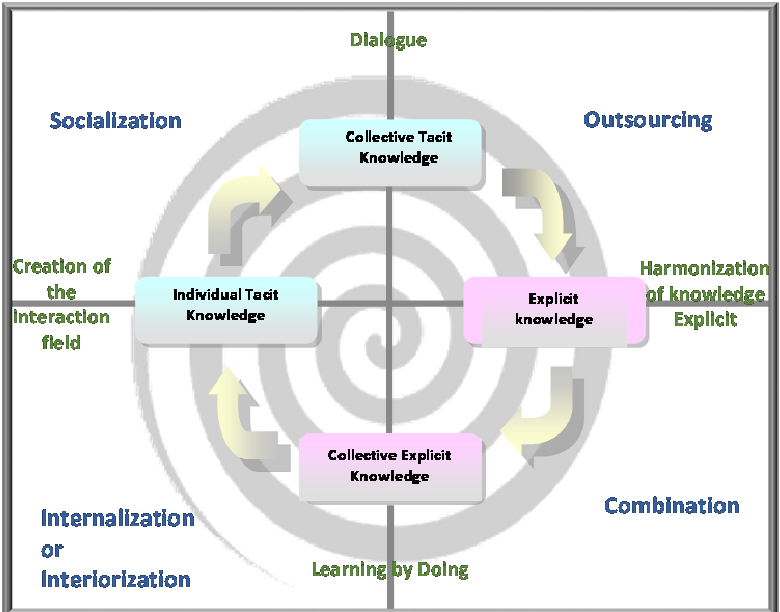 Figure 1: The SECI Knowledge Spiral showing the interaction between Tacit and Explicit knowledge types.
Research Design and "Diagnostic" Phase
The research employs a Mixed-Method Triangulation Design to ensure validity.
- Population: 150 students from the Bachelor of Information and Technology (BIT) program.
- The Experiment: The study compares two groups—one utilizing the SECI model with Web tools for collaborative work, and a control group working individually.
- Key Variables:
- Independent Variable: Knowledge Management (the generation/transfer process).
- Dependent Variable: Collective Intelligence (the emergent group quality).
- Intervening Variable: Web Tools (the technical mediators).
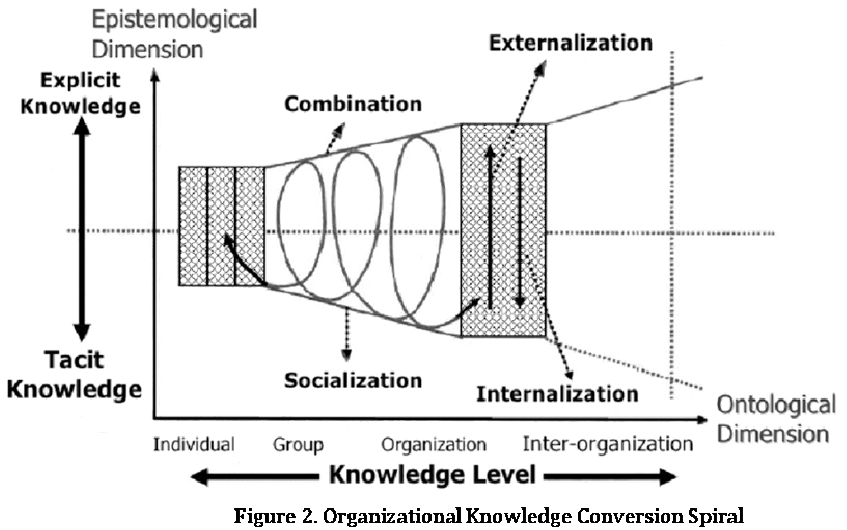 Figure 2: Methodological mapping used to diagnose ICT performance levels among faculty and students.
Early Results and Future Horizons
The authors have completed the initial diagnostic phase, surveying over 300 participants. Initial findings highlight the gap between current ICT use (often superficial) and the potential for these tools to drive pedagogical innovation.
Critical Insights:
- Intelligence as a Social Insect Model: The paper draws a fascinating parallel between collective intelligence in human organizations and "social insect studies" (bees/ants), emphasizing that CI is an "emergent synergy" between technology and human experts.
- Technological Empowerment: Web tools serve as a means for students to "empower themselves," moving from passive recipients to active contributors in a global knowledge economy.
Conclusion
This research underscores that Knowledge Management is not just for corporations—it is the lifeblood of 21st-century education. By moving away from individualistic, teacher-centered paradigms toward a Spiral Model of Knowledge, universities can cultivate a "Collective Intelligence" that is resilient, visible, and infinitely scalable.
Takeaway: The future of education lies in the synergy between technology and collective wisdom, where every student interaction contributes to a larger, shared intellectual capital.