
E-KMA: Building Automated Knowledge Frameworks from Digital Courseware
A Knowledge Mining Algorithm for E-Courseware Based on Query Likelihood Model
This paper proposes the E-KMA (E-Courseware Knowledge Mining Algorithm), a framework designed to automatically generate structured learning outlines from electronic courseware (e.g., PowerPoint). It integrates an Improved RAKE (IRAKE) algorithm for keyword extraction, a Maximum and Minimum Suppression (MMS) process for redundancy filtering, and a Query Likelihood Model to retrieve explanatory sentences.
TL;DR
Educational content is moving online at an unprecedented scale, yet "mining" the essence of a 100-slide PowerPoint remains a manual chore. This paper introduces a specialized pipeline that extracts key phrases using a position-aware algorithm (IRAKE), filters similarities via MMS, and automatically finds definitions using a Query Likelihood Model. The result is a clean, structured "Knowledge Framework" that turns a messy deck into a concise study guide.
Problem & Motivation: The Slide Dilemma
Most academic keyword extraction research focuses on long-form prose (essays or news). However, e-courseware (PowerPoints) follows a different logic:
- Positional Bias: Professors usually put the "Big Idea" at the very top (titles) or very bottom (summaries) of a slide.
- Redundancy: Core concepts often repeat across 5-10 slides as the lecture progresses, leading to "keyword clutter."
- Context Gap: A standalone keyword like "HFC" is useless for a student without the accompanying explanation tucked away in a bullet point three slides later.
The authors realized that a vanilla algorithm like TextRank is "blind" to these instructional nuances.
Methodology: The Three Pillars of E-KMA
The proposed E-KMA (E-Courseware Knowledge Mining Algorithm) operates through a specialized hierarchy:
1. IRAKE (Improved Rapid Automatic Keyword Extraction)
Standard RAKE relies on word frequency and degree. IRAKE introduces a Position Function. It calculates the distance between a candidate phrase and the "center" of the page. By weighting the head and tail of the slide more heavily, it mirrors the human intuition that titles and conclusions hold the most weight.
2. MMS (Maximum and Minimum Suppression)
To solve the redundancy problem, the MMS process acts as a "semantic filter." It calculates the cosine similarity between phrases:
- Maximum Suppression (): If two phrases are too similar (e.g., "Digital Transmission" and "Data Transmission"), it merges/deletes the redundant one.
- Minimum Suppression (): If a phrase is too unique and has zero relation to anything else in the deck, it’s likely noise (e.g., "Copyright 2024") and gets pruned.
3. Query Likelihood Model (The Explainer)
Once keywords are settled, they act as "Queries." The algorithm treats every sentence in the courseware as a potential document. Using a probabilistic Language Model, it calculates the likelihood that a keyword was generated by a specific sentence.
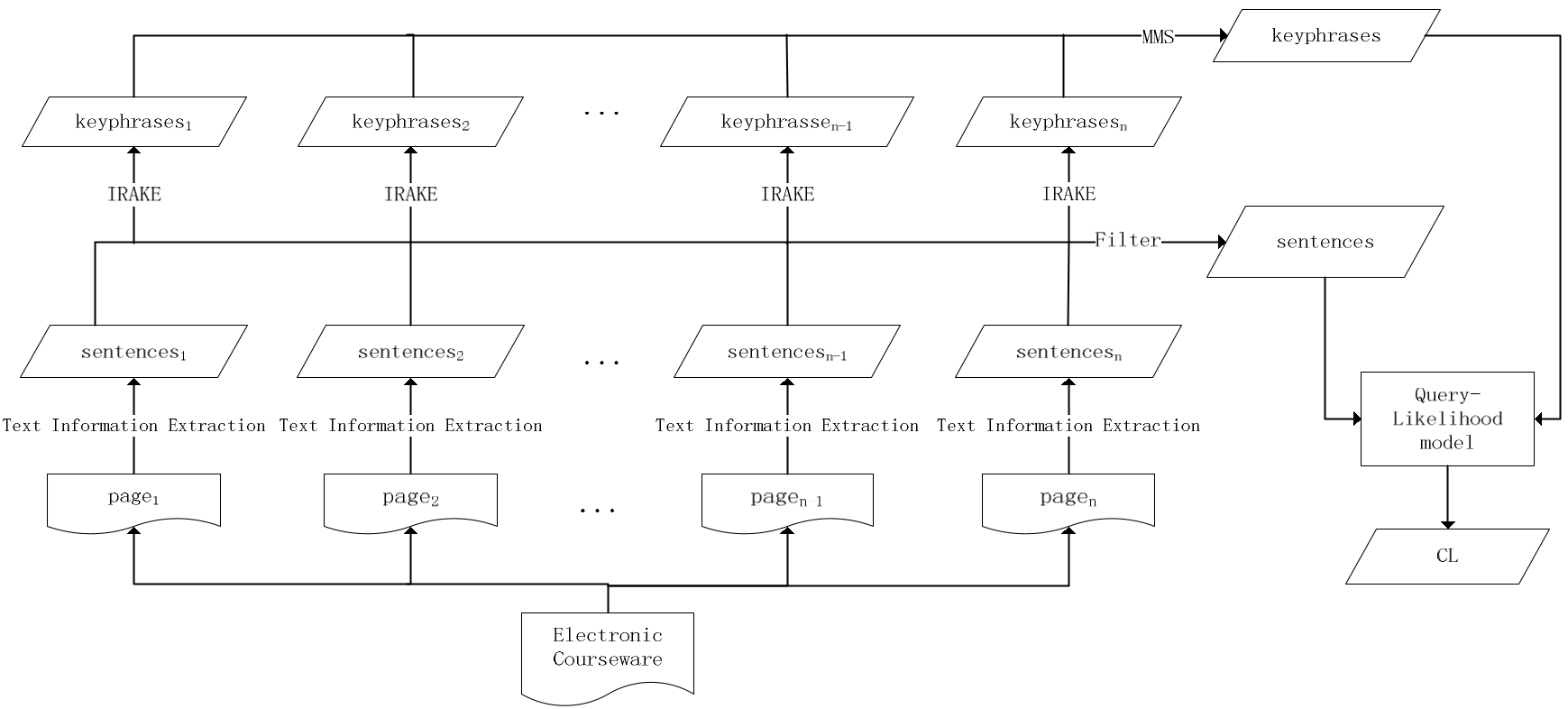 Fig 1: The E-KMA pipeline, from raw text extraction to the final structured Knowledge Framework.
Experiments & SOTA Comparison
The authors tested their approach against the DBQA Dataset. The findings were clear:
- Positional Advantage: On "Dataset 1" (where answers are at the top/bottom), IRAKE outperformed the standard RAKE with a precision of 43.3% vs 31.8%.
- The "Sweet Spot": Through ablation studies, they found that setting the output parameter (total phrases) creates the perfect balance between Precision and Recall.
 Table 1: Comparative performance showing IRAKE's superiority in slide-like structured data.
Real-World Application: Computer Networking
In a case study of a "Physical Layer" lecture, the algorithm successfully extracted complex terms like Hybrid Fiber Coaxial (HFC) and matched them with specific technical definitions (e.g., "backbone line adopts optical fiber") that were scattered across different slides.
Sample Knowledge Framework
| Phrase | Extracted Explanation |
|---|---|
| ADSL | 1. Asymmetric uplink/downlink 2. Discrete multi-tone modulation... |
| HFC | 1. Wider spectrum than CATV 2. Residential broadband access... |
Critical Analysis & Future Outlook
Strengths: The "Position Awareness" is a simple but brilliant inductive bias for educational slides. It effectively bridges the gap between Keyword Extraction and Information Retrieval.
Limitations: The model is primarily text-based. In modern e-learning, much of the "knowledge" is inside images, charts, or video demos. The authors acknowledge this, suggesting that Multi-modal fusion (combining slide text with lecture audio or video) is the next frontier.
Conclusion: E-KMA provides a robust blueprint for ed-tech platforms to build automated "summarization" features, helping students navigate the sea of digital content with surgical precision.