
ELM System: Redefining Web Usage Mining via Aspect-Oriented Integration
Knowledge Mining with ELM System
The paper introduces ELM (Event Logger Manager), a flexible Web Usage Mining (WUM) system designed to extract behavioral knowledge from user interactions across multiple Java applications. Unlike application-specific tools, ELM leverages Aspect-Oriented Programming (AspectJ) for non-invasive data collection and integrates standard algorithms like Apriori, ID3, and C4.5 to achieve service personalization and behavior analysis.
TL;DR
The paper presents ELM (Event Logger Manager), a system designed to solve the rigidity of traditional Web Usage Mining (WUM). By using AspectJ, ELM intercepts user interactions in Java applications non-invasively, centralizing behavioral data from multiple sources into a single repository for advanced analysis using algorithms like C4.5 and Apriori.
Background & Motivation: Beyond Static Server Logs
Web Usage Mining is essential for personalization and site optimization. However, the authors argue that existing systems suffer from "application silos"—they are built for one specific server. Moreover, standard server logs are often too "thin," lacking the semantic depth needed to understand complex user intent.
The motivation behind ELM was to create a pluggable, developer-friendly framework that could be "dropped into" any Java-based web service to observe user behavior without rewriting the application's core logic.
Methodology: The Power of Aspect-Oriented Logging
The technical heart of ELM is its use of Aspect Modification. Instead of manually inserting print statements or log calls, ELM defines "Aspects" that monitor specific execution points (Join Points).
1. System Architecture
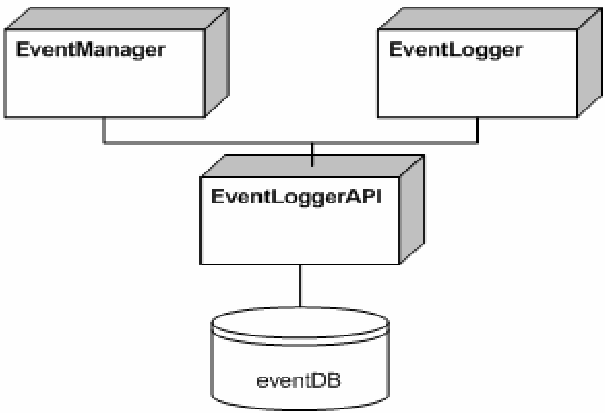
The architecture is split into two primary modules:
- EventLogger: Handles data acquisition. It defines logical events (e.g.,
PET_STORE_CHECKOUT) and their parameters. - EventManager: Acts as the analysis engine, pulling data from the
eventDBto run mining scripts.
2. Flexible Event Definition
Unlike fixed log formats, ELM allows users to define custom "Logical Events." For instance, in a retail context, an event can capture not just a URL hit, but the specific contents of a shopping cart and the total price, providing rich context for classification algorithms.
Experiments: Hunting for Patterns in JPetStore
The authors tested ELM on the JPetStore application, focusing on two primary tasks:
Classification Learning
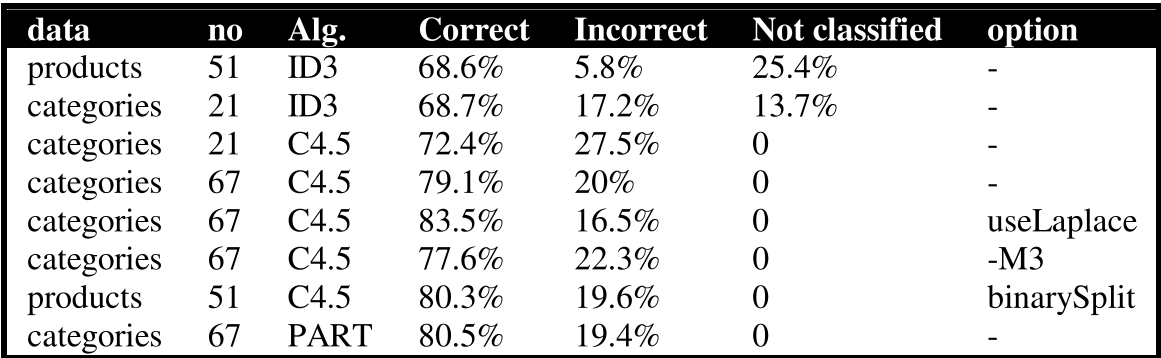
The goal was to predict a user's "favorite category" based on their cart contents. They compared several models:
- ZeroR: The baseline, which simply predicts the majority class (Reptiles).
- ID3/C4.5/PART: Decision tree and rule-based learners.
The results showed that C4.5 significantly outperformed simpler models, reaching 83.5% accuracy when Laplace smoothing was applied.
Association Rules
Using Apriori and Tertius, the system discovered hidden correlations. For example, specific rules were generated regarding "not viewing" certain items, which can be as telling as what a user does view in a real-world shopping scenario.
Critical Insight & Future Outlook
The primary contribution of ELM is its Inductive Bias toward flexibility. By moving the "logging" logic out of the application and into an "Aspect" layer, the authors provide a blueprint for what we now call observability-driven development.
Limitations:
While the system is powerful for Java environments, its reliance on AspectJ limits its portability to other languages (like Node.js or Python). Additionally, as the authors note, association algorithms like PredictiveApriori struggled with high-dimensional data, suggesting a need for better feature selection/reduction techniques in high-traffic scenarios.
Conclusion
ELM serves as a bridge between low-level telemetry and high-level knowledge discovery. For developers of Java-based web services, it offers a path to "Business Intelligence" that is both modular and theoretically grounded.