
Unmasking the Social Fabric of Niche Forums: A Deep Dive into DISboards
7676_Analysis of Knowledge Sharing Activities on a Social Network Incorporated Discussion Forum A Case Study of DISboards.
This paper presents a comprehensive trace-driven analysis of DISboards, a niche discussion forum integrating social network (SN) features. By analyzing over 13,800 threads and 27,000 users, the study characterizes the synergy between social connectivity and knowledge sharing, identifying distinct user roles and category-specific interaction patterns.
TL;DR
Is a forum just a collection of threads, or a hidden social network? This case study of DISboards (a Disney travel forum) reveals that social ties directly drive user activity, yet the lack of modern "feed" mechanics hinders knowledge sharing. The study highlights that teens are the true power users of niche social features and categorizes forum content into Report, Fact, and Discussion clusters with distinct mathematical signatures.
Context: Why DISboards?
Most social network research focuses on giants like Twitter or Facebook. However, niche forums like DISboards represent a massive portion of the "deep web" of human knowledge. Unlike general QA sites, DISboards attracts a unique cross-generation demographic—from parents planning vacations to teens obsessed with Disney lore. This study aims to understand how social connections (friending) influence how knowledge is shared in these specialized silos.
The Structural Intuition: Power Laws and Friendships
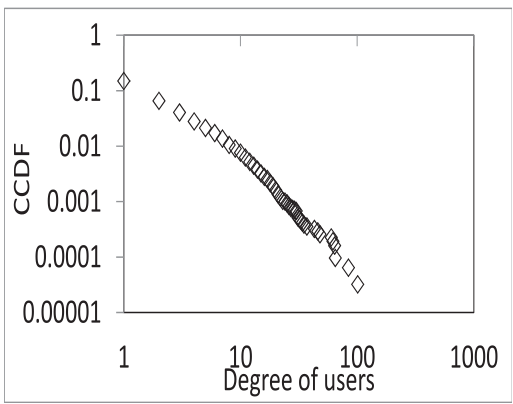
The researchers found that DISboards follows a typical power-law distribution (), meaning a few "super-users" hold most of the social capital. However, unlike Orkut or LiveJournal, there is no clear correlation between a user's degree and their friends' degree—a phenomenon that challenges common "homophily" assumptions in social networks.
The Participation Paradox
One of the most striking findings is the "Effect of SN on Forum Usage." Users with friends are 4.5x more likely to post daily (36.4% vs 8.3%). Yet, having more friends doesn't automatically mean your threads get more replies.
Why? The authors point to a technical gap: The Lack of an Alert Mechanism.
"DISboards lacks a mechanism for finding threads created by friends... Only 2.5% of threads receive any replies from friends."
Without a Facebook-style "News Feed," social ties remain "latent"—users have to manually check their friends' profiles to see updates, stifling the viral potential of the social graph.
 The visual representation of the interconnected nature of DISboards users.
Methodology: The Three Faces of Content
The authors clustered forum categories into three distinct types based on Thread Length (number of replies) and Post Length (verbosity):
- Report (e.g., Disney Trip Reports): Long threads, long posts. These are "one-to-many" broadcasts where users share detailed diaries.
- Fact (e.g., Orlando Hotels): Short threads, short posts. Functional "one-to-one" interactions where users get quick answers.
- Discussion (e.g., Adventures by Disney): High "Thread/Post Overlap." These are true "many-to-many" conversations where the same people both ask and answer.
 Analysis shows how different categories attract different social behaviors.
The "Teen Disney" Factor
A fascinating demographic insight: while adults make up 96% of the forum, teens are significantly more socially active.
- SN Participation: 36.3% of teens join the social network compared to only 14.3% of adults.
- Clustering: Teens are more likely to form tight-knit "cliques" (higher clustering coefficient).
- Interaction: Teens have broader "indegree" and "outdegree" ranges, meaning they are the engines of conversation within their niche.
Deep Insight: Entropy and Expertise
Using the concept of User Entropy, the researchers measured whether users are "specialists" or "generalists."
- The Result: 70% of users have near-zero entropy, meaning they stick to one specific category.
- The Opportunity: By analyzing category similarities (e.g., people in Transportation often visit Budget Board), forums can create better recommendation engines or travel packages.
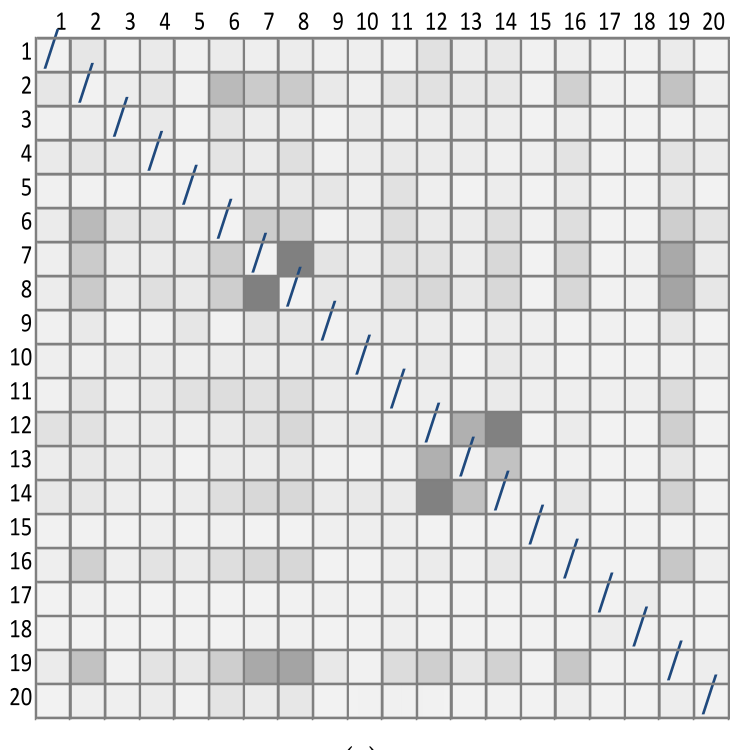 Grey-scale map showing the high correlation between trip-planning categories.
Critical Perspective & Summary
This study proves that even in "old school" forum architectures, social graphs are the primary predictors of user stickiness.
Key Takeaways for Platform Designers:
- Incentivize "Friendship": Since high-degree users post more, the "Add Friend" button is actually a "Retention" button.
- Bridge the Gap: Discussion forums must evolve into "Social Forums" by adding notification feeds to activate latent social ties.
- Targeted Rewards: Use the high-overlap between categories (like Budget and Dining) to offer cross-category rewards (e.g., "Best Answer" badges that unlock travel discounts).
Limitations: The data is a snapshot. Future work should investigate "Temporal Dynamics"—how a novice "asker" eventually matures into a high-degree "answer person" over several years.