
Beyond the Thread: How Social Networks Drive Knowledge Sharing in DISboards
Analysis of Knowledge Sharing Activities on a Social Network Incorporated Discussion Forum: A Case Study of DISboards
2017-09-05
Summary
Problem
Method
Results
Takeaways
Abstract
This paper presents a comprehensive trace-driven analysis of DISboards, a Disney-themed discussion forum, investigating the synergy between Social Networks (SN) and knowledge sharing. Using data from 27,000 users, it explores SN topology, user behavior across different age groups, and category-specific interaction patterns.
## TL;DR
Social networks aren't just for Facebook; they are the "engine" behind specialized discussion forums. This study of **DISboards** reveals that while social connectivity drastically boosts user activity, the lack of proactive notification tools prevents "friendships" from reaching their full potential in knowledge exchange.
## The Motivation: Why Niche Forums Matter
While platforms like Stack Overflow and Yahoo! Answers dominate general Q&A, niche forums like **DISboards** (Disney Planning) serve a unique purpose. They represent a culture of "generosity" where travel plans, tips, and personal reports are shared freely. The authors set out to find the "missing link": How does an embedded social network change the way people share this specialized knowledge?
## Methodology: Mapping the Disney Social Graph
The researchers crawled over 13,000 threads and 27,000 users to build a structural profile of the community. They focused on several key metrics:
* **SN Structure**: Degree distribution and clustering.
* **Category Dynamics**: Dividing the forum into **Report** (long-form), **Fact** (Q&A), and **Discussion** (opinion-based) clusters.
* **User Roles**: Identifying "Answer Persons" vs. "Discussion Persons" through ego-network analysis.
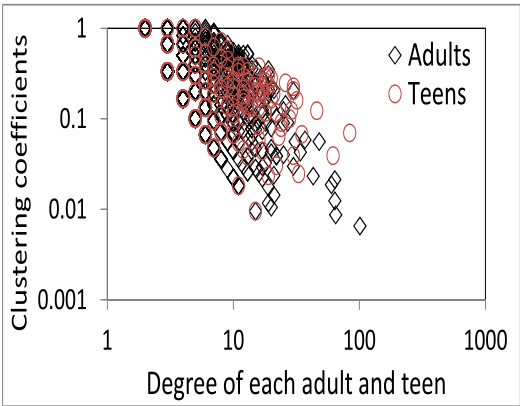
*Fig 1: The clustering of categories based on post and thread length shows distinct "Report," "Fact," and "Discussion" zones.*
## Key Insights: Teens, Friends, and the "Hidden" Activity
### 1. The Power of the Social Network
The study confirms that the common "Power-Law" distribution holds true—a few "super-users" hold the network together. Interestingly, **SN participants are significantly more active**: 36.4% of users with friends post daily, compared to only 8.3% of those without friends.
### 2. The Teen Factor
Despite the stereotype of forums being for adults, **teens are the most active participants** in the interaction network. They have higher indegrees and outdegrees, meaning they are more likely to both spark conversations and reply to others.
### 3. The "Answer Person" vs. "Discussion Person"
By looking at Ego Networks, the authors found a striking difference in how people interact:
* **Fact/Report Categories**: Dominated by "Answer Persons" who act as hubs, feeding information to many disconnected users.
* **Discussion Categories**: Feature "Discussion Persons" whose neighbors are themselves interconnected, creating a dense web of debate.
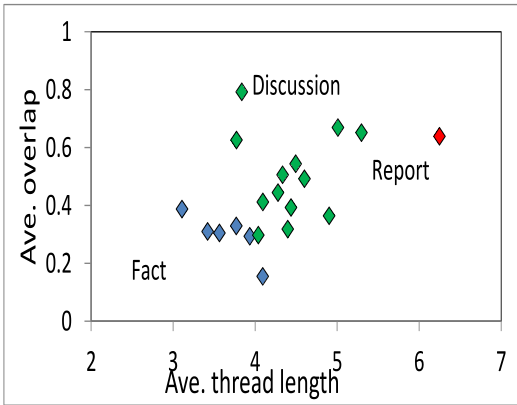
*Fig 2: Comparison of interaction density reveals the behavioral difference between factual queries and open discussions.*
## Results & Performance: The Engagement Gap
The data shows a critical missed opportunity. Only **2.5% of replies** come from a user's actual friend list. This "engagement gap" exists because the platform lacks a **News Feed** or **Alert Mechanism**. Users have to manually visit a friend's profile to see their posts, stifling the natural flow of information.
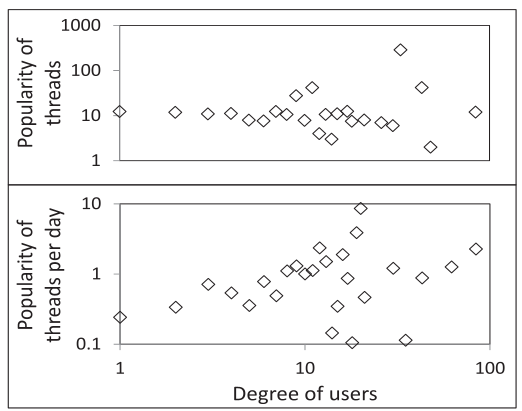
*Fig 3: The low percentage of friend-based replies highlights the structural friction in the forum's social features.*
## Critical Analysis & Future Outlook
**Takeaway for Product Designers**: The paper proves that social participation drives forum volume, but social *structure* is often under-utilized. To evolve, forums must move away from static "boards" toward dynamic, "social-first" architectures.
**Limitations**: The data is a snapshot (one month), which may not capture long-term seasonal trends in travel planning (e.g., Summer vs. Winter Disney trips).
**Future Perspective**: Integrating AI-based "Friend Recommendations" or "Expert Discovery" based on the **User Entropy** scores (expertise concentration) identified in this paper could transform how niche knowledge is surface and shared in the future.