
Inside the "YouTube Algorithm": How COVID-19 Reshaped Digital Consumption and Consumer Psychology
Exploring Korean Consumers’ Responses Toward Over-The-Top Recommendation Services Focusing on YouTube Algorithm: A Text-Mining Approach
This study utilizes text-mining and social media big data (Facebook, Twitter, blogs) to analyze South Korean consumers' perceptions of the YouTube algorithm. It identifies a significant shift in content consumption patterns and psychological responses in the wake of the COVID-19 pandemic.
TL;DR
The COVID-19 pandemic didn't just increase the time we spend online; it fundamentally changed what we watch and how we feel about the algorithms choosing for us. This study by Park and Chung uses text-mining of social media data to reveal that while South Koreans rely on YouTube to escape "lockdown blues," they grapple with a "love-hate" relationship with the recommendation engine—feeling both "healed" and "obsessed" by a system they admit they don't fully understand.
Background: The Algorithm as a Cultural Curator
In the wake of the pandemic, Over-the-Top (OTT) platforms moved from being a luxury to a psychological lifeline. In South Korea, YouTube usage surged, with users spending an average of 56 minutes a day on the platform. However, the "black box" of recommendation algorithms remains a point of mystery. Are we choosing what to watch, or is the algorithm choosing our reality for us?
The Shift: Content Consumption Before vs. After COVID-19
By analyzing thousands of social media posts, the researchers found a distinct shift in the South Korean "digital diet."
- The Rise of "Indirect Experience": Content categories such as Movies, Musicals, Documentaries, and Costume Play appeared exclusively in the top-ranked keywords after the pandemic. With theaters closed, the algorithm became a virtual window to the cultural world.
- Healing through Entertainment: Before the pandemic, only one entertainment program sat in the top 50 keywords. Post-COVID, that number jumped to six, reflecting a desperate search for "healing" and humor to combat "COVID blues."
- The "Home-Training" Phenomenon: As gyms closed, "Diet" and "Home Training" became staple algorithmic recommendations, showing how the system mirrors our physical limitations.
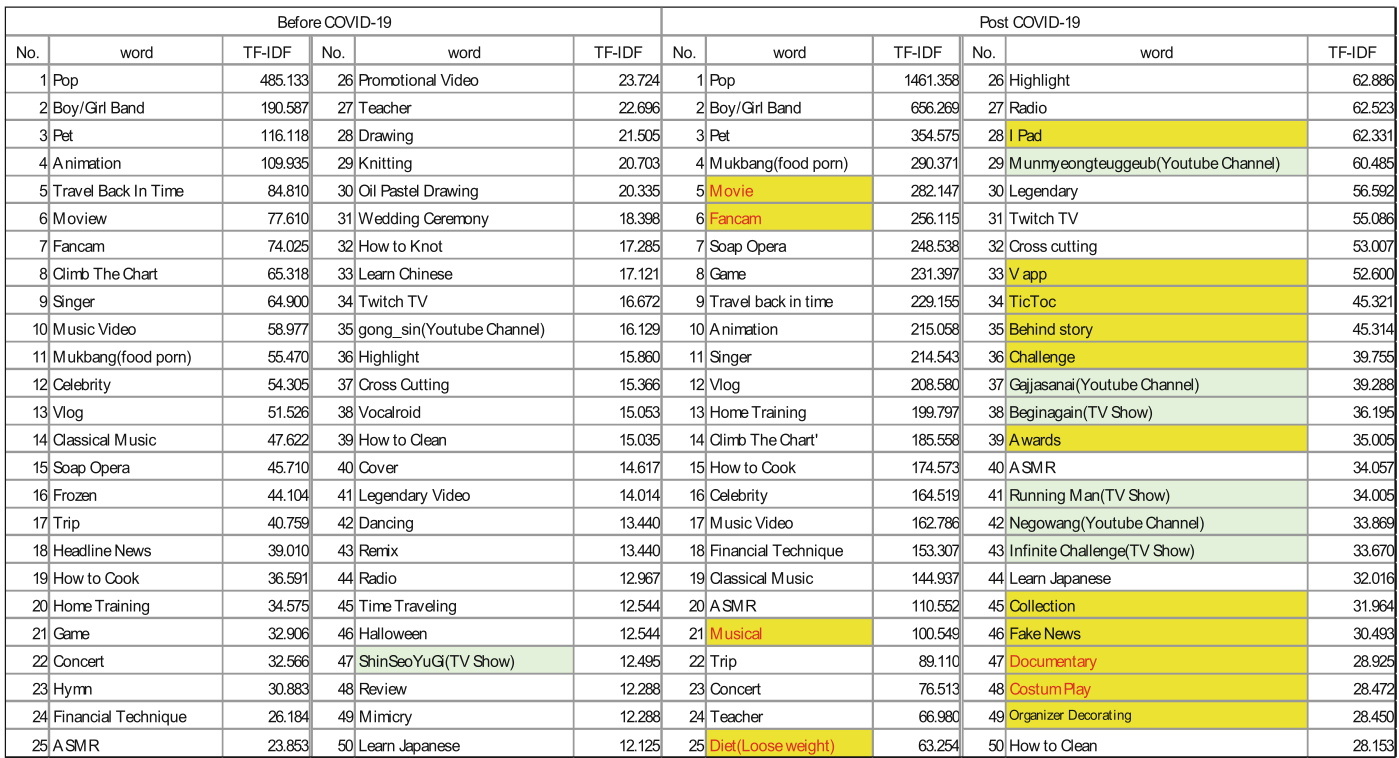 Table 1: Comparison of TF-IDF scores showing the shift in content categories pre- and post-outbreak.
Methodology: Mapping the Consumer Mind
The researchers didn't just look at what was watched; they looked at the reactions (Cognitive, Affective, Behavioral). Utilizing the KoNLP package for Korean natural language processing, they filtered raw social media buzz into structured sentiment categories.
The Semantic Network Analysis
To understand the "gravity" of these reactions, the study used Semantic Network Analysis. They mapped 28 categories to see which concepts were most central to the user experience.
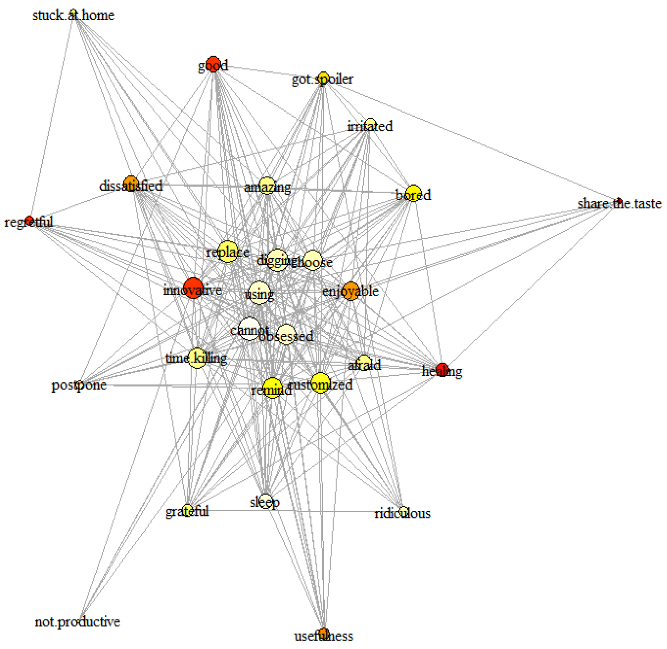 Figure 2: The semantic network revealing the relationship between different consumer responses.
Deep Insights: The Algorithmic Paradox
The results revealed a fascinating tension between convenience and control:
- Cognitive Dissonance: The word "Cannot understand" showed one of the highest centralities. Users find the algorithm "smart" and "innovative," yet they are baffled by why certain videos appear.
- Emotional Rollercoaster: The affective responses ranged from "Healing" and "Amazing" to "Afraid" and "Irritated." The algorithm is a source of joy but also a source of anxiety regarding data privacy and "time killing."
- The "Digging" Behavior: A unique behavioral response identified was "Digging"—users becoming obsessed with specific niches (like K-pop boy bands) because the algorithm continues to feed that specific interest, leading to a state of being "carried away."
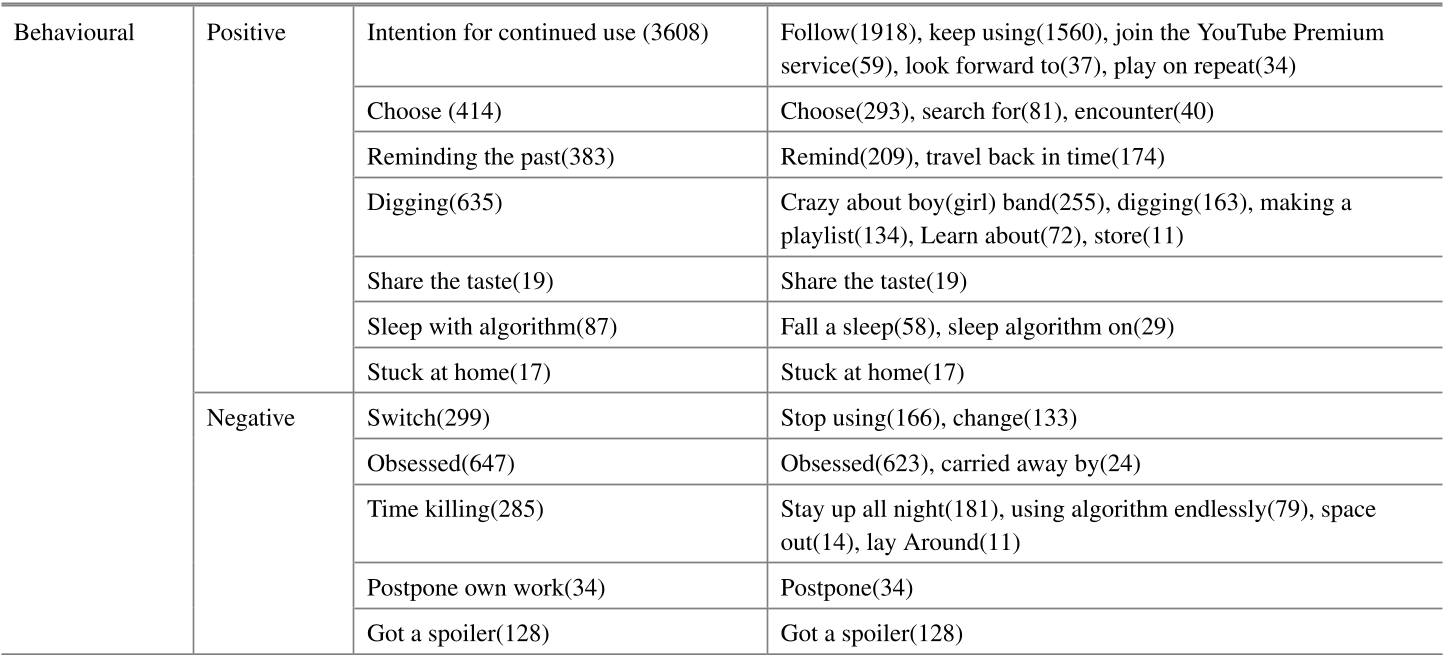 Table 4: Behavioral responses, highlighting the "Time Killing" and "Intention for continued use" metrics.
Critical Analysis & Conclusion
Takeaway for Product Designers
The study concludes that OTT providers must move beyond mere "accuracy." To improve long-term satisfaction:
- Transparency is Mandatory: Platforms should explain why a video was recommended (e.g., "Because you watched X").
- Algorithmic Agency: Users need tools to "reset" or "fine-tune" their algorithms to avoid the feeling of being "obsessed" or losing time to unwanted "spoiler" content.
Limitations
While the study provides a robust snapshot of Korean consumers, it relies on social media data which may skew toward younger, more vocal demographics. Furthermore, the 30-day collection windows offer a "pulse" but not a longitudinal view of how these sentiments evolve as the pandemic moved into later stages.
Final Thought
The YouTube algorithm is more than a piece of code; in the post-COVID era, it has become a "social companion." Understanding the subtle emotional interplay between the user and the machine is the next frontier for both AI researchers and sociologists.