
Krowdix: Decoding Social Media Dynamics Through Agent-Based Micro-Simulations
Krowdix: Agent-Based Simulation of Online Social Networks
Krowdix is presented as an Agent-Based Modelling (ABM) framework specifically designed for simulating Online Social Networks (OSNs). Unlike statistical models, it shifts focusing from graph theory to individual user behaviors, achieving a domain-specific balance between a rich library of prebuilt components and customizable plugins for platforms like Twitter and Facebook.
TL;DR
Understanding why a hashtag goes viral or how a social network collapses requires looking beyond simple graph nodes. Krowdix is a specialized Agent-Based Modelling (ABM) framework that treats Online Social Network (OSN) users as autonomous agents with unique profiles, attributes, and behaviors. By simulating individual actions in a discrete-time environment, it allows researchers to observe how micro-level decisions scale into macro-level social phenomena.
The Problem: The "Statistical Blind Spot" in Network Analysis
Most traditional tools for analyzing platforms like Twitter or Facebook rely heavily on Graph Theory (focusing on the "edges" between "nodes") or Statistical Data (focusing on general trends). While useful, these methods have significant limitations:
- Lack of Agency: They ignore the influence of personal attributes (e.g., a user's interests or privacy concerns).
- Static Nature: They struggle to account for unexpected real-time events or shifting user behaviors.
- Implementation Gap: General-purpose tools like NetLogo require too much "boilerplate" code for simple social media tasks, while specialized tools are often too rigid to adapt to new platforms.
Methodology: The Three Pillars of Krowdix
Krowdix solves these issues by providing a structured, modular environment divided into three architectures:
1. Structural Architecture (The "What")
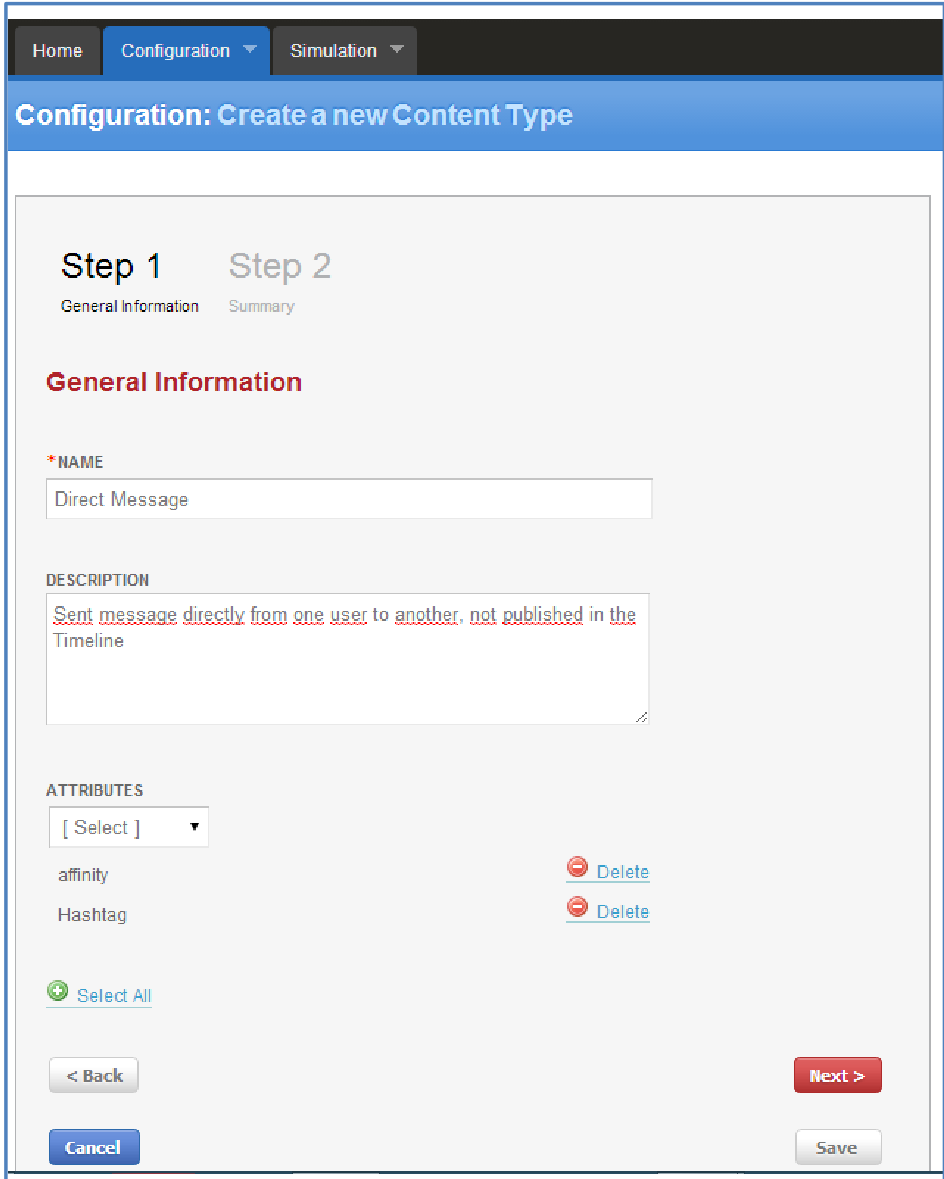
This layer defines the "nouns" of the simulation. It handles Social Network Users (SNUs), relationships, and content types (e.g., a "Tweet"). Crucially, it introduces Dynamic Profiles, allowing an agent's behavior to change over time—for example, a user might become less active the longer they stay on a platform.
2. Dynamic Architecture (The "How")
This layer defines the "verbs." Developers use a Java-based API to create Actions.
- Common Actions: Peer-to-peer interactions like following or replying.
- System Actions: External shocks, such as a platform changing its algorithm or a sudden influx of bot accounts.
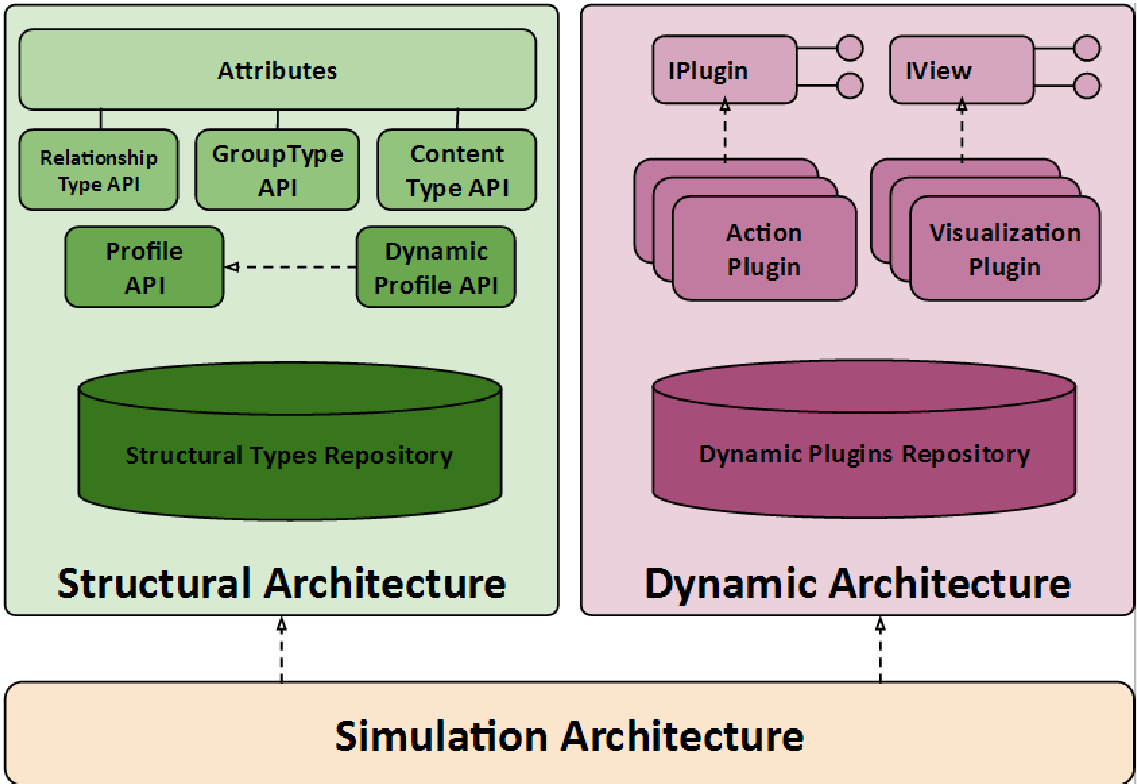
3. Simulation Architecture (The "When")
Krowdix utilizes a discrete-time engine. A standout feature is its Time-Branching capability. If a system action occurs, the engine can "split" the simulation. This allows a researcher to see two parallel futures: one where the event happened and one where it didn't, which is invaluable for A/B testing social theories.
Case Study: Architecting Twitter
The authors demonstrated Krowdix's power by rebuilding the logic of Twitter. They mapped basic interactions—posting tweets, following users, and retweeting—into the framework's API.
By assigning "Action Points" to different tasks, they could simulate realistic constraints. For instance, a user profile might spend 50% of its time "Lurking" (scrolling) and only 10% "Retweeting," allowing researchers to see how different user-mixes affect the speed of information spread.
Deep Insights & Critical Analysis
Krowdix’s most significant contribution is its balance between flexibility and specialization. By using Java instead of interpreted languages (like NetLogo’s Logo), it provides the performance necessary for large-scale, long-term simulations while remaining accessible to developers.
Comparison with SOTA ABM Tools:
- vs. NetLogo: Krowdix is more performant for long-lived simulations and has native support for social media "Content" objects.
- vs. Mason: While Mason is powerful, Krowdix provides a higher-level abstraction specifically for social networks, reducing the "implementation learning curve."
Limitations & Future Work
While robust, the current version of Krowdix relies on attribute-based triggers for behavior changes. The authors acknowledge that real-world human behavior is more complex. Future iterations will need to explore more nuanced psychological modeling and potentially integrate AI-driven agents to better mimic human unpredictability.
Conclusion
Krowdix represents a bridge between Social Science and Computer Science. It provides a laboratory where hypotheses about digital society can be tested safely and at scale. As OSNs continue to evolve and impact global politics and health, tools that prioritize the individual user over the statistical average will be critical for our digital future.