
Instagram Cyberbullying: Why Profanity Filters Are Not Enough
Analyzing labeled cyberbullying incidents on the instagram social network
This paper presents a large-scale study on "cyberbullying" within Instagram by analyzing 2,218 human-labeled media sessions (images and comments). The researchers distinguish cyberbullying from general "cyberaggression" by emphasizing repetition and power imbalance, establishing a comprehensive dataset to characterize the linguistic, temporal, and visual features of these incidents.
TL;DR
Cyberbullying is more than just "mean words"; it is a repeated, power-imbalanced psychological attack. This study analyzes Instagram media sessions to prove that traditional profanity filters fail because high-toxicity conversations often aren't bullying, while real bullying thrives on temporal repetition and specific visual contexts (like drug-related imagery).
The Misconception of Cyberaggression
In the academic landscape of Online Social Networks (OSNs), a critical distinction is often missed: the difference between Cyberaggression and Cyberbullying.
- Cyberaggression: Harmful intent using digital media.
- Cyberbullying: Aggression characterized by repetition and an imbalance of power.
The authors argue that most prior work simply detects "bad words," which misidentifies one-off arguments as bullying and misses the systemic harassment that leads to tragic outcomes like teen suicide.
Methodology: Human-in-the-Loop Labeling
To ground their research, the authors collected 3,165K media sessions from 25K public Instagram profiles. They filtered these down to 2,218 sessions for high-quality human labeling via CrowdFlower.
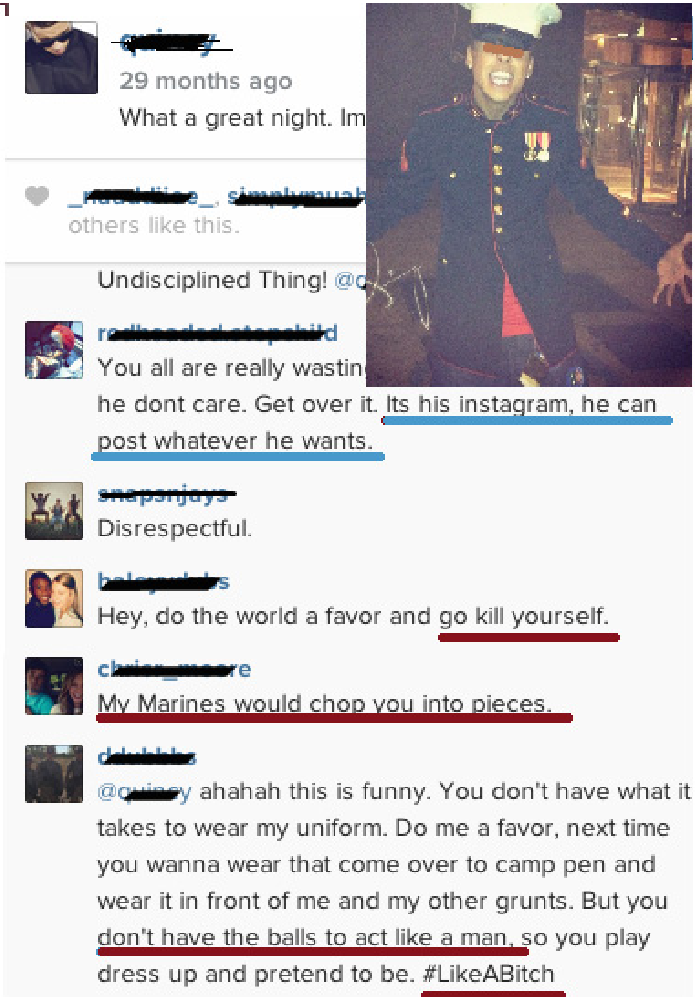 Caption: A typical Instagram media session used for labeling, showing the interplay between image content and comment threads.
Labelers were not just asked "Is this mean?" but were specifically trained to look for signs of repeated targeting and the victim's inability to defend themselves.
Deep Dive: The Data's Counter-Intuitive Truths
The study’s analysis yields several "Key Findings" that challenge common assumptions in AI safety:
1. The Negativity Paradox
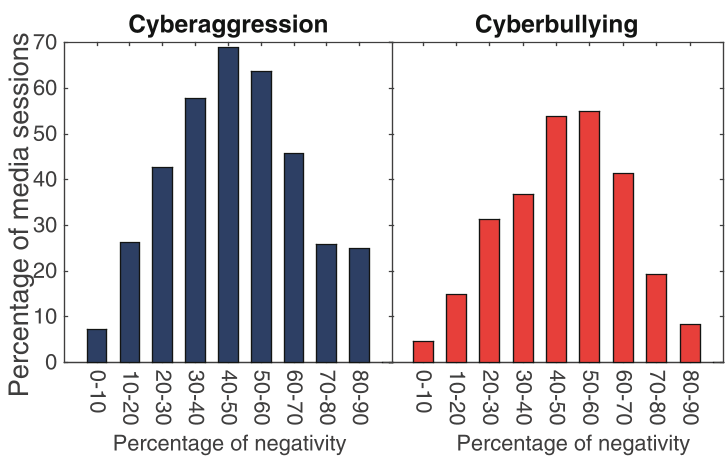
One might assume more profanity equals more bullying. The data says otherwise. As negativity in comments increases up to 50-60%, the probability of bullying rises. However, above 70% negativity, the probability of bullying actually drops. In these contexts, users are often using extreme slang/profanity to discuss sports, politics, or tattoos in a "friendly-aggressive" manner.
2. The Liking Gap (Social Graph Indicators)
The research reveals a striking visual of "Power Imbalance." Victims of cyberbullying on Instagram often have a high number of followers but receive significantly fewer "Likes" (approx. 4x fewer) compared to non-bullied users. This suggests a social isolation effect where the "audience" watches the harassment but does not support the victim.
3. Image Content Matters
This is the first major study to correlate Image Categories with bullying.
- High Risk: Images containing "Drugs" (75% linked to bullying).
- Low Risk: Images of "Food," "Bikes," or "Tattoos."
- Linguistic Shifts: Bullying comments use more 3rd-person pronouns ("she," "he," "them") as harassers talk about the victim to an audience, rather than just 2nd-person ("you") direct attacks.
Temporal Dynamics: The "Flash Mob" Effect
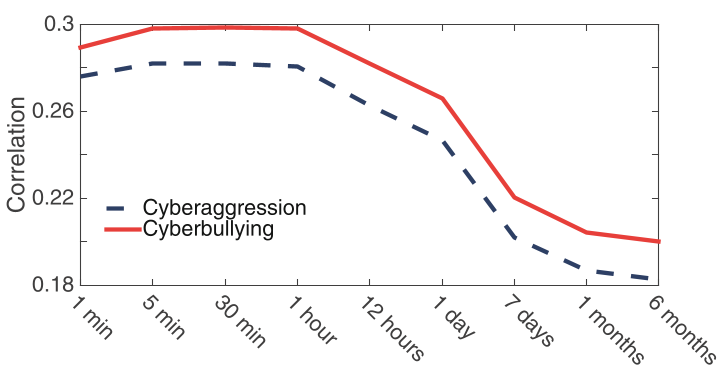
Bullying on Instagram is fast. The study found a 0.3 correlation between "bullying strength" and frequent posting (comments arriving within 1 minute to 1 hour of each other). This "burstiness" is a key temporal signature that automated systems could use to trigger alerts.
Critical Insight & Conclusion
The merit of this paper lies in its holistic view. It proves that the "signal" for bullying is not found in a single profane word, but in the rhythm of the comments, the social metrics of the user, and the visual context of the post.
Takeaway for Developers: If you are building moderation AI, your model must be multi-modal. A text-only classifier is blind to the fact that a picture of a "Drug" attracts vastly different social behavior than a picture of a "Burger," regardless of the words used.
Limitations: The study relies on public profiles (25% of the sampled data was private and excluded), meaning bullying in "Direct Messages" or "Private Stories"—where much of it occurs today—remains a dark matter for researchers.