
LACAS: Securing Life-Critical Data through Intelligent Congestion Avoidance in Healthcare WSNs
Lacas: learning automata-based congestion avoidance scheme for healthcare wireless sensor networks
This paper introduces LACAS (Learning Automata-Based Congestion Avoidance Scheme), a preventive congestion management framework specifically designed for Healthcare Wireless Sensor Networks (WSNs). By deploying Distributed Learning Automata at intermediate nodes to adaptively balance packet arrival and service rates, LACAS achieves a stable data flow that prevents buffer overflows and packet drops in life-critical monitoring scenarios.
Executive Summary
TL;DR: LACAS is a proactive congestion avoidance scheme for Healthcare Wireless Sensor Networks that uses Learning Automata to adaptively tune transmission rates at intermediate nodes. Instead of reacting to dropped packets, it "learns" to prevent them, ensuring higher throughput and significantly lower energy consumption for critical patient monitoring.
Background: Within the academic coordinate system, this work transitions WSN management from reactive heuristic-based control (like AIMD) to preventive, intelligent adaptation. It positions itself as a specialized solution for "Many-to-One" traffic patterns common in medical disaster relief and post-operative care.
The Problem: When Network Delay Becomes Life-Threatening
In healthcare WSNs—such as those monitoring heart rates in a disaster relief camp—data loss isn't just a technical failure; it’s a medical risk. Existing protocols like CODA or ARC rely on backpressure, where a congested node tells the source to slow down.
The authors identify two fatal flaws in this "curative" approach:
- Latency: By the time the source slows down, critical packets have already been dropped.
- Energy Inefficiency: Retransmissions and mass collisions in high-traffic medical scenarios drain the non-replaceable batteries of sensor nodes.
Methodology: The Architecture of an Intelligent Node
The core innovation of LACAS is the deployment of Learning Automata (LA) as "logic layers" within the standard network stack (primarily interacting with the MAC layer).
1. The Learning Loop
Each intermediate node treats the network as a Random Environment (RE).
- Actions (): Different preset transmission rates ().
- Feedback (): A binary signal—Reward (successful delivery/no drops) or Penalty (packet drops).
- Policy: Using a Linear Reward-Inaction (LRI) scheme, the node increases the probability of selecting a successful rate while keeping probabilities unchanged upon failure to ensure stability.
2. Matching Arrival and Service Rates
The physical intuition is simple: Congestion starts in the queue. By forcing the , LACAS prevents the "funnel effect" where data accumulates at bottlenecks.
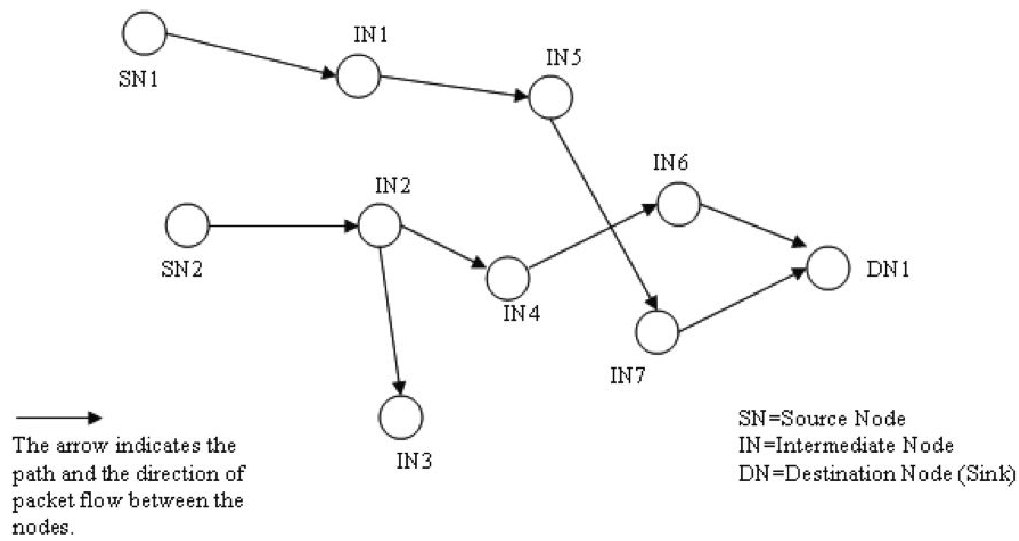 Figure 1: The feedback loop between the Learning Automaton and the WSN Environment.
Experimental Insights & Results
The authors utilized the GloMoSim environment with a 100-node grid to simulate high-stress healthcare scenarios.
- Throughput Supremacy: LACAS maintained a throughput ratio of ~0.8, whereas congested networks dropped to 0.1. This means 80% of generated medical data reached the sink successfully.
- Collision Reduction: By intelligently spacing out transmissions, collisions were reduced by over 60% compared to standard IEEE 802.11 implementations.
- Energy Uniformity: Unlike standard protocols where bottleneck nodes die quickly, LACAS balances the load, leading to uniform and lower energy dissipation (approx. 23.5 mWh per node).
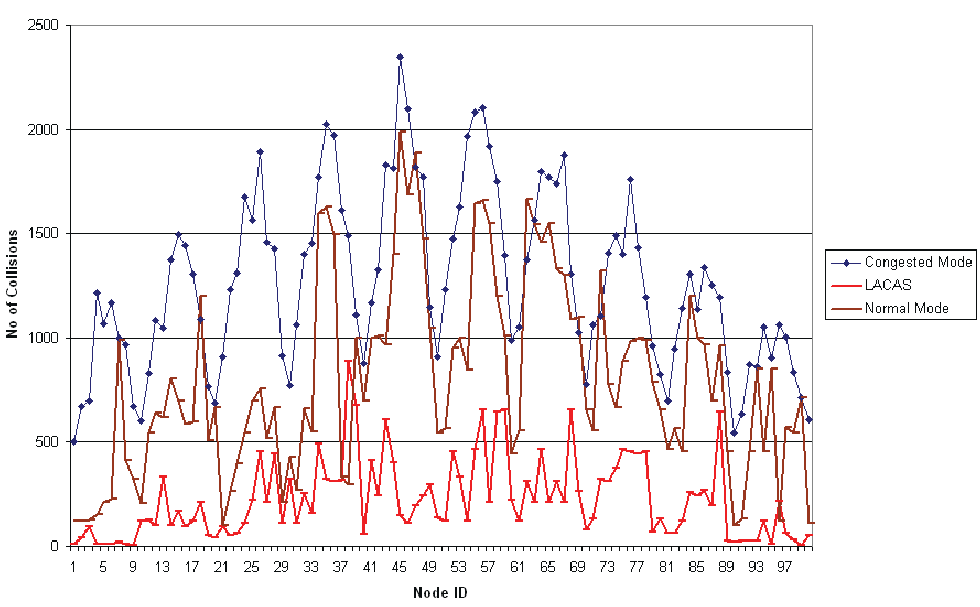 Figure 2: Drastic reduction in energy consumption and collisions compared to standard modes.
Critical Analysis & Conclusion
Takeaway
LACAS demonstrates that local intelligence (Learning Automata at each hop) creates a global emergent behavior of congestion avoidance. This is far more robust than centralized control in unpredictable environments like disaster zones.
Limitations
- Stationary Assumption: The current model assumes nodes are stationary. In modern "Ambulance-to-Hospital" scenarios, mobility would introduce Doppler shifts and rapid topology changes that LRI might not learn fast enough to counteract.
- P-Model Limitations: Using a binary penalty (0 or 1) is a simplification. Modern networks might benefit from a Q-Model (continuous feedback) to fine-tune rates more granularly.
Future Outlook
The shift towards Automotive Healthcare and Body Area Networks (BAN) requires LACAS-like logic to be integrated with cross-layer optimization, potentially moving from simple LA to Deep Reinforcement Learning for more complex, non-stationary environments.