Beyond the Classroom: How Instruction-Oriented Social Networks Shape Language Learning
Language Learners Perceptions and Behaviors on An Instructional-Oriented Social Networking Site Out-of-Classroom: A Case of Lang-8
This study investigates language learners' perceptions and behaviors on Lang-8, an instruction-oriented social networking site (SNS). Through a mixed-methods approach involving interviews and log data analysis, it identifies how the platform's social and instructional affordances facilitate out-of-classroom Chinese language acquisition.
TL;DR
Why do language learners avoid Facebook but flock to specialized platforms like Lang-8? This study uncovers the psychological and behavioral split in out-of-classroom learning. It finds that while some users treat these platforms as "digital diaries" for self-expression, others use them strictly as "drill-and-kill" exercise hubs. The bridge between these two worlds is the promise of authentic feedback from native speakers.
Background: The Social Media Paradox in Education
For years, educators have tried to leverage social networking sites (SNS) for language learning, citing their potential for "authentic communication." However, a consistent problem remains: students are often reluctant to use their "personal" social spaces for "academic" work. This paper positions itself at the intersection of this paradox, examining Lang-8—a platform specifically designed to blend social networking with peer-led language instruction.
The Perception Gap: Why Use Lang-8?
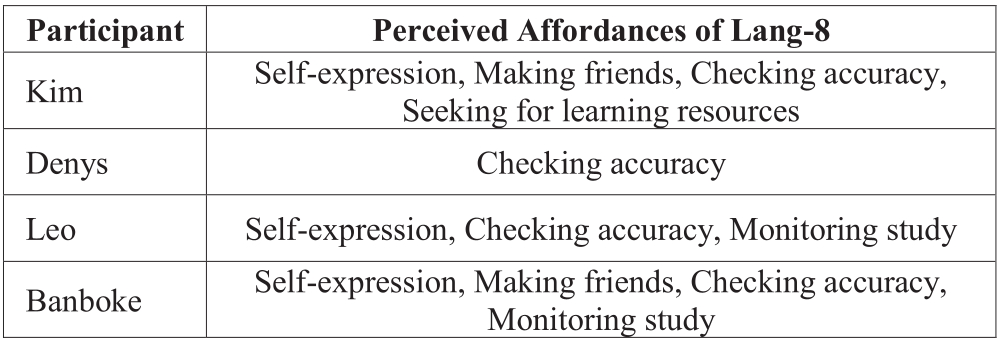
The researchers identified a fascinating divergence in how learners perceive the "affordances" (potential uses) of the platform. Based on qualitative interviews, the usage motives fell into two primary camps:
- The Socializers: Users like "Kim" and "Banboke" saw the platform as a way to express their inner thoughts and build relationships with native speakers.
- The Monitored Learners: Users like "Denys" and "Leo" viewed the platform as a functional extension of their classroom, primarily for monitoring study progress and checking grammatical accuracy.
Methodology: Matching Words with Deeds
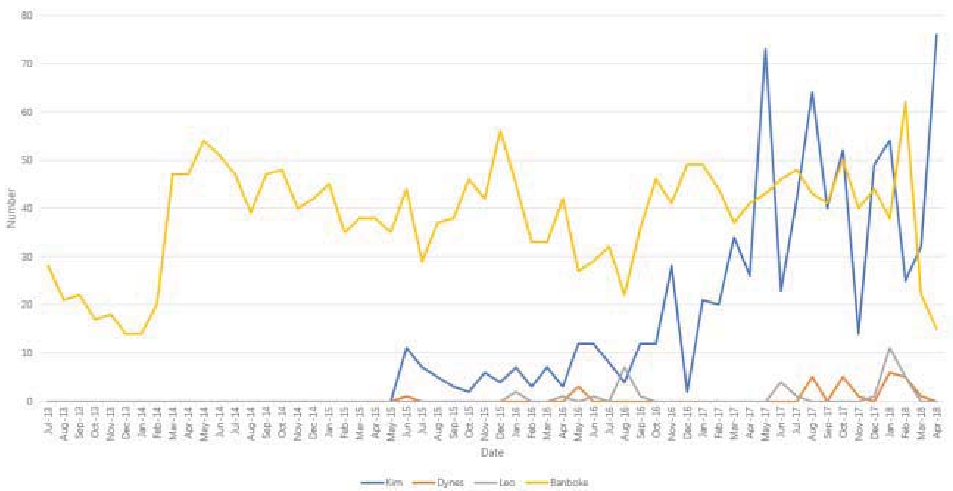
One of the strengths of this study is its use of log data to verify interview claims. The authors analyzed the nature of the blog posts over several years, categorizing them into categories such as "Self-expression," "Drill and Exercise," and "Learning Reflection."
The results were striking. The "Socializers" spent over 98% of their effort on self-expression (writing about daily life and opinions). In contrast, the "Monitored Learners" dedicated up to 80% of their posts to drills and vocabulary exercises. This proves that a learner’s initial perception of a tool almost entirely dictates their long-term behavior on it.
Deep Insights: The Specificity of Affordances
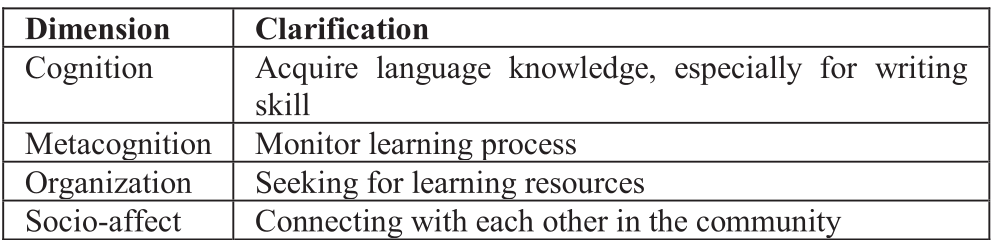
The study maps these behaviors onto a four-dimension model of SNS affordances:
- Cognition: Acquiring language knowledge (especially writing and grammar).
- Metacognition: Tracking progress through a history of corrected posts.
- Organization: Accessing native resources through a community.
- Socio-affect: Finding a "safe space" to use the language with peers.
The authors conclude that instruction-oriented SNS platforms are not "one size fits all." A learner in a target-language environment (like Denys studying in China) might stop using the platform because real-world opportunities satisfy their needs, whereas a remote learner might rely on it as their primary "lifeline" to native speakers.
Critical Analysis & Future Outlook
Summarizing the Contribution: This paper provides a rare "under the hood" look at the long-term habits of active language learners. It confirms that the "social" in Social Networking doesn't always mean "making friends"—for many, the "social" aspect is simply a vehicle for receiving high-quality corrective feedback.
Limitations: The small sample size (n=4) means these findings are exploratory rather than generalizable. However, as an "intensive" look at power users, it provides deep qualitative value that large-scale surveys often miss.
The Road Ahead: As we move into 2026, the rise of LLMs (Large Language Models) like ChatGPT poses a threat to peer-to-peer platforms. Why wait for a human on Lang-8 when an AI can correct your grammar in seconds? The survivors in the SNS space will likely be those that double down on the socio-affective dimension—the human connection that AI still cannot replicate.