
Language Models Need Sleep: Scaling Reasoning via Recursive Memory Consolidation
Language Models Need Sleep
The paper introduces "Language Models Need Sleep," a method that enhances the reasoning capabilities of hybrid SSM-attention models by implementing an offline recurrent consolidation phase. By performing N recursive forward passes over context before evicting the KV cache, the model converts transient short-term memory into persistent fast weights. This approach allows models like Jet-Nemotron and Ouro to handle complex multi-step reasoning tasks while maintaining low latency during prediction.
TL;DR
Current hybrid AI models can remember a lot, but they struggle to "think" about what they remember once it leaves their immediate focus. This paper proposes a "Sleep" mechanism: before a model clears its short-term memory (KV cache), it runs several offline internal loops ( passes) to digest that information into its long-term weights. This allows the model to solve complex math and logic problems that usually require much larger or slower models, all while keeping real-time responses lightning-fast.
The Cognitive Bottleneck: Memory vs. Reasoning
In the world of Large Language Models (LLMs), there is a growing divide between Context Capacity (how much you can read) and Reasoning Depth (how much you can do with what you read).
While hybrid architectures—combining the precision of Attention with the efficiency of State-Space Models (SSMs)—have solved the memory scaling problem, they hit a wall when the task requires "deep" thinking. If a model needs to simulate 32 steps of a logic rule but only sees the data in a single pass before it's evicted from the cache, it fails. The authors argue that converting context into "fast weights" (internal model memory) is a non-trivial computation that requires more than one pass.
The Solution: A Sleep-Like Consolidation Phase
Inspired by biological sleep—where the brain replays hippocampal memories to consolidate them into the cortex—the authors introduce an offline recurrence phase.
How it Works:
- Wake Phase: The model processes tokens normally within its context window ().
- Sleep Phase: Before the context window is full and tokens are "forgotten" (evicted), the model enters a sleep cycle. It performs recurrent passes over the same hidden states.
- Weight Update: During these passes, it uses a learned rule to update the SSM's "fast weights" ().
- Eviction: The KV cache is cleared, but the refined now contains a "compressed" and "reasoned" version of the history.
- Prediction: At the moment of truth, the model makes a single-pass prediction using its consolidated weights.
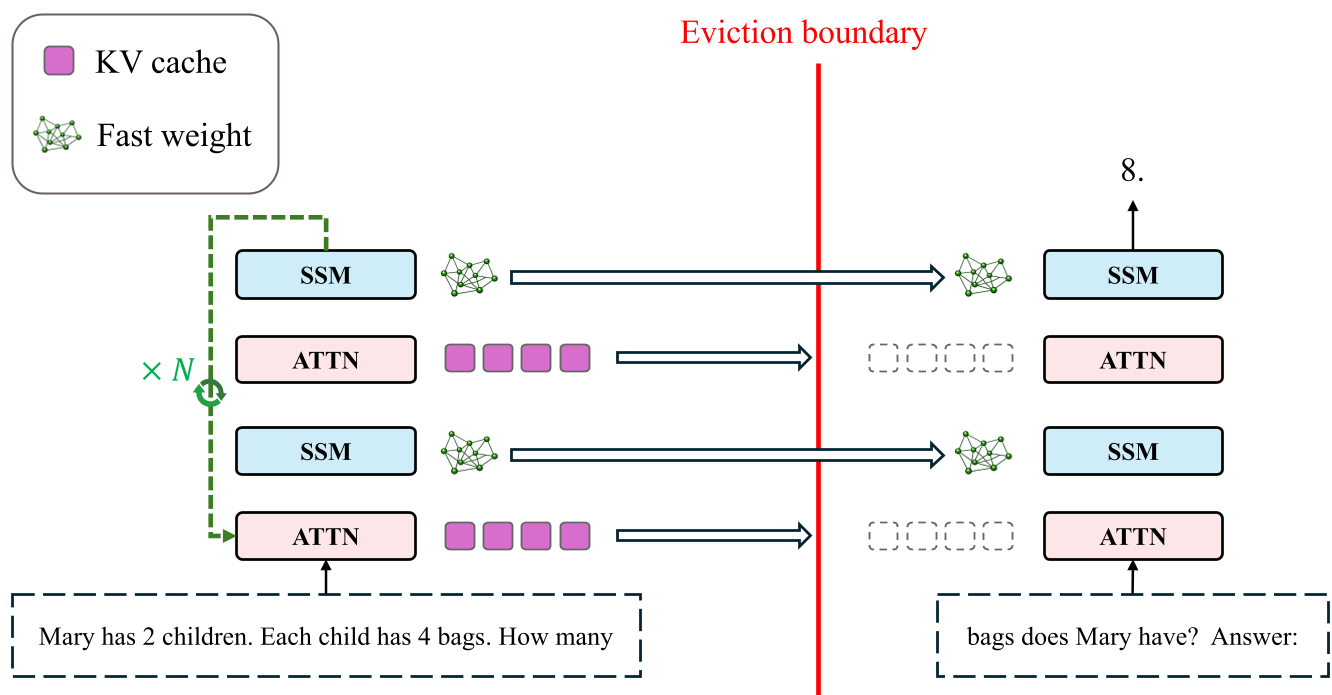 Figure 1: The 'Sleep' loop allowed the model to refine its internal state recursively before clearing the attention cache.
Experimental Breakdown: Does it actually work?
1. The Cellular Automaton Test (Rule 110)
Rule 110 is a "P-complete" logic task—you cannot skip steps; you must simulate every transition. A standard model () stays at near-random accuracy. As the authors increased the "sleep duration" (), the model's ability to predict the outcome of the logic simulation improved dramatically.
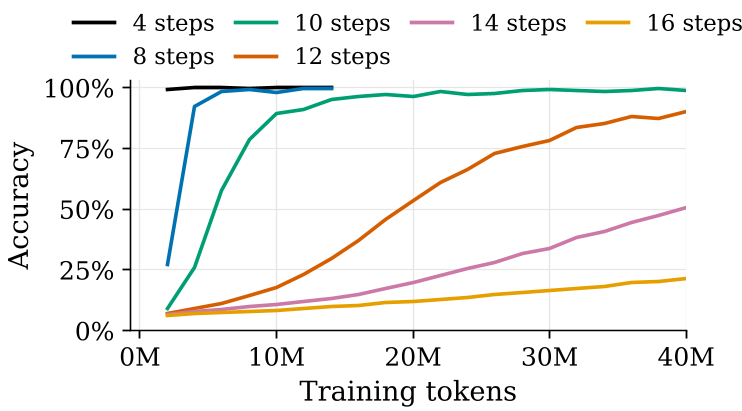 Figure 2: Performance gains on Rule 110 as the number of sleep loops increases.
2. Multi-Hop Retrieval (Depo)
In the Depo task, the model must traverse a graph. If you need to find a node 16 "hops" away, a single pass simply isn't enough to "save" the path into weights. The 4-loop sleep model was the only one capable of beginning to solve the 16-hop challenge within the training budget.
3. Real-World Math: GSM-Infinite
The authors scaled this to 2-billion parameter models (Jet-Nemotron and Ouro). On complex math problems involving up to 8 arithmetic operations:
- Jet-Nemotron: 6 loops improved accuracy on 8-operation problems from 35.1% to 38.8%.
- Ouro: 4 loops pushed 6-operation accuracy from 41.9% to 61.5%—a massive jump.
Critical Analysis: The Price of a Good Night's Sleep
While "sleeping" makes the model smarter, it isn't "free":
- Training Cost: Training takes longer because you are effectively running times more forward and backward passes.
- Sequential Bottleneck: Standard Transformer training is highly parallel. This method introduces a sequential dependency (you must finish sleeping on window before processing window ).
However, the authors point out that reasoning itself is inherently sequential. Attempting to solve sequential problems with purely parallel shortcuts often leads to "brittle" models that fail on slightly harder data.
Conclusion and Future Outlook
"Language Models Need Sleep" provides a compelling blueprint for the next generation of reasoning models. By separating the computation of memory from the latency of prediction, we can build models that are context-efficient yet capable of "thinking" through deep, multi-step problems.
The takeaway for researchers is clear: If you want your model to reason over long contexts, don't just give it a bigger cache—give it the time to process what it has already seen.
Senior Editor's Note: This work aligns with the broader industry trend of "Inference Scaling" (as seen in models like OpenAI's o1), but moves the scaling from the final output generation to the internal memory consolidation phase. This is a vital distinction for maintaining throughput in high-capacity systems.