
From LAMs to Agentic AI: The "Brain" of 6G Intelligent Communications
From Large AI Models to Agentic AI: A Tutorial on Future Intelligent Communications
This tutorial systematically explores the transition from Large AI Models (LAMs) to Agentic AI in the context of 6G communications. It proposes a LAM-centric design paradigm and an agent-driven framework (CommLLM) to address the dynamic complexity and scalability challenges of future intelligent wireless networks.
TL;DR
As we move toward the 6G era, the role of AI is shifting from simple predictive models to Agentic AI—autonomous systems capable of planning, reasoning, and executing complex communication tasks. This paper provides a comprehensive tutorial on building communication-specific Large AI Models (LAMs) and integrating them into multi-agent frameworks to automate everything from semantic transmission to UAV drone swarm coordination.
Why 6G Needs More Than Just "Models"
Traditional wireless networks are governed by rigid protocol stacks. While deep learning improved specific blocks (like channel estimation), it couldn't manage the network as a whole. The authors argue that 6G requires cognitive autonomy. Current Large Language Models (LLMs) are great at text, but 6G demands "Agentic" behavior: the ability to observe a network state, plan a resource allocation strategy, invoke simulation tools, and reflect on the outcome to self-optimize.
Methodology: The Two-Pillar Design
1. Designing LAMs for Communications
The authors suggest that general-purpose models (like GPT-4) aren't enough. They propose a training pipeline specific to the telecom domain:
- Internal Learning: Continuous pre-training on 3GPP specifications and IEEE documents using Causal Language Modeling. This is followed by Instruction Fine-Tuning (SFT) and Alignment (DPO) to ensure the model outputs concise, accurate technical parameters rather than "hallucinated" prose.
- External Learning: Utilizing Retrieval-Augmented Generation (RAG) and Knowledge Graphs (KG). This allows the model to access the latest 6G standards without constant retraining, ensuring "semantic closure."
2. The Agentic AI Architecture (CommLLM)
The paper introduces CommLLM, a multi-agent framework designed to handle complex telecom workflows. Unlike a single chatbot, this system breaks down tasks into three collaborative modules:
- Multi-Agent Data Retrieval (MDR): Securely fetches and condenses domain knowledge.
- Multi-Agent Collaborative Planning (MCP): Uses Chain-of-Thought (CoT) to decompose a goal (e.g., "Optimize slice for 500 UAVs") into executable sub-steps.
- Multi-Agent Evaluation & Reflection (MER): A feedback loop where "Reflexion" agents critique the plan, checking for logical errors before execution.
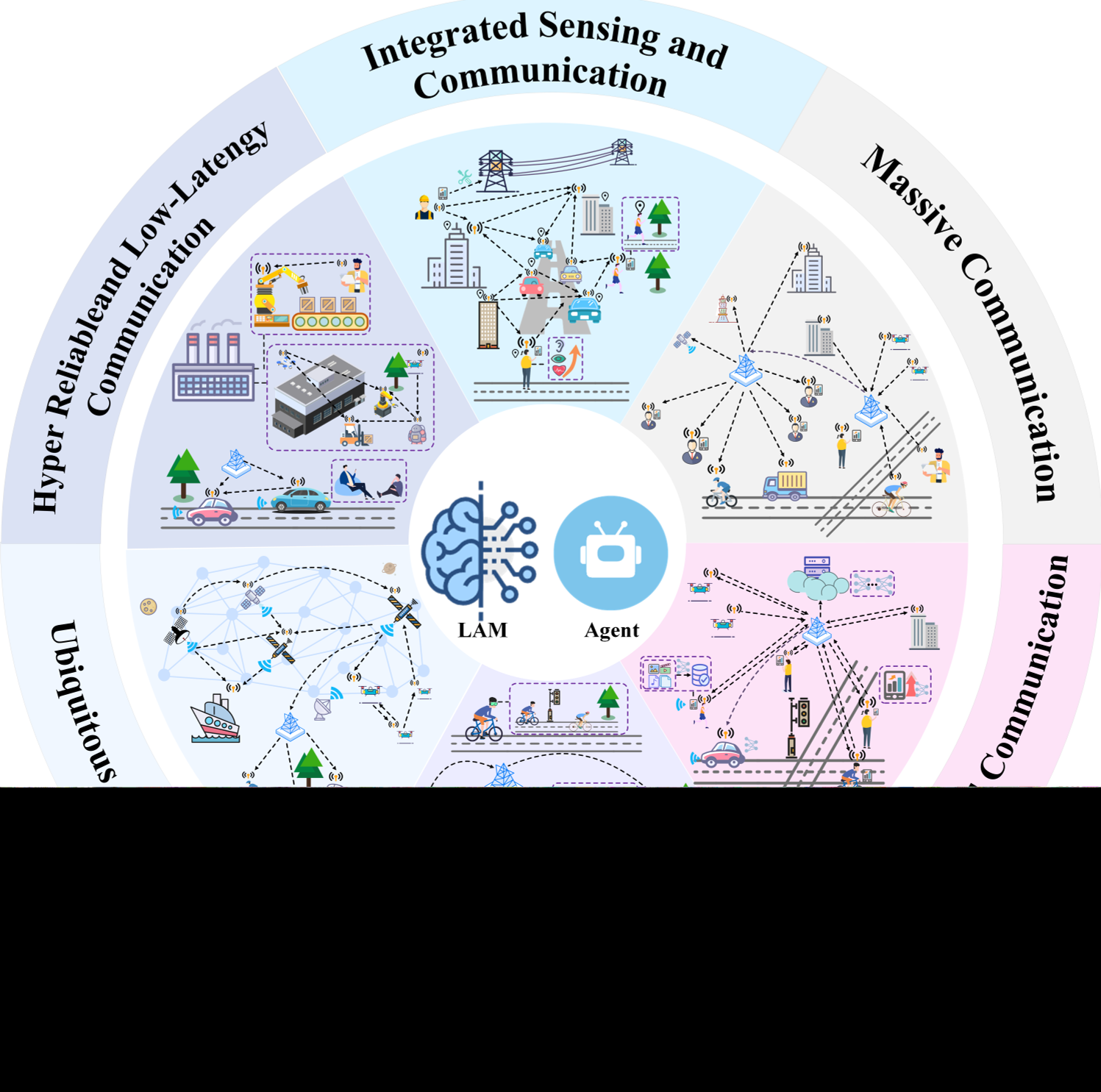 Figure 1: The Evolution from 6G Vision to Agentic AI Implementation.
Key Application Frontiers
Semantic Communication
LAMs are transforming the foundational unit of transmission from bits to meanings. By using Vision-Language Models (VLMs), systems can transmit high-level semantic tokens of an image, which the receiver reconstructs using a Generative AI model, reducing bandwidth usage by orders of magnitude while maintaining "intent-level" accuracy.
UAV and Edge Intelligence
In Unmanned Aerial Vehicle (UAV) networks, Agentic AI moves beyond simple pathfinding. Agents can autonomously plan flight trajectories based on real-time signal strength and obstacle detection, invoking local "tools" for 3D spatial reasoning.
 Figure 2: Systematic Framework for Integrating LAMs into the 6G Ecosystem.
Critical Analysis & Challenges
Despite the promise, the authors identify significant "moats" for Agentic AI:
- Reasoning Gaps: Current models are often data-driven rather than logic-driven. They might struggle with "counterfactual reasoning" (e.g., "What happens if this base station fails?").
- Deployment Latency: Running a multi-billion parameter model at the "edge" (on a phone or tower) is still computationally expensive, requiring advanced Model Compression and Distillation.
- Standardization: We need protocols like MCP (Model Context Protocol) to allow different AI agents to talk to each other across different vendors.
Conclusion: From Model-Driven to Agent-Driven
The future of 6G isn't just "faster" data; it's "smarter" data. By moving to Agentic AI, communication systems can evolve from passive pipes into active, self-healing entities. This tutorial serves as a blueprint for researchers to stop viewing AI as a "black box" tool and start building it as a "network brain."