
Scaling Face Identification: From Small Labs to 1,000 Celebrities in the Wild
Toward Large-Population Face Identification in Unconstrained Videos
This paper introduces Celebrity-1000, the first large-scale unconstrained video face identification database, and proposes SISO (Sparsity Induced Scalable Optimization) to accelerate the MTJSR (Multitask Joint Sparse Representation) algorithm. The method treats video frames as multiple tasks to perform collaborative inference, significantly outperforming traditional single-image and manifold-based baselines.
Executive Summary
TL;DR: This paper tackles the "Large-Population Face Identification" problem in real-world videos. The authors contribute the Celebrity-1000 dataset—one of the first massive unconstrained video benchmarks—and a mathematical framework called SISO that makes sparse-representation methods 18 times faster, allowing them to work with millions of gallery images.
Status: This work is a foundational contribution to large-scale video-based biometrics, bridging the gap between theoretical sparse coding and practical, large-population scalability.
Problem & Motivation: The Scalability Wall
Traditional face identification often fails in "the wild" due to variations in pose, expression, and lighting. Video provides a solution by offering multiple temporal views, but it introduces a massive computational burden.
Existing methods like Multitask Joint Sparse Representation (MTJSR) are excellent because they perform "collaborative inference"—they don't just look at frames individually; they look at them as a unified set. However, when the gallery (database) grows to 1,000 subjects with millions of frames, the optimization problem explodes. Solving for millions of coefficients simultaneously makes standard solvers grind to a halt.
Methodology: The SISO Framework
The core insight of this paper is that most people in a database are not the person you are looking for. In mathematical terms, the solution is "Group Sparse."
1. Collaborative Inference (MTJSR)
Instead of classifying one frame at a time, the model represents the entire query sequence as a linear combination of gallery images . The -norm encourages the model to pick only a few subjects (groups) from the gallery to explain the query sequence.
2. Sparsity Induced Scalable Optimization (SISO)
To solve this at scale, the authors proposed a "Shrinkage-Expansion" strategy:
- Expansion Phase: Use the KKT (Karush-Kuhn-Tucker) conditions to identify which gallery groups are most likely to reduce the error. Only these are added to the "Active Set."
- Shrinkage Phase: Solve a tiny sub-problem using only the Active Set. If a subject's coefficient drops to zero, they are kicked out of the set.
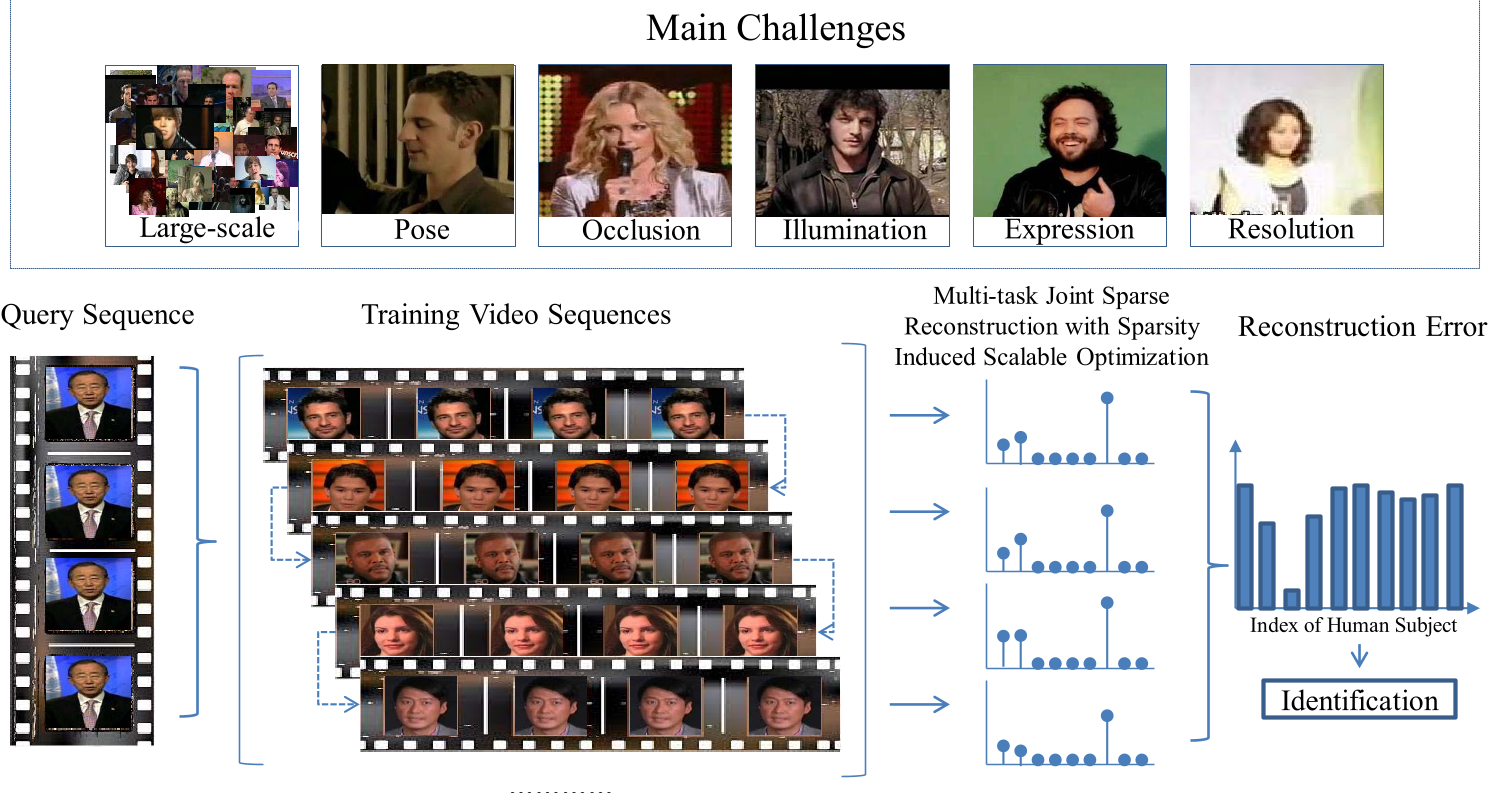 Figure 1: The framework pipeline, showing face tracking, feature extraction, and the iterative SISO optimization.
Experiments & Results
The researchers tested their method against heavyweights like SVMs and Manifold Discriminant Analysis (MDA).
Performance in the Wild
MTJSR consistently outperformed baselines across both Open-set (generalization to unseen subjects) and Close-set (fixed gallery) protocols. While MDA struggled with the short duration of tracking sequences, MTJSR's ability to utilize context across frames gave it a significant edge.
The Speed Revolution
The most impressive result is the efficiency gain. By using SISO, the team achieved a nearly 20-fold increase in speed without losing any accuracy.
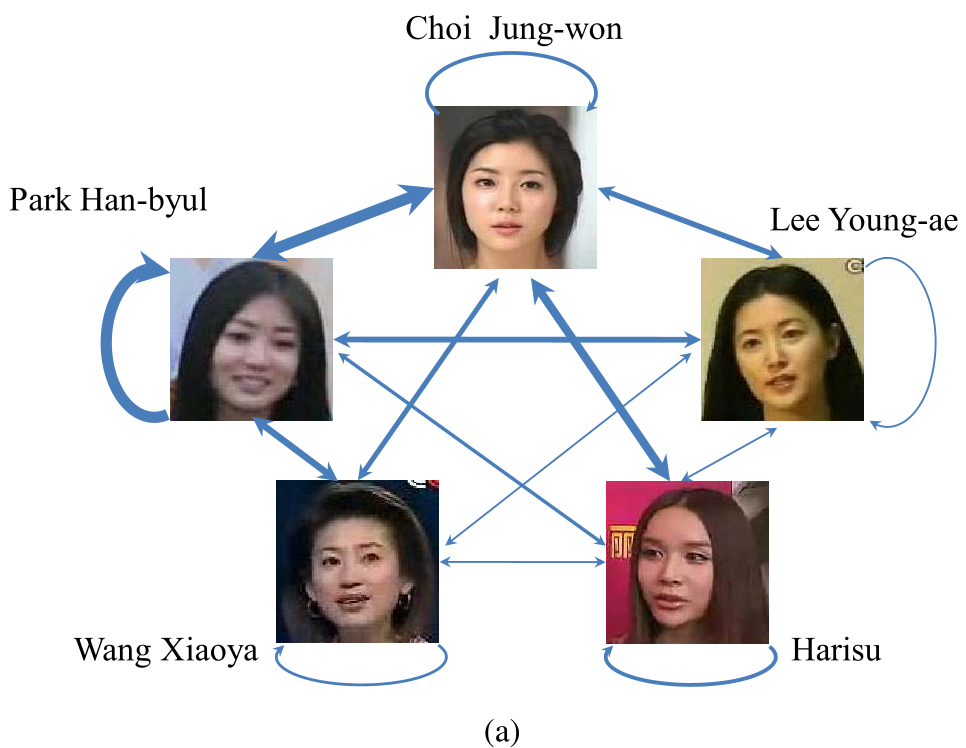 Figure 2: Runtime comparison showing how SISO stays efficient as the number of variables increases, whereas standard APG grows exponentially.
Visualizing "Hard" Faces
The authors used graph-based clustering to identify which celebrities were most often confused. As shown below, subjects with similar facial structures and skin tones form "dense subgraphs," representing the remaining challenges in unconstrained identification.
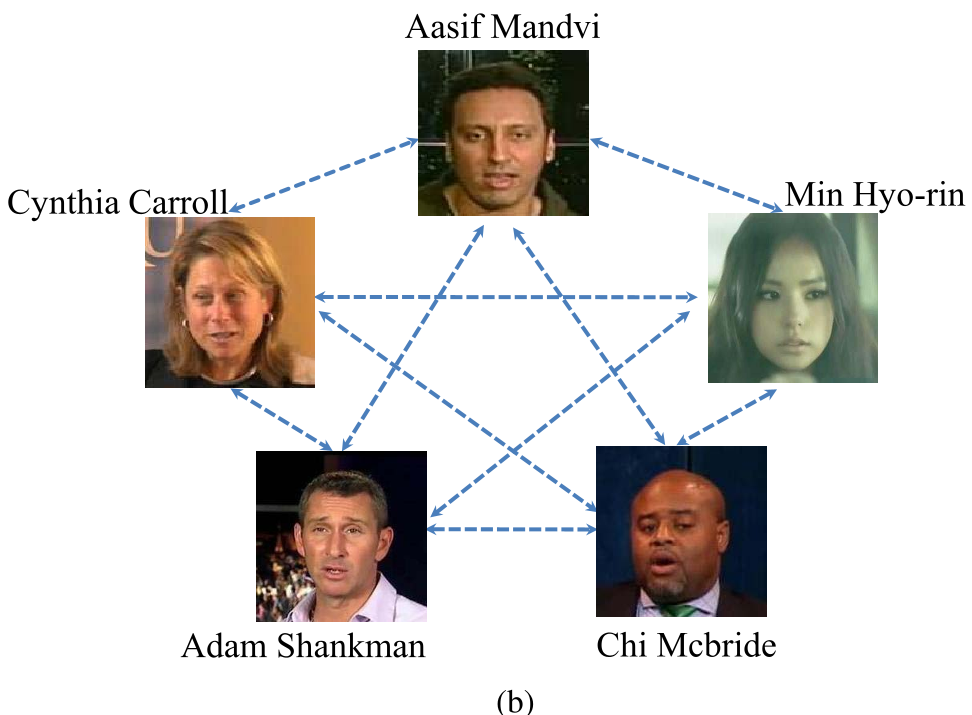 Figure 3: Clusters of similar faces that are easily misclassified by the algorithm.
Critical Analysis & Conclusion
Takeaway: The success of SISO proves that we don't always need to solve the "big" problem. By mathematically identifying the relevant subspace (the Active Set), we can achieve SOTA results with a fraction of the compute.
Limitations: Despite the speedup, 3,254 seconds per test sequence is still high for real-time applications. Future iterations would likely need to incorporate Hashing or Indexing within the expansion phase to reach sub-second performance.
Future Outlook: While deep learning has since taken over feature extraction (replacing LBP/Gabor), the principle of Joint Sparse Representation remains a powerful tool for robust inference in noisy, multi-frame environments.