
Last Call for the Buffet: Why Your "Unlimited" Data Plan is an Economic Ticking Time Bomb
Last call for the buffet: economics of cellular networks
The paper investigates the impact of "all-you-can-eat" buffet plans on cellular network economics using a 27-month dataset of 1 million users. It proposes a framework to optimize operator profits by implementing volume caps that account for both individual usage and social network propagation effects.
TL;DR
Is "unlimited" actually sustainable? This landmark study of 1 million cellular users reveals a stark reality: 20% of subscribers are "money losers" who cost more in infrastructure fees than they pay in bills. By analyzing the social "call graph," the authors demonstrate how operators can double their profit margins by pivoting from "all-you-can-eat" buffets to strategically optimized volume caps.
Academic Context: Published at MobiCom '13, this work is a foundational intersection of network economics and social computing, moving beyond simple usage metrics to a holistic "Net-aware" profitability model.
The "Buffet" Problem: Why Flat Rates Fail
For years, cellular operators used unlimited voice and data as "incentives" to drive user acquisition. The assumption was simple: the majority of users wouldn't actually use much.
However, the study finds two fatal flaws in this logic:
- The Subsidization Trap: 20% of users have a negative "balance"—meaning the operator loses money every time they pick up the phone or open an app.
- Lack of Proxy: Usage between services (SMS vs. Data vs. Voice) is weakly correlated. You cannot guess a user's data cost simply by looking at their voice minutes.
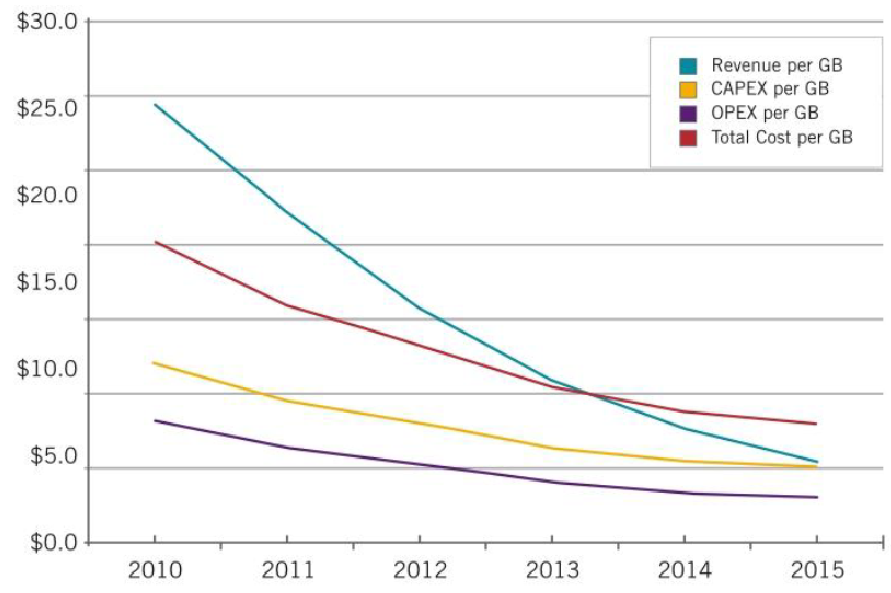 Figure 1: Declining margins as data delivery costs approach retail prices.
Methodology: Beyond the Individual
The authors argue that looking at a user’s bill in isolation is myopic. They introduce two critical concepts:
- Balance Assortativity: "Heavy users" tend to hang out with other "heavy users." If you kick one out, you risk a cascade.
- The Net-aware Model: Using a recursive algorithm, they simulate how a cap affects not just the person who exceeds it, but their friends who might leave the network because their "social incentive" (free on-net calls) disappeared.
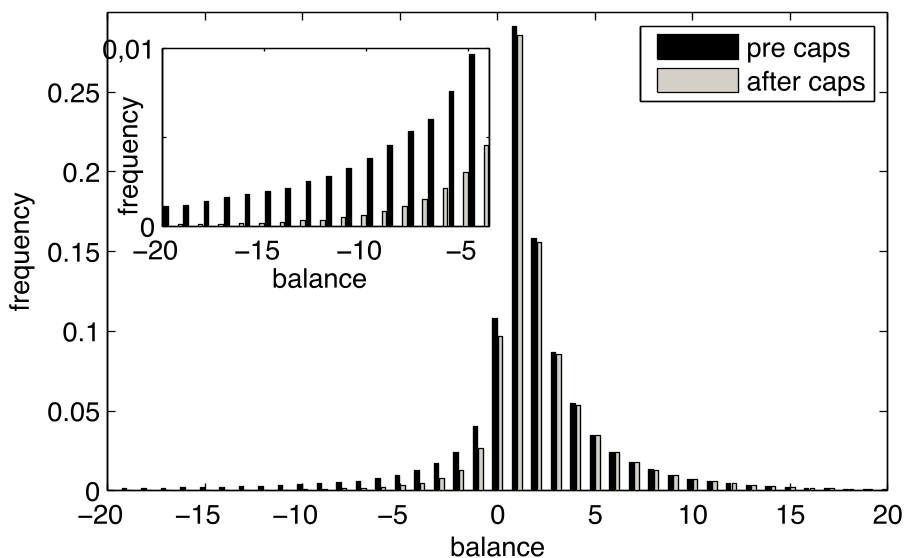 Figure 2: Relative Total Balance gains under Net-Oblivious vs. Net-Aware models.
Key Results: The Power of 16%
The study finds that the path to profitability isn't about charging everyone more; it's about capping the outliers.
- The Sweet Spot: A cap of roughly 1.3GB of data and 1,300 SMS (in 2013 terms) maximizes the operator's total balance.
- Efficiency: This strategy affects only 16% of users but can increase the operator’s net profit margin by nearly 100%.
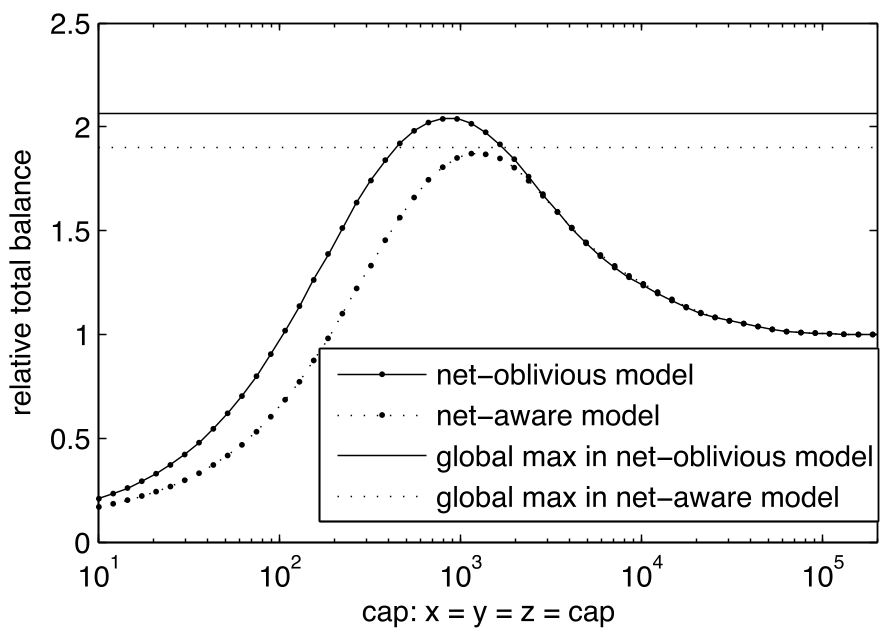 Figure 3: Impact of caps on the user base—the negative balance (left tail) is effectively pruned.
Critical Insight: The Social Safety Net
One of the paper’s most profound findings is that some "loss-leader" users are actually valuable. When calculating balance through the social graph, the distribution "squeezes." Some costly users are the "glue" holding together a cluster of highly profitable users. If an operator prunes these hubs blindly, they trigger a catastrophic churn.
Conclusion & Future Outlook
This research was a "last call" for the era of unmetered data. As we transition deeper into the 5G and 6G eras, the paper’s core takeaway remains: Network economics is social economics.
Limitations: The data comes from an MVNO (Mobile Virtual Network Owner), which has a more linear cost structure than infrastructure-heavy MNOs like Verizon or Vodafone. However, the behavioral insights regarding cross-subsidization are universal across the telecom industry.