
Beyond the Simple Smile: Decoding the 16 Flavors of Positive Emotion
Laughter and Smiling in 16 Positive Emotions
2017-08-07
Summary
Problem
Method
Results
Takeaways
Abstract
This study utilizes the Facial Action Coding System (FACS) to map the expression of 16 distinct positive emotions proposed by Ekman. It identifies that while the Duchenne Display (DD) is universal across these emotions, Amusement and Schadenfreude are uniquely characterized by high-intensity laughter.
## TL;DR
Is a smile just a smile? Not according to Hofmann, Platt, and Ruch. Their research dives into the "Family of Joy," proving that while 16 different positive emotions (from *Fiero* to *Schadenfreude*) all share the classic Duchenne Display, they differ wildly in intensity and their propensity to trigger laughter. This study provides a roadmap for "fine-grained" emotion recognition in both humans and AI.
## The Problem: The "Joy" Generalization
For decades, psychology and computer vision have treated "Happiness" as a monolith. If the lips turn up and the eyes crinkle (the Duchenne marker), we check the "Joy" box. However, this ignores the vast psychological distance between the quiet contentment of a sunset and the explosive mirth of a joke. Moreover, most studies use actors "posing" for a camera—a far cry from the complex social dance of real-life emotional expression.
## Methodology: The Art of the Group Recall
To capture authentic expressions, the researchers didn't ask participants to "look happy." Instead, they used a **structured group conversation**. Participants recalled vivid memories of 16 specific emotions:
* **Sensory Pleasures** (Tactile, Gustatory, etc.)
* **Social Emotions** (Gratitude, Elevation, Naches)
* **High-Arousal States** (Amusement, Excitement, Schadenfreude)
Two FACS-certified coders then disassembled every micro-expression and vocalization, looking for the specific Action Units (AUs) that distinguish a polite social mask from a genuine emotional "burst."
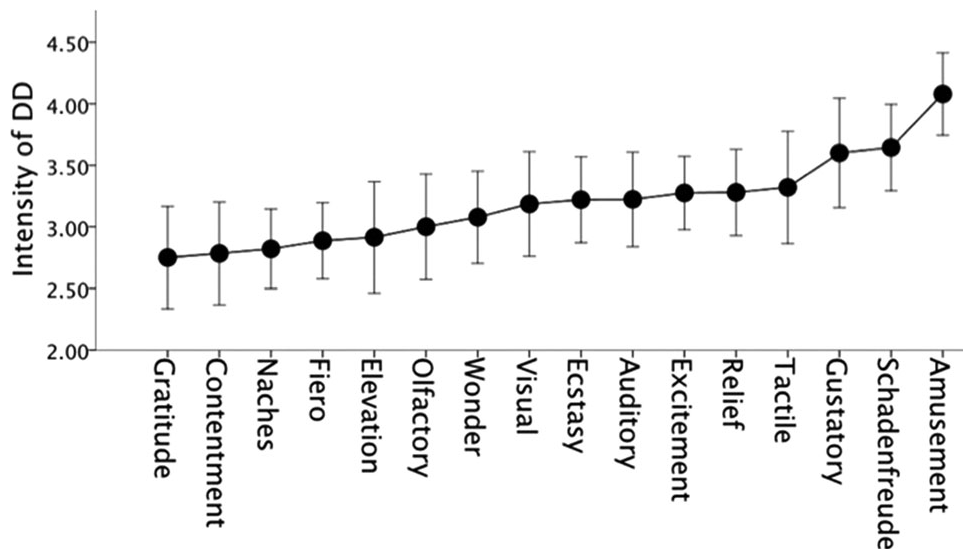
*Fig 1. Intensity of Duchenne Displays across the 16 positive emotions.*
## Core Insights: When Does Smiling Turn to Laughter?
The data reveals a clear hierarchy. While every positive emotion can elicit a Duchenne smile, only a few are "laughter-heavy."
### 1. The Laughter Leaders: Amusement & Schadenfreude
Amusement and Schadenfreude (joy at others' misfortune) were the only emotions where participants laughed more than they smiled. This suggests that laughter is not just a "loud smile" but a specific signal for high-intensity or socially transgressive joy.
### 2. The Power of Regulation
The study found that in social settings, people frequently "down-regulate" their joy—especially for Schadenfreude. They use "smile controls" like AU14 (dimpler) or AU24 (lip press). Crucially, the researchers found that these regulated smiles are just as intense as "pure" Duchenne smiles; they are simply the "joy" signal fighting against a social filter.
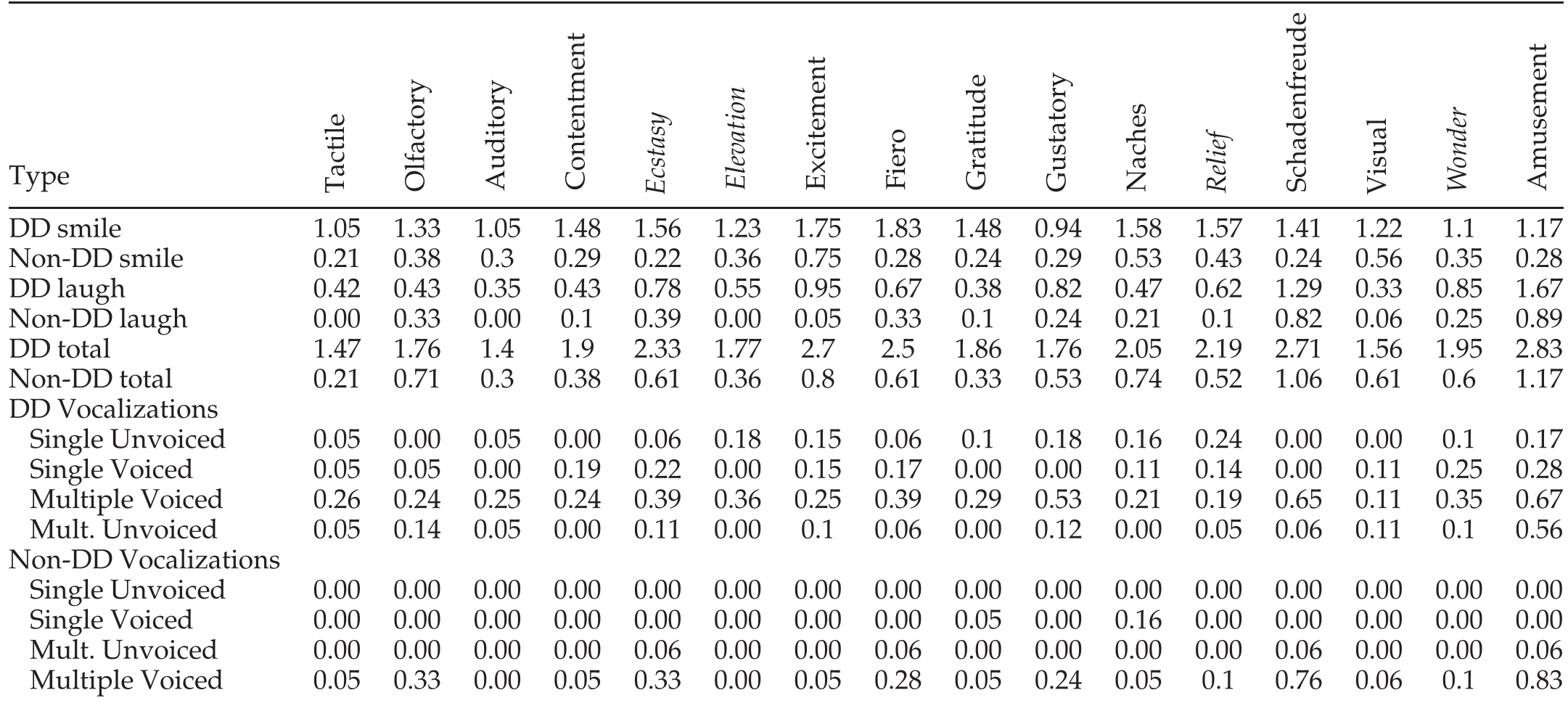
*Table 1. Frequency of different smile and laugh configurations per emotion memory.*
## Critical Analysis & Future Outlook
This work is a cornerstone for **Affective Computing**. If we want Virtual Agents or AI tutors to appear empathetic, they must know that *Gratitude* requires a subtle, low-intensity display, whereas *Fiero* (pride in achievement) might involve an expansive, high-intensity laugh.
**Limitations:**
The study was conducted within a specific cultural context (Swiss German). Emotional display rules are notoriously cultural—what is "regulated" in Zurich might be "up-regulated" in Rio de Janeiro.
**The Takeaway:**
The "Duchenne Display" is the common currency of all positive emotions, but the "denomination" (intensity) and "vocalization" (laughter) tell the real story of what someone is feeling. For future research, the challenge lies in moving beyond the face to see how body posture and breathing rhythm complete the emotional picture.
## Conclusion
By mapping the subtle nuances of 16 enjoyable emotions, Hofmann and colleagues have shown that the landscape of "Happiness" is far more diverse than a single emoji suggests. Whether for clinical psychology or human-computer interaction, the key to understanding joy lies in its regulation and its vocal release.