
LBTask: Revolutionizing Spatial Crowdsourcing through Precision Assignment and Trajectory Prediction
LBTask: A Benchmark for Spatial Crowdsourcing Platforms
This paper introduces LBTask, a specialized benchmark and platform for spatial crowdsourcing that prioritizes location-aware task management. Unlike traditional platforms, it implements a modular architecture supporting various task assignment algorithms (Location-first, Quality-first, and Skill-first) and location prediction based on historical movement patterns.
TL;DR
LBTask is a benchmark platform designed to solve the "geographic gap" in crowdsourcing. By moving away from the static task lists of legacy platforms like Amazon Mechanical Turk, LBTask introduces a dynamic server-client architecture. It uses predictive data mining to anticipate where workers will be, ensuring that location-sensitive tasks (like checking a parking lot's occupancy) are assigned to the right person at the right time.
The "Passive Selection" Problem: Why Traditional Crowdsourcing Fails the Real World
Most crowdsourcing platforms operate on a "Digital Billboard" logic: publishers post a task, and workers browse a list. This works for labeling images or transcribing audio, but fails miserably for Spatial Crowdsourcing.
If you need to know the current crowd density at a specific basketball court now, you cannot wait for a random worker to stumble upon your post. Current SOTA systems often struggle with:
- Spatial Disconnect: Tasks require physical presence, but assignment doesn't account for worker movement.
- Quality Volatility: Without active screening, the person closest to the task might not be the most qualified.
- Algorithmic Rigidity: Most platforms support only one type of matching logic (e.g., simple radius search).
Methodology: The Core Logic of LBTask
LBTask's innovation lies in its multi-strategy assignment engine. Instead of a one-size-fits-all approach, it utilizes four distinct "First" strategies:
- Location-First: Mapping tasks to the nearest available worker via Euclidean distance.
- Skill-First: Prioritizing workers with specific certified abilities (e.g., photography or specialized knowledge).
- Quality-First: Ranking assignments based on historical reliability and check-in frequency.
- Position Prediction: The "Proactive" mode.
Predictive Task Assignment
The system doesn't just look at where a worker is; it looks at where they will be. By mining movement patterns from check-in data, LBTask builds a transition matrix:
- Mining: Clusters discrete GPS points into "Regions."
- Rule Generation: Uses an Apriori-inspired logic to find frequent routes (e.g., Region A -> Region B).
- Matching: If a task exists in Region B, and a worker is currently in Region A with a high transition probability, the task is assigned to them before they even arrive.
 Figure 1: The high-level architecture of the LBTask platform.
Implementing the User Experience
The authors implemented a dual-platform approach. The Server handles the heavy lifting of EM algorithms for quality estimation and trajectory mining, while the Client (mobile app) provides a streamlined interface for publishers and workers.
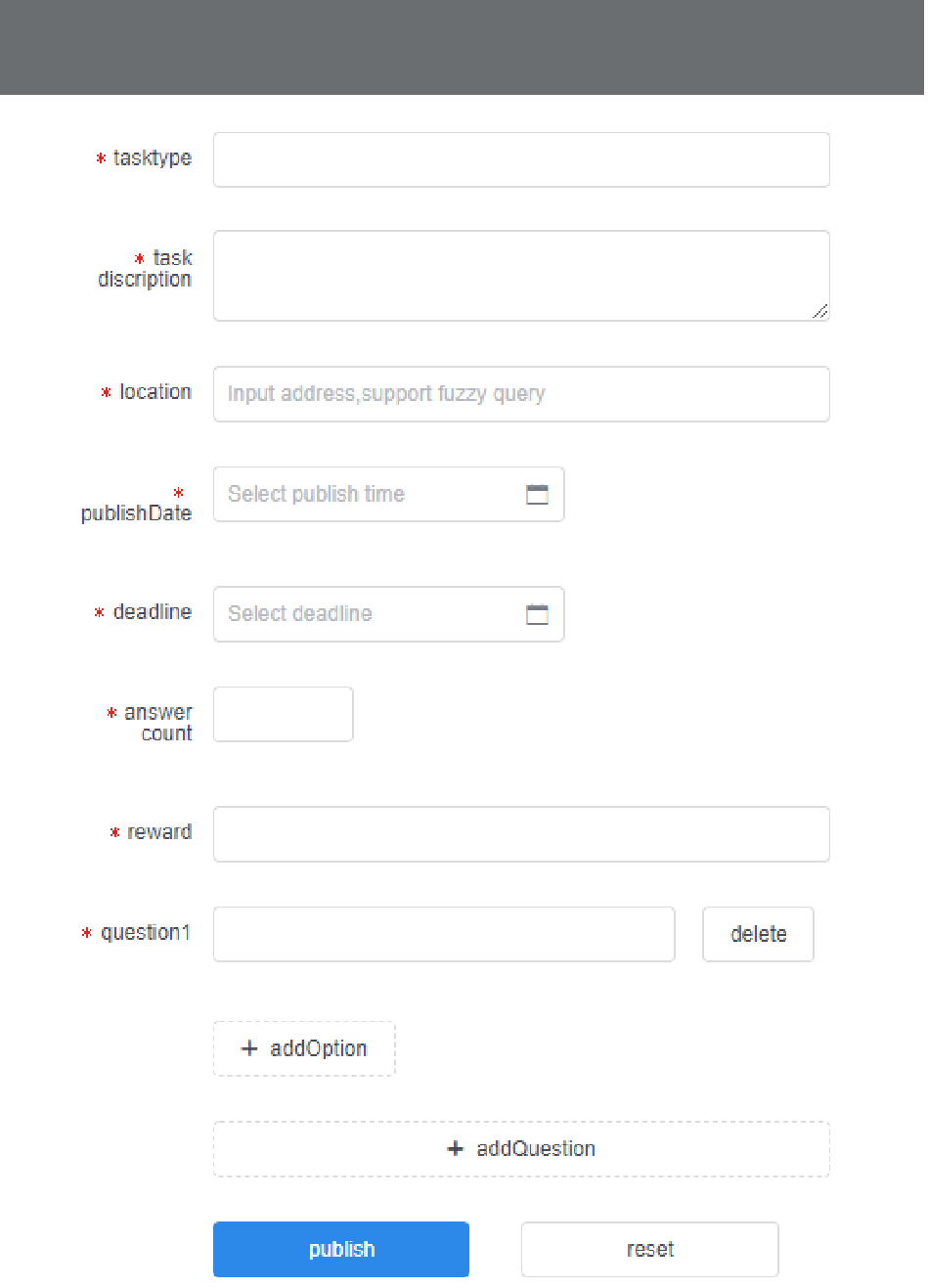 Figure 2: The task publishing interface allows for precise POI (Point of Interest) selection and reward setting.
Critical Analysis: Impact and Limitations
The Upside: LBTask effectively bridges the gap between digital questionnaires and physical world sensing. Its ability to support varied assignment strategies makes it a flexible "benchmark" for comparing different crowdsourcing algorithms in a real-world environment.
The Limitations:
- Cold Start: Predictive assignment relies heavily on historical data. New workers without a check-in history cannot be accurately predicted.
- Privacy Concerns: The paper focuses on efficiency but does not deeply address the privacy implications of tracking "frequent activity areas" of users.
- Battery/Data Drain: Constant check-ins and location updates on the client-side can be resource-intensive for mobile devices.
Conclusion
LBTask represents a significant step toward "Human-in-the-loop" sensing. By treating worker movement as a predictable resource rather than a random variable, it optimizes the efficiency of the "Shared Economy" model. For researchers, it provides a robust framework to test new spatial assignment strategies; for industry, it offers a blueprint for more responsive location-based services.
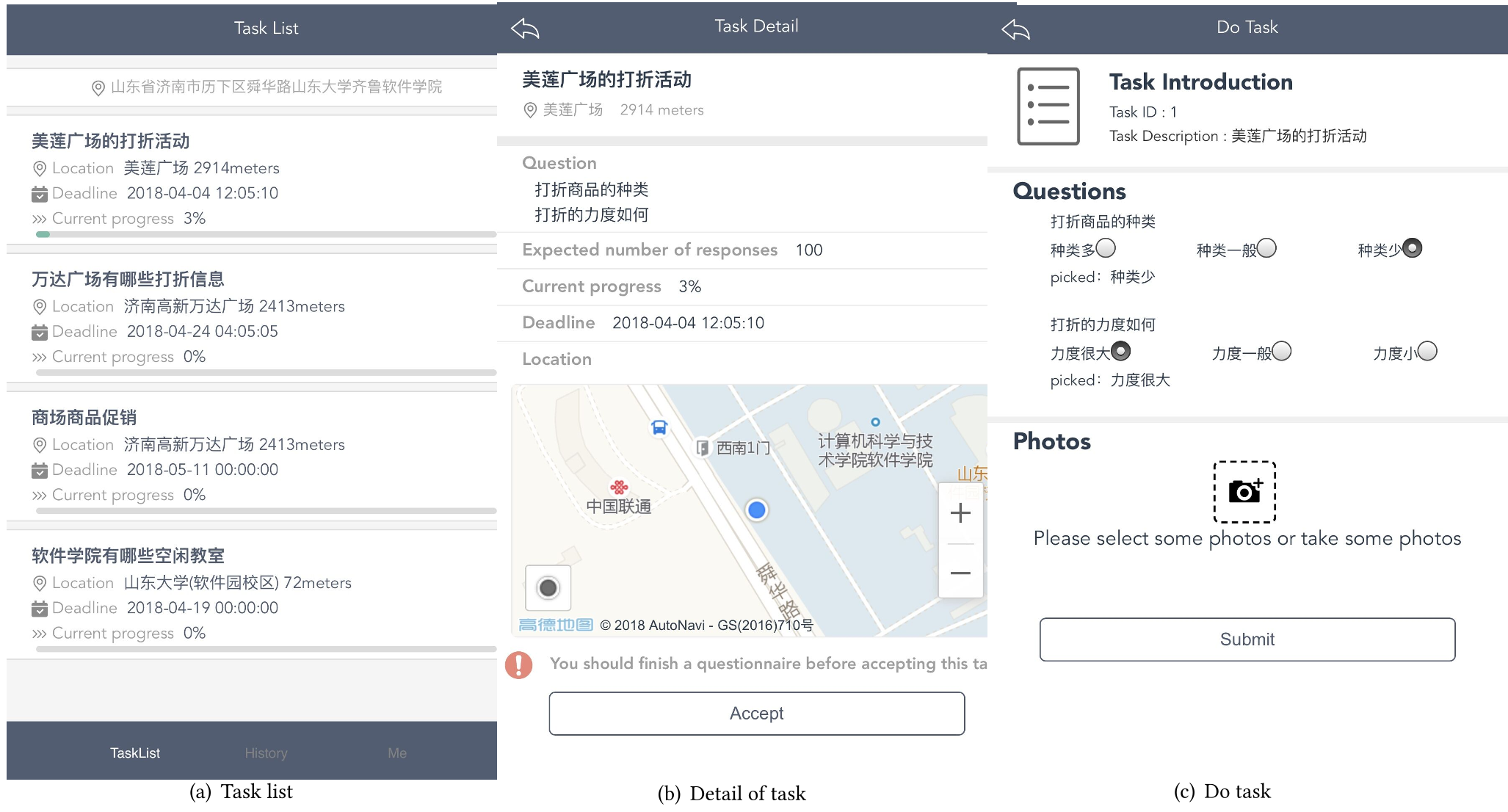 Figure 3: Representation of the worker's task-acceptance view.