
Leadership Networks in Competitive Contests: Is the Death of the "Solitary Leader" Greatly Exaggerated?
Leadership network and team performance in interactive contests
The paper investigates the relationship between leadership structures (centralized vs. de-centralized) and team performance using Social Network Analysis (SNA) on large-scale historical cricket data. By constructing batting partnership networks, the study identifies that centralized leadership significantly correlates with higher winning odds in One Day International (ODI) matches.
TL;DR
While modern management theory pushes for de-centralized, "shared" leadership, this large-scale empirical study of cricket history (1877–2013) reveals a counter-intuitive truth: in high-pressure, result-oriented environments like One Day Internationals, teams with a highly centralized leader—a captain who is the literal and figurative "hub" of the network—are 30% more likely to win.
Problem: The Subjectivity Trap in Leadership Research
The study of leadership has long suffered from a "subjectivity trap." Most theories are built on survey data where leaders rate their own performance—a recipe for bias where a leader's ego inflates the perceived effectiveness of the team. Furthermore, historical data on how leadership structures actually evolve during high-stakes "contests" has been scarce.
Satyam Mukherjee addresses this by turning to the "treasury of data" in professional sports. In cricket, the captain is not just a figurehead; they make on-field decisions that directly alter the network of cooperation (batting partnerships).
Methodology: The Team as a Network
The author uses Social Network Analysis (SNA) to map the batting partnership network for every major cricket match in history.
- Nodes: Individual batsmen.
- Links: Partnerships formed during an innings.
- Weights: The number of runs scored together.
To analyze leadership style, the author focuses on Betweenness Centrality. If the formal captain is the central-most node—the bridge through which the team's run-scoring flows—the leadership is classified as Centralized. If others take that spot, it is De-centralized.
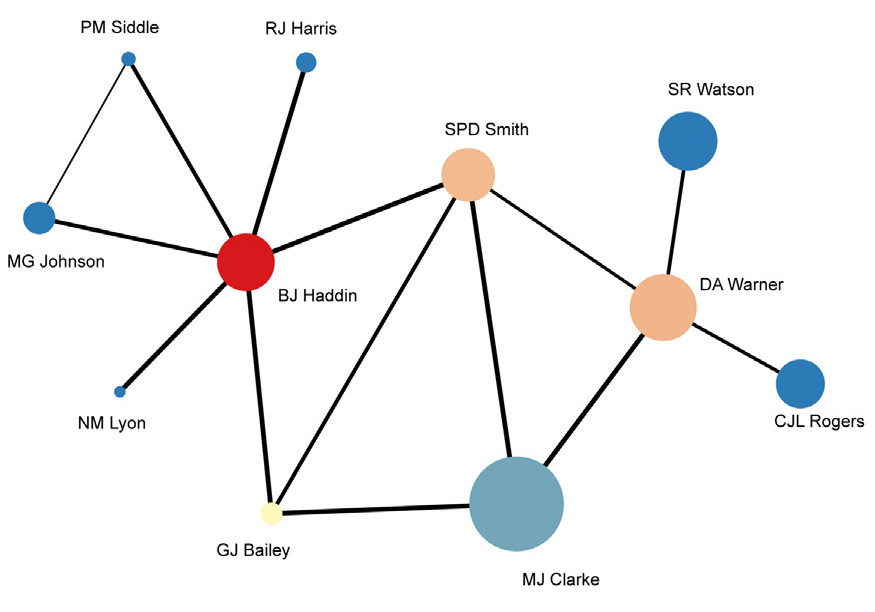 Figure 1: Comparison of Australian centralization (M.J. Clarke) vs. England's distribution in the 2013/14 Ashes series.
Why Centralization Wins
The study analyzes 3,420 ODI matches and 1,979 Test matches. The results across formats are striking:
- ODIs (High Intensity): Centralized leadership shows a massive advantage. The probability of winning is significantly higher when the captain is the central pillar of the partnership network.
- Test Matches (Endurance): The effect is negligible. Leadership structure matters less than raw team talent (as measured by ICC points).
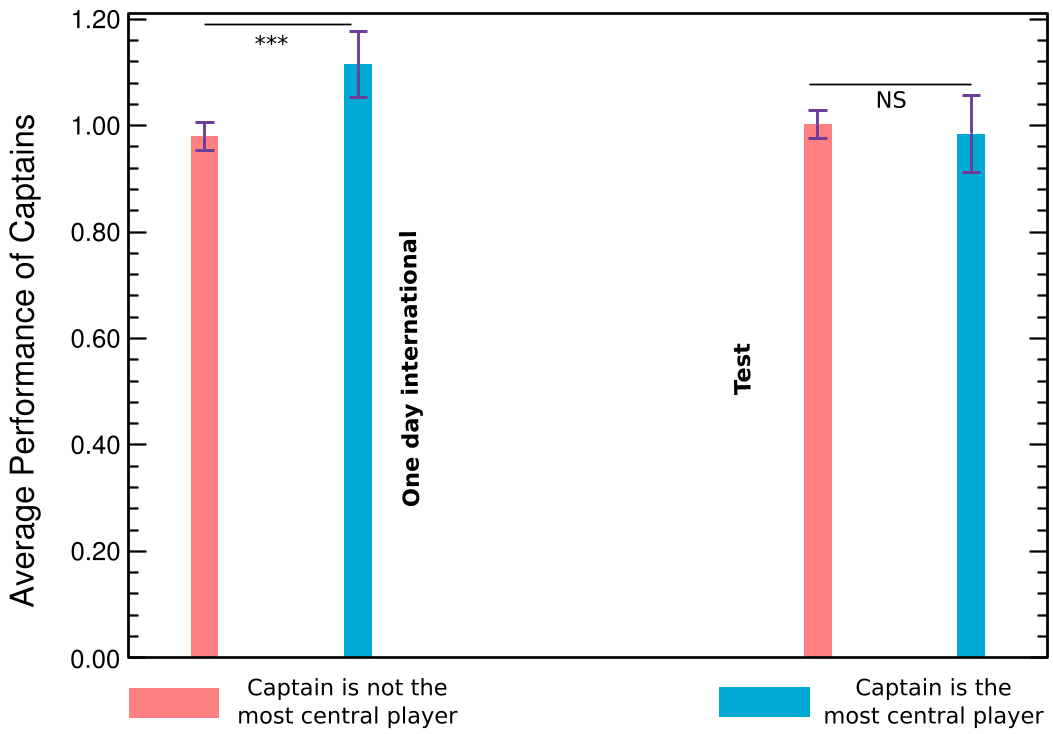 Figure 2: Performance scores showing a significant win-rate advantage for centralized leadership in ODI cricket.
The "Why" behind this lies in the nature of the contest. ODIs are shorter and more competitive; they require decisive, leading-by-example maneuvers. A captain who anchors the team (centralized) provides a stabilizing structure that de-centralized teams lack in time-sensitive crises.
Critical Insight: The Context-Dependency of Leadership
This paper serves as an important corrective to the "de-centralize everything" movement. It suggests that:
- Competitiveness Dictates Structure: The more "result-oriented" and time-constrained the task, the more a team benefits from a central, dominant leader.
- Distributed Leadership is No Panacea: In both Test and ODI cricket, there was no evidence that distributed leadership was associated with higher team performance.
- Talent vs. Strategy: In the long-form version of the game (Test cricket), raw talent (ICC player rankings) finally outweighs the structural influence of the captain.
Conclusion and Limitations
The takeaway for administrators and managers is clear: when the pressure is high and the duration is short, look for a "hub" leader who can anchor the network.
However, the author notes potential endogeneity: captains are selected for their talent. While the study controls for individual batting averages, the specialized roles of captains (like those who are primarily bowlers) remain an area for future SNA research. This work provides a robust template for analyzing small-team collaborations in any field where "partnerships" can be measured, from R&D labs to open-source software teams.