
LeadersRank: Redefining Community Detection through Influence-Centric Seeding
LeadersRank: Towards a new approach for community detection in social networks Community detection based on leaders' nodes
This paper introduces LeadersRank, an eigenvector centrality-based algorithm for community detection in social networks. The method identifies influential "leader" nodes as cluster centers to derive community structures without requiring the number of communities () as an input parameter.
TL;DR
LeadersRank is a novel community detection algorithm that pivots from traditional partitioning to an influence-first approach. By leveraging Eigenvector Centrality, it identifies "leader" nodes to anchor communities, successfully detecting network clusters without needing the number of communities () as a prior input. It outperforms standard Label Propagation (LPA) in structural accuracy (ARI) across classic social network benchmarks.
Background & Motivation: The Problem with Knowing ""
In social network analysis (SNA), community detection is essential for understanding how information or diseases propagate. However, most SOTA methods face a catch-22: to find clusters accurately, they often require you to specify how many clusters exist (the parameter). In real-world, evolving networks like Facebook or LinkedIn, is almost always unknown.
Furthermore, local metrics like Degree Centrality merely count an individual's friends. The authors argue that this is insufficient. A true leader isn't just someone with many connections—it's someone connected to other influential people.
Methodology: High-Influence Anchoring
The LeadersRank algorithm operates on a three-step pipeline designed to extract structure from topology:
- Nodes Centrality (The Global View): Instead of simple counting, the algorithm calculates the Eigenvector Centrality (). This captures the "Gould’s index of accessibility," meaning a node's importance is relative to its neighbors' importance.
- Leaders Ranking: Nodes are sorted by their centrality scores. The node with the peak score is designated as the first leader ().
- Community Formation: The algorithm uses a neighborhood function to sweep the immediate surroundings of . These neighbors are assigned to ’s community and removed from the global list (). The process repeats until all nodes are assigned.
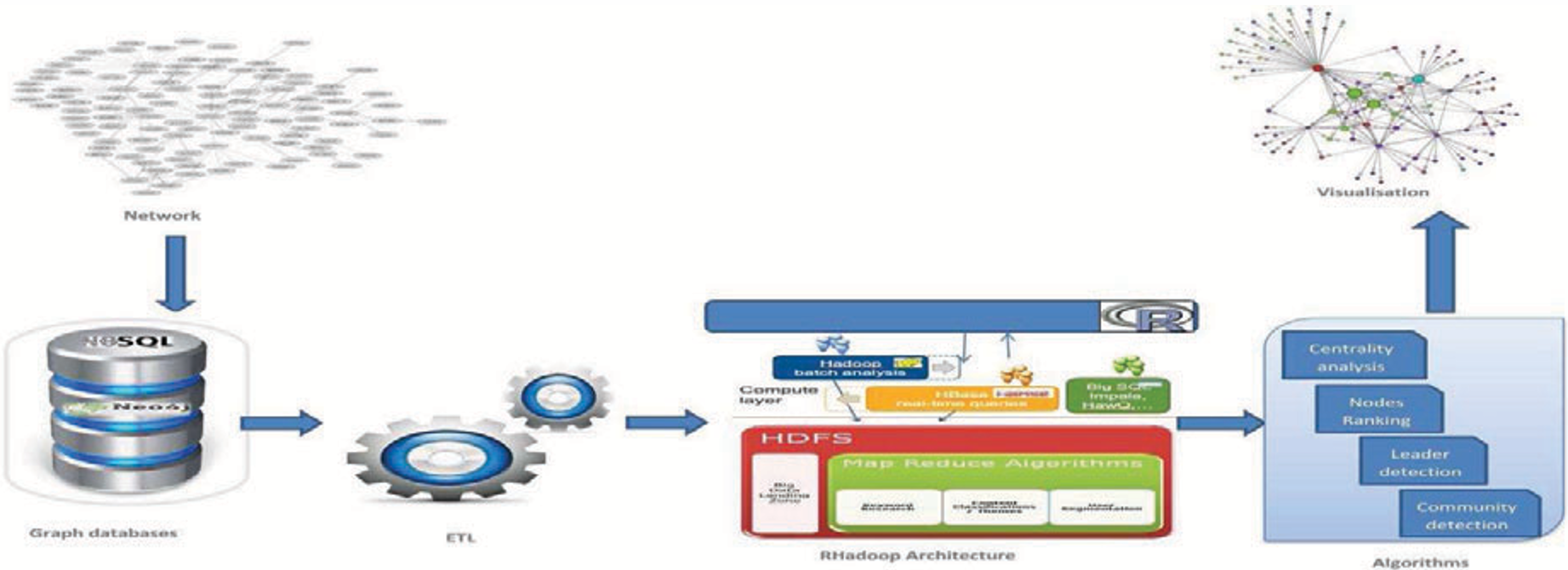 Fig 1: The three-step mining task: Centrality calculation, Ranking, and Community assignment.
Experimental Validation
The authors tested LeadersRank against two heavyweights: the Label Propagation Algorithm (LPA) and the Leading Eigenvalue Algorithm (LEA) using classic benchmarks like Zachary’s Karate Club and American College Football.
Performance Metrics
The researchers focused on three critical metrics:
- Modularity (Q): Quality of the clusters.
- NMI: Information overlap with ground truth.
- ARI (Adjusted Rand Index): Accuracy of node-pair assignments.
Key Results
In the Zachary Karate Club test, LeadersRank significantly outperformed both LPA and LEA in terms of ARI and NMI, proving it can recover "ground truth" social factions much more reliably than randomized propagation methods.
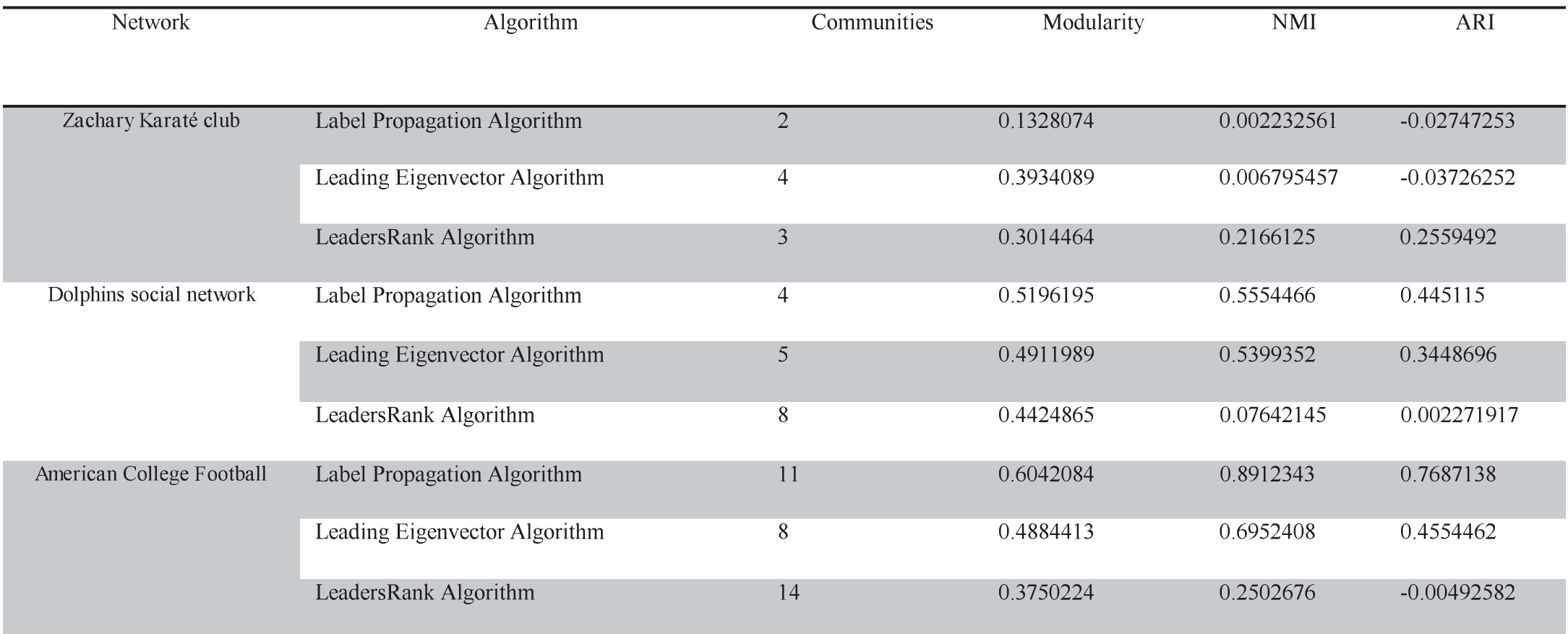 Table 1: Quantifying the superiority of LeadersRank over LPA and LEA in standard benchmarks.
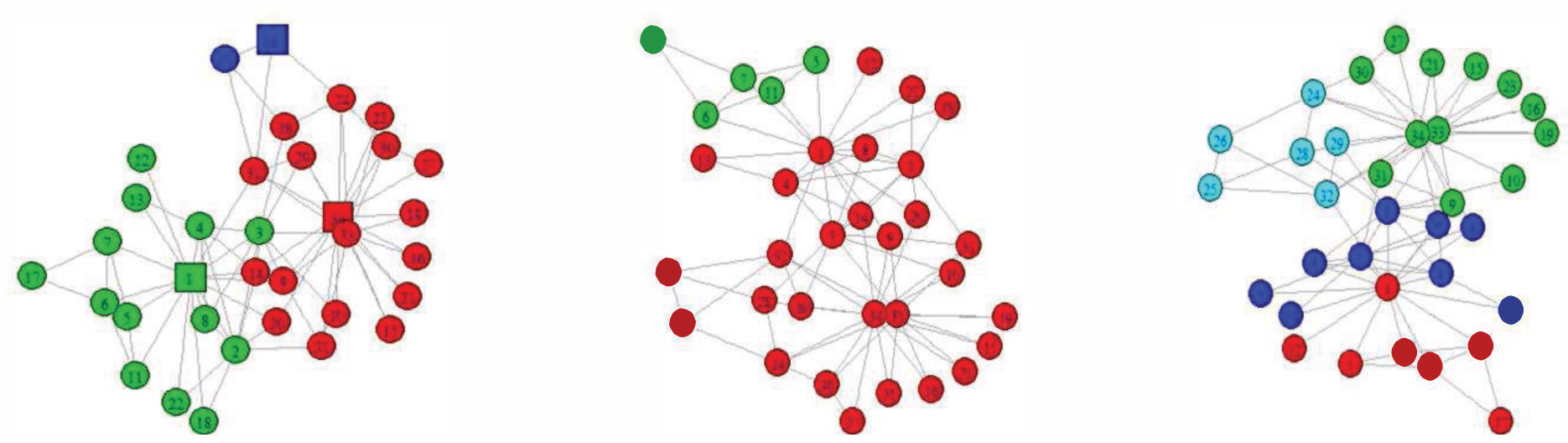 Fig 2: Community partitioning in Zachary’s Karate Club. Note how LeadersRank identifies clear central hubs (squares) compared to the more fragmented LEA output.
Deep Insight: Why Does It Work?
The success of LeadersRank lies in its Inductive Bias: it assumes that communities are naturally organized around influential individuals. By extracting these "gravity centers" (leaders) first using a global spectral method (Eigenvectors), the algorithm avoids the "parasite community" problem where small, insignificant clusters are created by mistake.
The transition from local searching to global ranking allows the algorithm to be robust even when community sizes vary significantly—a common failure point for modularity-optimization methods.
Conclusion & Future Outlook
LeadersRank offers a compelling, parameter-free alternative for social graph mining. While it excels in small-to-medium networks, the authors acknowledge that neighbor selection strategies (e.g., multi-hop paths) could be further refined to improve results in extremely dense graphs like the American College Football dataset.
For marketers and data scientists, this work provides a blueprint for identifying "Viral Casters"—the specific nodes that, if targeted, offer the maximum return on influence for product dissemination.
Limitations: The algorithm currently assumes unweighted graphs; extending this to weighted edges (strength of ties) remains a promising area for future research.